
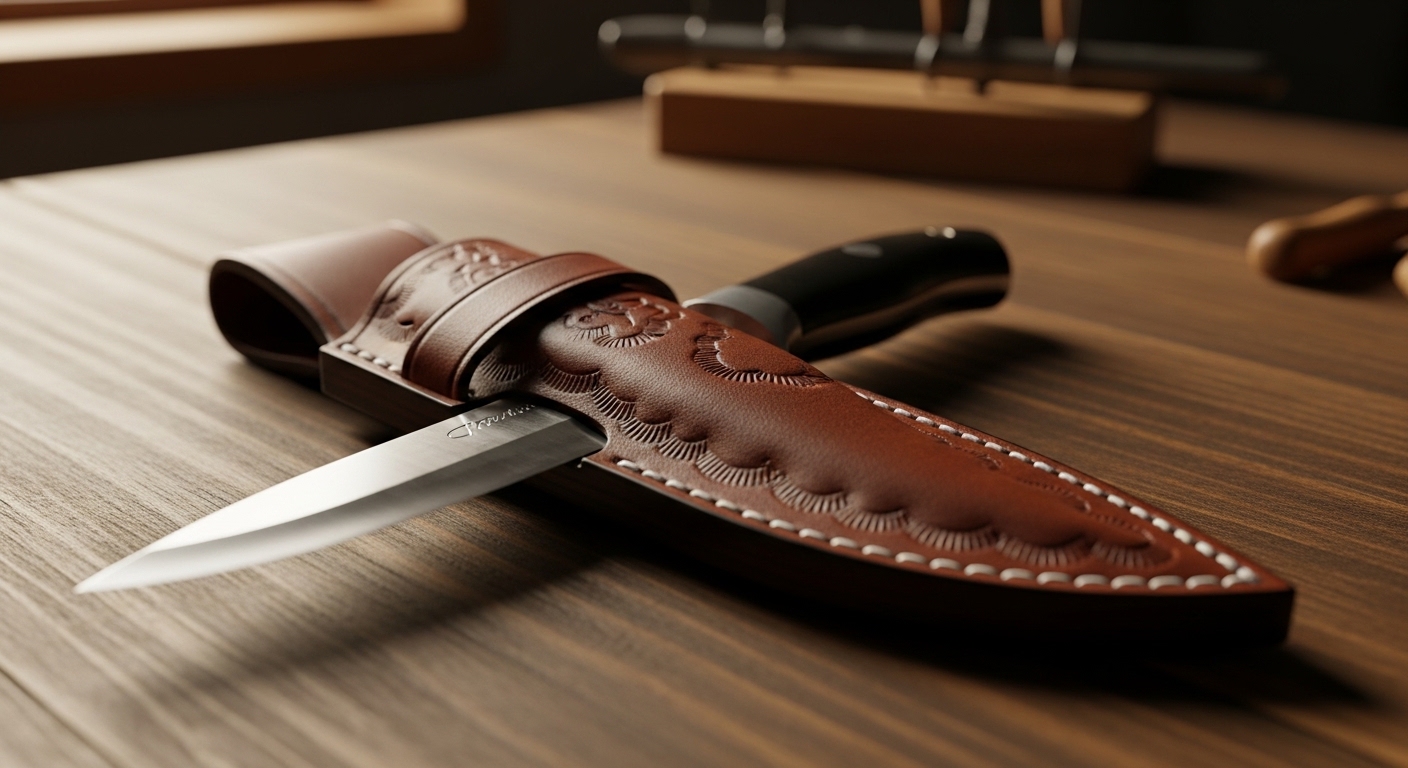
A knife without a cover is like a traveler without shoes; it’s vulnerable, slightly dangerous, and won’t last nearly as long as it should. If you own a high-quality blade, whether it’s a rugged survival tool or a delicate heirloom, protecting it isn’t just an option—it’s a necessity. Among all the materials available today, leather knife sheaths remain the gold standard for enthusiasts and professionals alike. In this deep dive, we’ll explore why leather is the superior choice, how to pick the right one, and even how to craft your own if you’re feeling adventurous.
Why Choose Leather? The Timeless Appeal
Before we get into the “how-to,” let’s talk about the “why.” You might see plastic or nylon covers at the store, but they rarely hold a candle to genuine hide.
1. Unmatched Durability
Leather is incredibly tough. While synthetic materials can crack in the cold or melt near a campfire, a leather knife sheath thrives in harsh conditions. As long as you treat it with a little bit of leather conditioner, it can literally last for generations. It’s not uncommon for a grandfather to pass down a hunting knife still tucked into its original, battle-scarred leather home.
2. The Perfect Fit
One of the coolest things about leather is its ability to “break in.” Much like a good pair of boots, a leather knife sheath will eventually mold itself to the exact shape of your blade. This creates a “friction fit” that keeps the knife secure without needing loud Velcro or finicky plastic clips.
3. Silent Stealth
If you are out in the woods, the last thing you want is the “scritch-scratch” sound of nylon or the “clack” of Kydex. Leather knife sheaths are silent. Drawing your blade is a smooth, quiet affair, which is vital for hunters or anyone who appreciates the stillness of nature.
The Story of the Old Woodsman’s Blade
I remember meeting an old carpenter named Elias up in the mountains. He carried a knife that looked older than he was. The blade was sharpened down to a sliver, but the sheath was a thick piece of dark, oil-tanned leather. He told me he’d fallen into a river, hiked through snowstorms, and worked in dusty workshops for forty years with that same cover. “The knife does the work,” he said, “but the leather keeps the knife alive.” That’s the magic of a high-quality leather knife sheath. It isn’t just an accessory; it’s a life-support system for your steel.
Key Features to Look For When Buying
If you aren’t making your own, you need to know what separates a cheap imitation from a professional-grade product.
The Type of Leather
Always look for Vegetable Tanned Leather. This is crucial. Chrome-tanned leather (the kind used for jackets or car seats) contains salts and chemicals that can actually corrode your metal blade over time. Vegetable tanning uses natural tannins from tree bark, making it safe for long-term storage of your leather knife sheaths.
The Welt
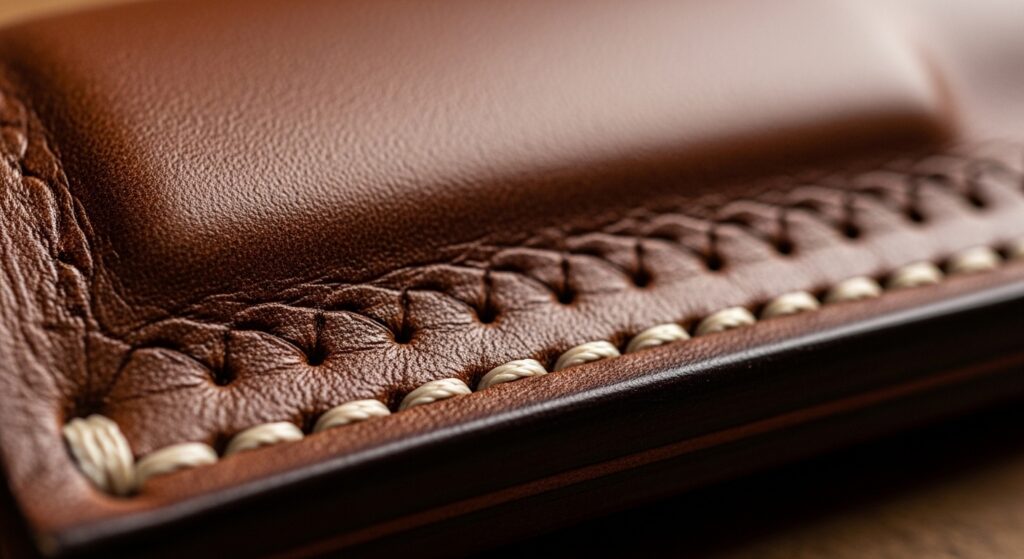
Look at the edge of the sheath where the two pieces of leather meet. Is there a thin strip of leather sandwiched between them? That’s called a welt. A proper leather knife sheath must have a welt so that the sharp edge of your knife cuts into the leather strip rather than the stitching holding the whole thing together.
Stitching and Hardware
- Thread: Look for heavy-duty, waxed nylon or polyester thread.
- Rivets: Copper or brass rivets at “stress points” (like the top of the opening) prevent the sheath from splitting under pressure.
- Belt Loops: Ensure the loop is wide enough for a standard utility belt.
Step-by-Step: Crafting Your Own Leather Knife Sheath
For those who want to feel the satisfaction of DIY, here is a simplified guide to creating a basic “taco style” (fold-over) sheath.
Tools You Will Need:
- A piece of 8-10 oz Vegetable Tanned Leather.
- A sharp utility knife.
- Contact cement or leather glue.
- A stitching pony (optional but helpful).
- Waxed thread and two needles.
Step 1: Create a Template
Don’t just start cutting leather! Trace your knife onto a piece of heavy cardstock. Draw a border around it, leaving about half an inch of extra space for the welt and the stitching. Fold the paper to make sure the knife fits inside the “pocket” comfortably.
Step 2: Cut the Leather
Trace your template onto the back (the fuzzy side) of the leather. Use your utility knife to make slow, steady cuts. Remember: you can always trim more off, but you can’t put it back on!
Step 3: Prepare the Welt
Cut a thin strip of leather that follows the curve of the blade’s edge. Glue this strip to one side of your leather knife sheath. This protects your stitches from being sliced by the blade.
Step 4: Glue and Sand
Apply contact cement to the welt and the matching edge of the sheath. Once the glue is tacky, press them together. Use a bit of sandpaper to smooth out the edges so they look like one solid piece of leather.
Step 5: Stitching
Use a stitching chisel to punch holes through all the layers. Use a “saddle stitch” (two needles passing through the same hole from opposite sides) for maximum strength. This is the hallmark of a high-quality leather knife sheath.
Step 6: Wet Molding (The Secret Sauce)
Soak your finished sheath in warm water for about 10 minutes. Wrap your knife in plastic wrap (to prevent rust), then shove it into the wet leather knife sheath. Use your fingers or a smooth tool to press the leather around the handle and blade. Let it dry overnight. The leather will harden into a custom-fit “glove” for your knife.
Maintenance: Keeping the Leather Alive
You wouldn’t buy a car and never change the oil, right? Your leather knife sheath needs love too.
- Cleaning: Use a damp cloth to wipe away dirt. Never use harsh dish soaps.
- Conditioning: Every six months, apply a light coat of Neatsfoot Oil or beeswax cream. This keeps the fibers supple and prevents cracking.
- Storage: Avoid storing your sheath in direct sunlight or on a radiator. Extreme heat will suck the moisture out of the leather, making it brittle.
Why You Can Buy With Confidence
Investing in a leather knife sheath is an investment in safety and longevity. When you buy a handcrafted or high-end leather product, you aren’t just buying “a pouch.” You are buying:
- Security: Your knife won’t fall out during a hike.
- Protection: The steel won’t get scratched or rusted by the elements.
- Style: Let’s be honest—nothing looks cooler on a belt than rugged, weathered leather. Whether you are a chef, a hunter, a carpenter, or a weekend camper, the way you carry your tool matters. A leather knife sheath bridges the gap between a simple tool and a prized possession.
Final Thoughts
In a world full of disposable plastic, choosing leather knife sheaths is a nod to craftsmanship and tradition. It’s a material that gets better with age, telling the story of every mountain climbed and every campfire started.