
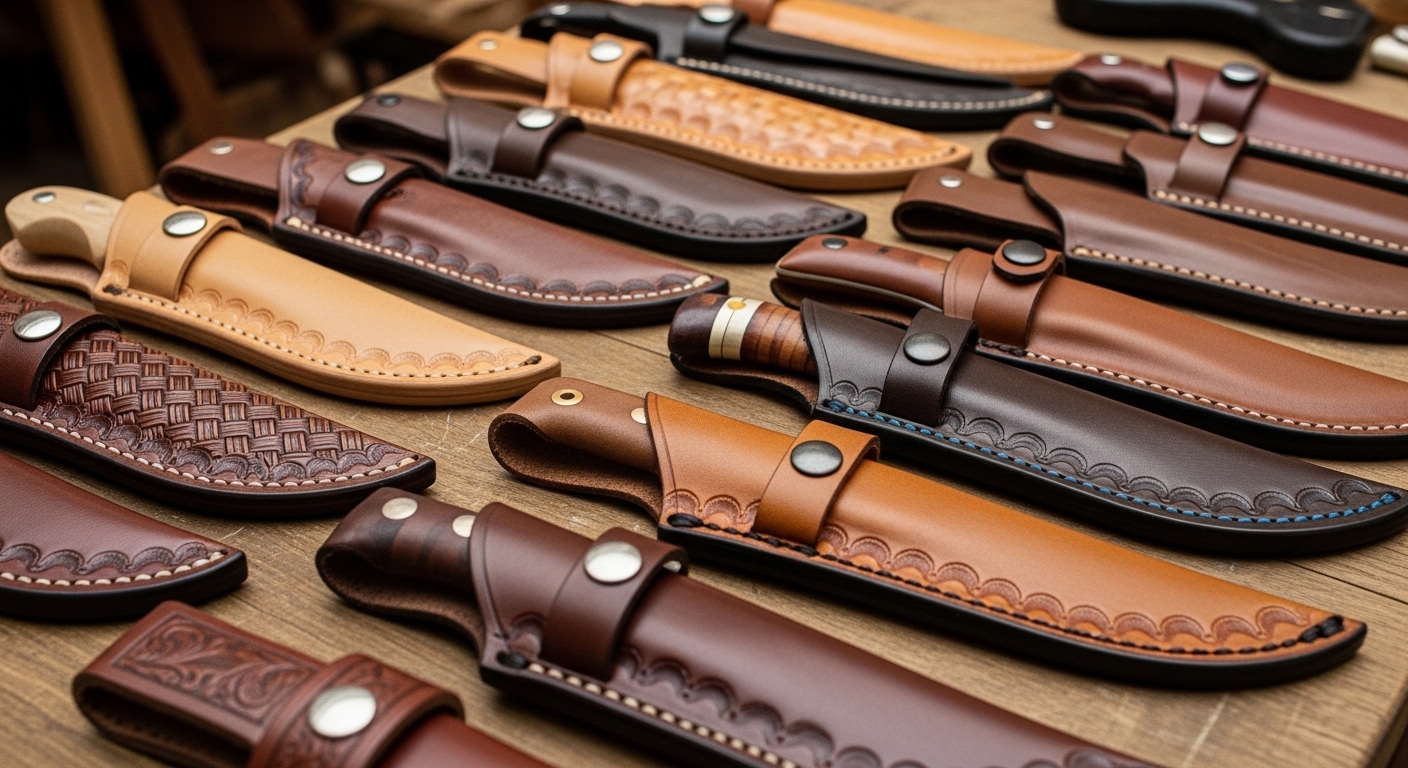
When you hold a well-crafted knife in your hand, you feel the balance, the sharpness, and the potential. However, a knife without a proper home is just a dangerous piece of metal waiting to get dull—or worse, cause an accident. That is exactly why knife sheaths leather are more than just accessories; they are essential partners for your tools. In this deep dive, we are going to explore everything you need to know about leather craftsmanship. We’ll talk about why leather remains the king of materials, how to make your own, and why investing in a high-quality sheath is the best decision you’ll make for your gear today.
Why Leather? The Soul of the Blade
I remember the first time I went camping with my grandfather. He had an old hunting knife tucked into a weathered, dark brown knife sheaths leather. It smelled of pine needles and old stories. One afternoon, I asked him why he didn’t use one of those modern plastic cases. He just smiled, pulled the knife out with a satisfying shick sound, and said, “Plastic protects the edge, but leather protects the soul.” He wasn’t just being poetic. Knife sheaths leather offer a unique blend of durability, beauty, and silence. Unlike Kydex or nylon, leather doesn’t clatter against rocks or brush. It ages with you, developing a patina that tells the story of every hike, hunt, and campfire.
The Benefits of Choosing Leather
- Durability: High-quality vegetable-tanned leather can last for decades if treated right.
- Comfort: Leather molds to your body and your knife over time.
- Safety: A thick leather welt prevents the blade from cutting through the stitches.
- Aesthetics: There is simply nothing that looks as professional or “classic” as a hand-stitched knife sheaths leather.
Understanding Different Types of Leather
Before you run out and buy the first knife sheaths leather you see, you need to understand what you’re looking at. Not all leather is created equal.
- Vegetable Tanned (Veg-Tan): This is the gold standard for knife sheaths leather. It is processed using natural tannins from tree bark. It is stiff, takes stamps and dyes well, and most importantly it won’t corrode your steel.
- Chrome Tanned: While soft and great for jackets, avoid this for sheaths. The chemicals used in chrome tanning can actually rust your blade over time.
- Full-Grain Leather: This is the top layer of the hide. It’s the strongest part and contains all the natural fibers. If you want a knife sheaths leather that can survive a trip through the wilderness, ensure it is full-grain.
Step-by-Step Guide: Crafting Your Own Knife Sheaths Leather
If you are a DIY enthusiast, there is nothing more rewarding than making your own gear. Let’s walk through the process of creating a simple “pouch style” knife sheaths leather.
Phase 1: Tools and Materials
You will need:
- A piece of 8-10 oz vegetable-tanned leather.
- A utility knife or rotary cutter.
- Contact cement or leather glue.
- Waxed thread and two needles (for the saddle stitch).
- A leather hole punch or awl.
Phase 2: Creating the Template
Don’t just start cutting! Lay your knife down on a piece of heavy paper. Trace the outline, but leave about an inch of extra space around the blade. This extra space accounts for the thickness of the knife and the knife sheaths leather welt. Fold the paper to ensure the “fold-over” covers the handle enough to keep it secure.
Phase 3: The Welt – Your Blade’s Bodyguard
A “welt” is a thin strip of leather placed between the two main layers of the knife sheaths leather where the sharp edge sits. This is crucial because, without it, your knife will eventually slice through your stitching. Glue the welt along the edge of your back piece first.
Phase 4: Gluing and Stitching
Once the welt is in place, glue the top piece of your knife sheaths leather down. Use a stitching pony or a clamp to hold it tight. Mark your holes using a stitching wheel and punch through. The saddle stitch is the most durable method—even if one thread breaks, the whole thing won’t unravel.
Phase 5: Finishing the Edges
To make your knife sheaths leather look professional, you must “burnish” the edges. Wet the edges with a bit of water or gum tragacanth and rub them vigorously with a wooden slicker. This friction melts the fibers together into a smooth, shiny finish.
How to Maintain Your Knife Sheaths Leather
Buying or making a knife sheaths leather is an investment. If you want it to last long enough to pass down to your kids, you have to take care of it.
- Keep it Dry: If your knife sheaths leather gets soaked in the rain, don’t put it near a heater! This will make the leather brittle. Let it air dry slowly at room temperature.
- Conditioning: Every few months, apply a high-quality leather conditioner or mink oil. This keeps the fibers supple and prevents cracking.
- Avoid Over-Oiling: Too much oil can make the knife sheaths leather too soft, losing its ability to hold the knife securely.
Common Mistakes to Avoid
Many people think a knife sheaths leather is indestructible, but a few common errors can ruin both the sheath and the knife.
- Storing a Wet Knife: Never put a wet blade back into your knife sheaths leather. Leather is porous and will hold that moisture against the steel, leading to pitting and rust.
- Using the Wrong Dye: If you are making your own, use professional leather dyes. Poor quality dyes can bleed onto your clothes or, worse, react with the metal of the knife.
- Ignoring the Fit: A knife sheaths leather should be snug. If the knife rattles or falls out when you turn it upside down, it’s a safety hazard. You can often “wet-mold” leather by soaking it briefly in warm water and then inserting the knife (wrapped in plastic wrap) to let the leather dry around the specific shape of the handle.
The Aesthetic Appeal: Tooling and Carving
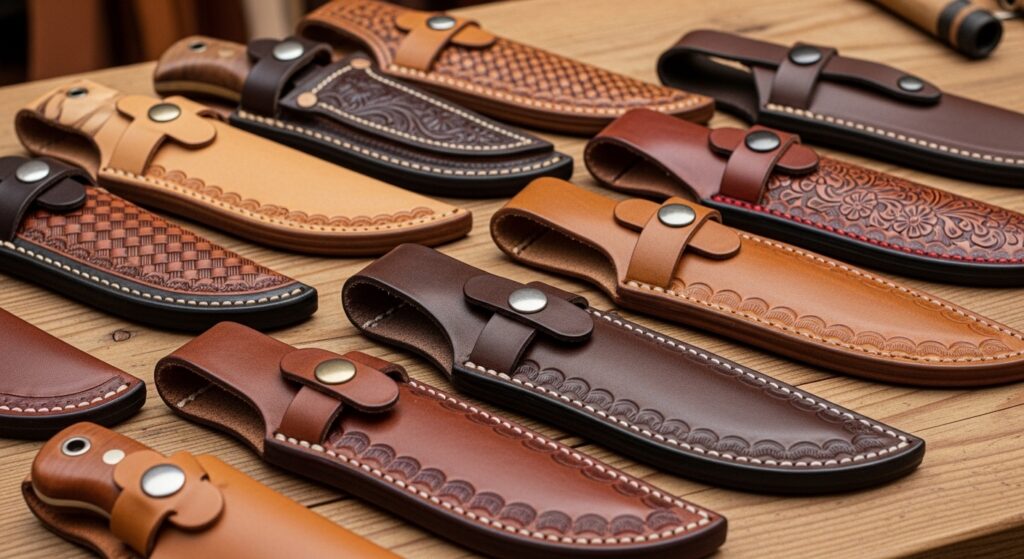
For many, knife sheaths leather are a canvas for art. Using leather carving tools, artisans create intricate floral patterns, “basket weave” stamps, or even family crests. Imagine pulling out a blade at a BBQ and having your friends admire not just the knife, but the custom-tooled knife sheaths leather on your belt. It’s a statement piece that says you care about quality and tradition.
Why You Should Buy a Premium Knife Sheaths Leather Today
There is a saying in the outdoor community: “Buy once, cry once.” This means it is better to spend a bit more on a high-quality item that lasts a lifetime than to keep replacing cheap gear every year. When you buy a professionally made knife sheaths leather, you are supporting a craft that has existed for thousands of years. You are getting a product that is:
- Hand-Inspected: Ensuring there are no weak spots in the hide.
- Custom-Fit: Providing the “snap” and retention needed for safety.
- Inherently Unique: No two pieces of leather are exactly the same. Whether you are a chef, a hunter, a carpenter, or a hobbyist, your knife is an extension of your hand. Doesn’t it deserve a home that is just as tough and reliable as you are? Don’t settle for cheap nylon that rips or plastic that cracks in the cold. Step up to the timeless reliability of knife sheaths leather. It’s more than a purchase; it’s a tradition you can wear on your belt. Shop our collection of handcrafted leather goods and find the perfect match for your favorite blade today. You’ll feel the difference the moment you slide your knife into place.
Final Thoughts
In a world full of disposable gadgets and “fast fashion,” knife sheaths leather stand as a testament to things that last. They remind us of a time when tools were built to be repaired, not replaced.