
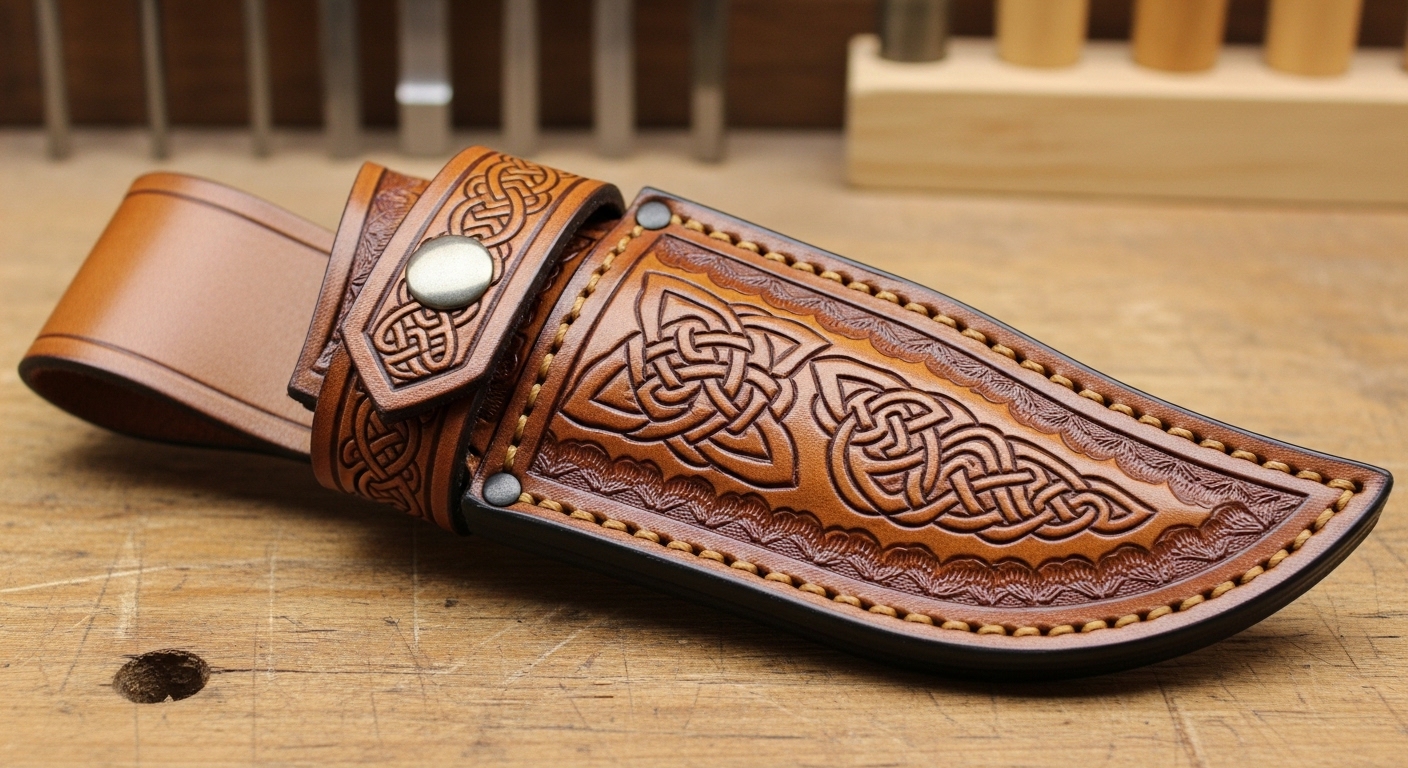
The sound of a blade clicking into place is more than just noise; it is the sound of security. Whether you are a professional chef, an avid hunter, or a weekend camper, your tools are an extension of your hands. However, a knife without a home is a liability. That is why choosing the right leather knife sheath is one of the most important decisions a gear enthusiast can make.
In this guide, we will explore the timeless art of leatherwork, why it remains the gold standard for protection, and how you can even try your hand at crafting one yourself. By the end of this, you will understand why investing in a premium leather knife sheath is the ultimate way to respect your edge.
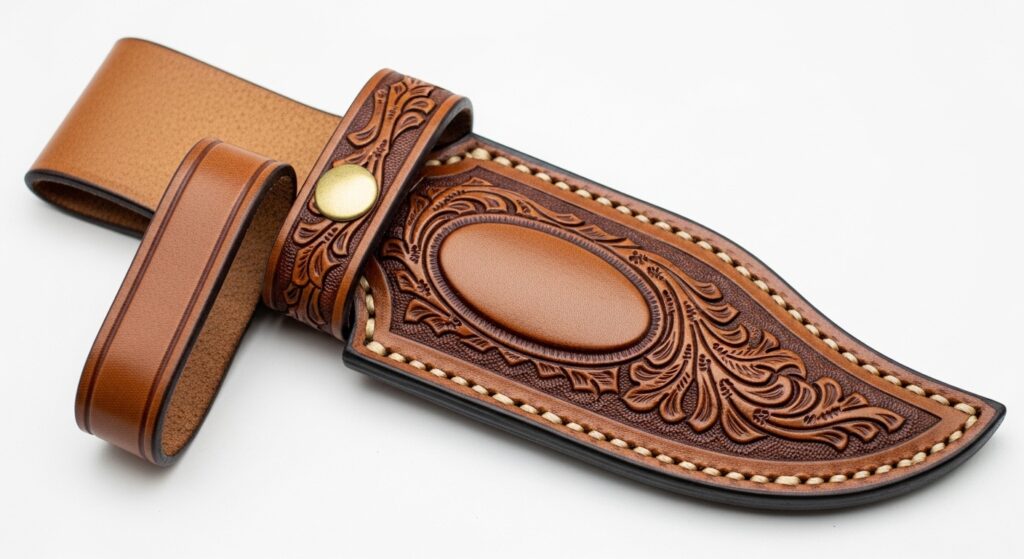
The Soul of the Material: Why Leather?
In a world filled with high-tech plastics and tactical nylons, you might wonder why a material used by ancient civilizations still reigns supreme. The answer lies in the unique relationship between steel and hide.
1. Durability and Longevity
Unlike synthetic materials that can crack under extreme cold or fray after heavy use, a leather knife sheath actually improves with age. It develops a rich patina that tells the story of your adventures. If you treat it well with mink oil or beeswax, it can easily outlast the person wearing it.
2. The Custom Fit
Leather is organic. Over time, it “remembers” the specific shape of your knife. This creates a friction-fit that prevents the blade from rattling. A well-made leather knife sheath provides a silent draw—a feature highly valued by hunters who don’t want to spook game with the “clack” of Kydex.
3. Safety First
A sharp knife is a safe knife, but only when the edge is covered. A thick piece of vegetable-tanned leather acts as a puncture-resistant barrier. Whether the knife is in your pocket, on your belt, or tossed in a backpack, a leather knife sheath ensures that the only thing getting cut is your target.
An Anecdote from the Field: The Lesson of the Rusty Blade
I remember my grandfather’s old skinning knife. It was a beautiful piece of carbon steel, but he had a habit of leaving it in a cheap nylon pouch. One damp autumn in the Pacific Northwest, he forgot the knife in his truck for a week. When he pulled it out, the moisture trapped by the synthetic fabric had turned that mirror finish into a pitted, orange mess.
He spent the next three days teaching me how to restore the blade. Once it was back to its former glory, he didn’t put it back in the nylon. He spent the evening hand-stitching a heavy-duty leather knife sheath. He explained that leather breathes. It manages moisture better than plastic ever could. Since that day, that knife hasn’t seen a single speck of rust. That is the power of a quality leather knife sheath.
Types of Leather Knife Sheaths
Before you hit the “Buy Now” button, you need to know which style fits your lifestyle. Not all carriers are created equal.
| Type | Best For | Pros |
| Pancake Sheath | EDC (Everyday Carry) | Sits flat against the body; very discrete. |
| Dangler Sheath | Bushcraft / Camping | Hangs low; doesn’t poke you when you sit down. |
| Scout Carry | Tactical / Hiking | Worn horizontally on the small of the back. |
| Pocket Slip | Folders / Pen Knives | Keeps the knife upright in your pocket. |
When searching for a leather knife sheath, consider how often you sit, climb, or run. A dangler style is perfect for those moving through thick brush, while a scout carry leather knife sheath is the choice for those who want quick, two-handed access.
Step-by-Step: How to Craft Your Own Leather Knife Sheath
If you are a DIY enthusiast, making your own gear is incredibly rewarding. Here is a simplified guide to creating a basic fold-over leather knife sheath.
Step 1: Preparation and Patterning
First, lay your knife on a piece of cardboard. Trace around it, leaving about a half-inch of extra space for the stitching. Fold the cardboard to ensure the knife fits snugly inside. This is your template.
Step 2: Cutting the Leather
Transfer your pattern onto a piece of 8–9 oz veg-tan leather. Use a sharp utility knife to cut the shape. Remember: measure twice, cut once!
Step 3: Creating the Welt
A “welt” is a thin strip of leather placed between the two main layers where the blade edge sits. This is vital! Without a welt, your sharp blade will eventually cut through your stitching. Glue the welt along the edge of your leather knife sheath using contact cement.
Step 4: Stitching Holes
Use a stitching pony and a diamond awl to punch holes through all three layers (front, welt, back). Make sure your holes are evenly spaced for a professional look.
Step 5: The Saddle Stitch
Thread two needles on a single piece of waxed polyester thread. Pass them through the same holes from opposite sides. This “Saddle Stitch” is the strongest stitch known to man. If one thread breaks, the rest of the leather knife sheath stays together.
Step 6: Burnishing the Edges
To give your leather knife sheath that high-end look, sand the edges smooth. Wet them slightly and rub them vigorously with a wooden burnisher. The friction will seal the fibers and create a shiny, hard edge.
The Importance of the “Welt”
Many cheap, mass-produced covers skip the welt to save money. This is a huge mistake. Imagine you are hiking, and you trip. If your knife pushes hard against the side of the pouch, only the thread is holding it back. A leather knife sheath with a proper welt ensures the blade hits leather, not thread. It is a small detail that makes a massive difference in safety.
How to Maintain Your Leather Knife Sheath
Buying a leather knife sheath is an investment. To keep it in top shape, follow these simple steps:
- Keep it Clean: Use saddle soap to remove dirt and sweat after a long trip.
- Conditioning: Every few months, apply a leather conditioner. This keeps the fibers supple and prevents cracking.
- Avoid Submersion: If your leather knife sheath gets soaking wet, do not put it near a heater. Let it air dry slowly. High heat will make the leather brittle.
- Check the Hardware: If your leather knife sheath has Chicago screws or snaps, make sure they are tight and free of corrosion.
Buying with Confidence: What to Look For
If you aren’t ready to make your own, you can find incredible artisans online. When shopping for a leather knife sheath, look for these “Green Flags”:
- Full-Grain Leather: Avoid anything labeled “genuine leather,” which is often just scraps glued together. You want full-grain.
- Heavy Thread: Look for thick, visible stitching.
- Secure Retention: The knife should stay in the leather knife sheath even if you turn it upside down and give it a light shake.
- Belt Loop Integrity: Ensure the loop is either part of the main piece of leather or reinforced with heavy-duty rivets.
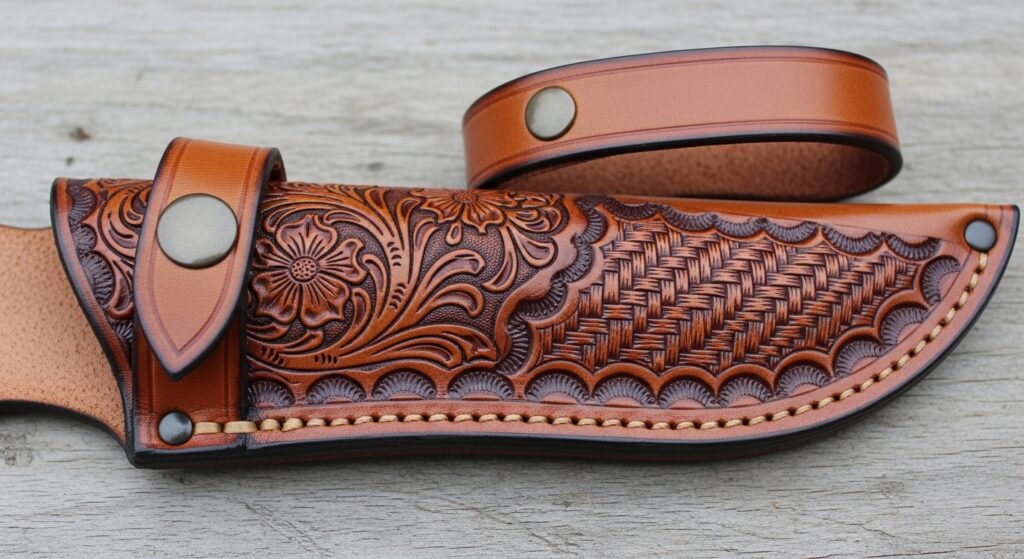
Conclusion: A Legacy in Your Pocket
A knife is just a piece of shaped metal until you give it a soul. By pairing it with a high-quality leather knife sheath, you are choosing tradition over convenience. You are choosing a material that grows with you, protects you, and eventually, becomes an heirloom you can pass down.