
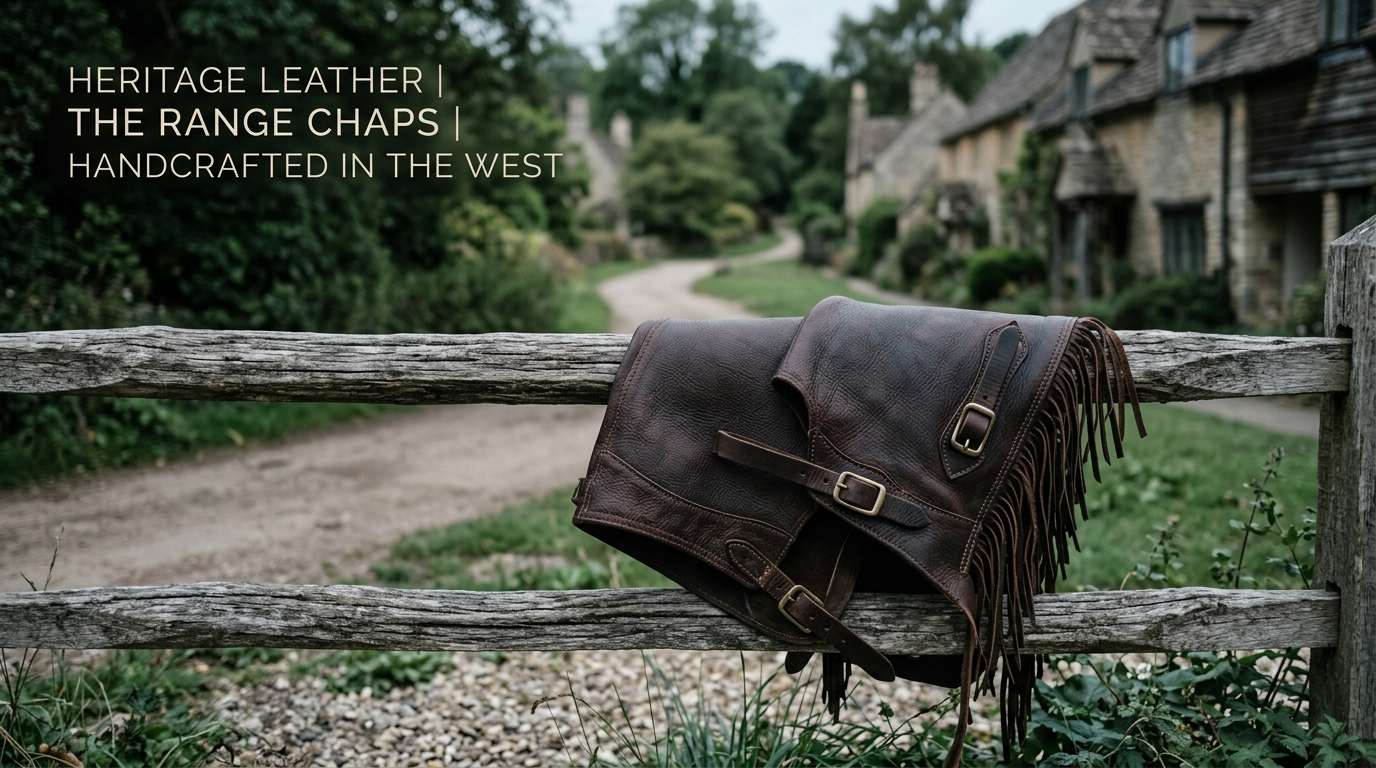
Leather western chaps are a fundamental component of traditional equestrian equipment. When working in agricultural settings, managing livestock in rural villages, or riding through unmaintained trails, standard denim fails to provide adequate physical protection. Authentic leather chaps function as a modular, heavy-duty barrier, shielding the rider from environmental hazards while improving overall performance in the saddle.
Selecting the proper pair requires a firm understanding of material grades, traditional cut styles, and exact sizing measurements. This guide details the structural and functional aspects of western chaps, ensuring you acquire gear that delivers long-lasting durability in demanding rural environments.
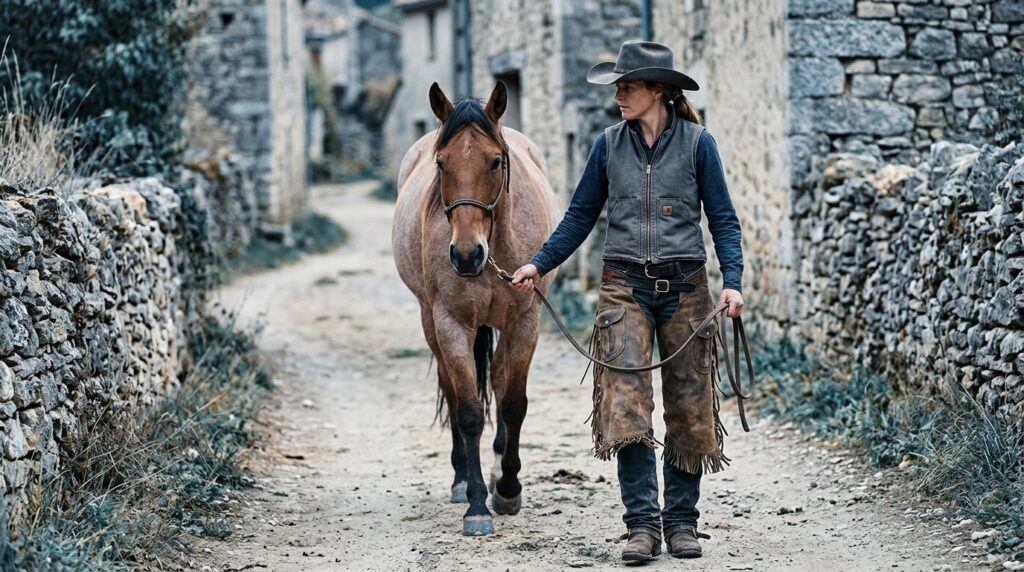
The Functional Mechanics of Western Leg Armor
The design of western chaps prioritizes rugged utility. Worn as an over-garment, they offer specific mechanical advantages for daily ranch work and trail riding:
- Environmental Barrier: Premium cowhide absorbs the physical impact and friction from dense brush, sharp branches, and fencing materials. This thick layer prevents serious skin lacerations and protects primary clothing from tearing during heavy labor.
- Enhanced Saddle Adhesion: Western chaps are frequently manufactured using roughout (suede) leather. The textured nap of the suede creates high friction against a leather saddle, locking the rider’s legs firmly into position. This grip is essential when executing sharp turns or navigating steep, uneven village paths.
- Weather Mitigation: Heavy leather acts as a natural insulator. During early morning rides or cold-weather farm work, chaps trap body heat and block freezing winds, while also shedding light moisture and trail mud.
Traditional Western Silhouettes
The cut of the chap determines its primary application. Different rural tasks require varying levels of mobility, airflow, and leg coverage.
Batwing Chaps
The batwing style is the standard for active ranch work. As visible in the layout options, these chaps secure tightly around the upper thigh but leave the lower leg completely unfastened, creating a wide leather flap that flares outward. This design permits a full, unrestricted range of motion for the knee joint, which is necessary for riders who must frequently dismount to open gates or handle equipment. The wide profile also offers maximum frontal coverage against tall brush.
Western Chinks
Chinks provide a shorter, highly functional alternative, typically extending only slightly below the knee. They feature distinctive fringe along the outer seams and are secured with buckled straps around the thigh. Chinks are optimized for hot climates, providing necessary protection for the upper leg and knee while allowing maximum airflow to the lower leg.
Traditional Shotgun Chaps
The traditional western shotgun cut features a straight, narrow profile that fully encloses the rider’s leg from the thigh down to the boot. Unlike modern aerodynamic versions, the western shotgun is built for heavy brush navigation and winter insulation, offering complete, wraparound protection for environments with severe environmental hazards.
Accurate Sizing for Rural Utility
Chaps must fit correctly over standard work pants. Incorrect sizing leads to severe chafing, restricted blood flow, or hazardous excess material.
1.Upper Thigh Measurement:
Wrap a flexible measuring tape around the widest part of your thigh while wearing your standard work jeans. Add 1 to 2 inches to this measurement. This critical addition allows the thigh muscle to expand comfortably when you are seated in the saddle.
2.Waist Line Baseline:
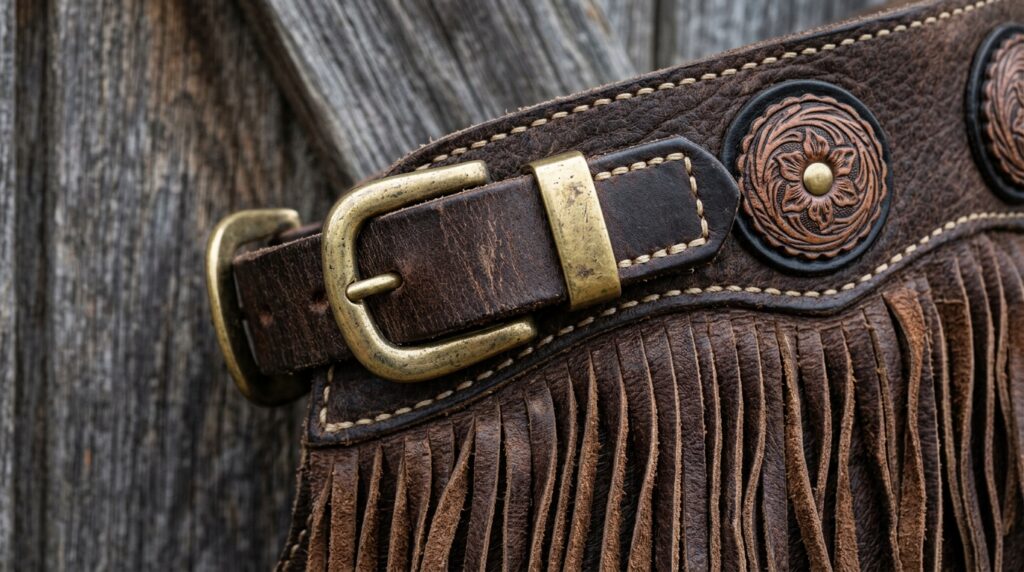
Measure your waistline directly over your jeans and belt. Authentic western chaps utilize a heavy-duty front buckle and an adjustable rear leather lacing system. This mechanism allows the waistline to expand for winter outerwear or contract for thin summer clothing.
3.Outseam Length Verification:
Measure from your belt line straight down the outside of your leg to the heel of your riding boot. The leather should completely cover the ankle joint when the knee is bent in a riding stance.
Maintenance Requirements for Leather Gear
Heavy-duty cowhide requires consistent maintenance to prevent the organic fibers from drying, cracking, and ultimately failing under tension.
| Hide Finish | Best Task Application | Preferred Cleaning Tool | Conditioning Protocol |
| Roughout (Suede) | Rodeo, daily ranching, arena grip | Specialized stiff suede brush | Never use oils or waxes (ruins the nap). Use suede-safe protector sprays only. |
| Smooth Top-Grain | Wet trails, mud clearing, show rings | Stiff horsehair brush & damp cloth | Apply a thin coat of natural leather conditioner every few months to restore oils. |
- Routine Cleaning: After riding through muddy trails or dusty village roads, allow any wet mud to dry completely before brushing. Use your brush to sweep the ground dirt cleanly out of the leather grain and seams.