
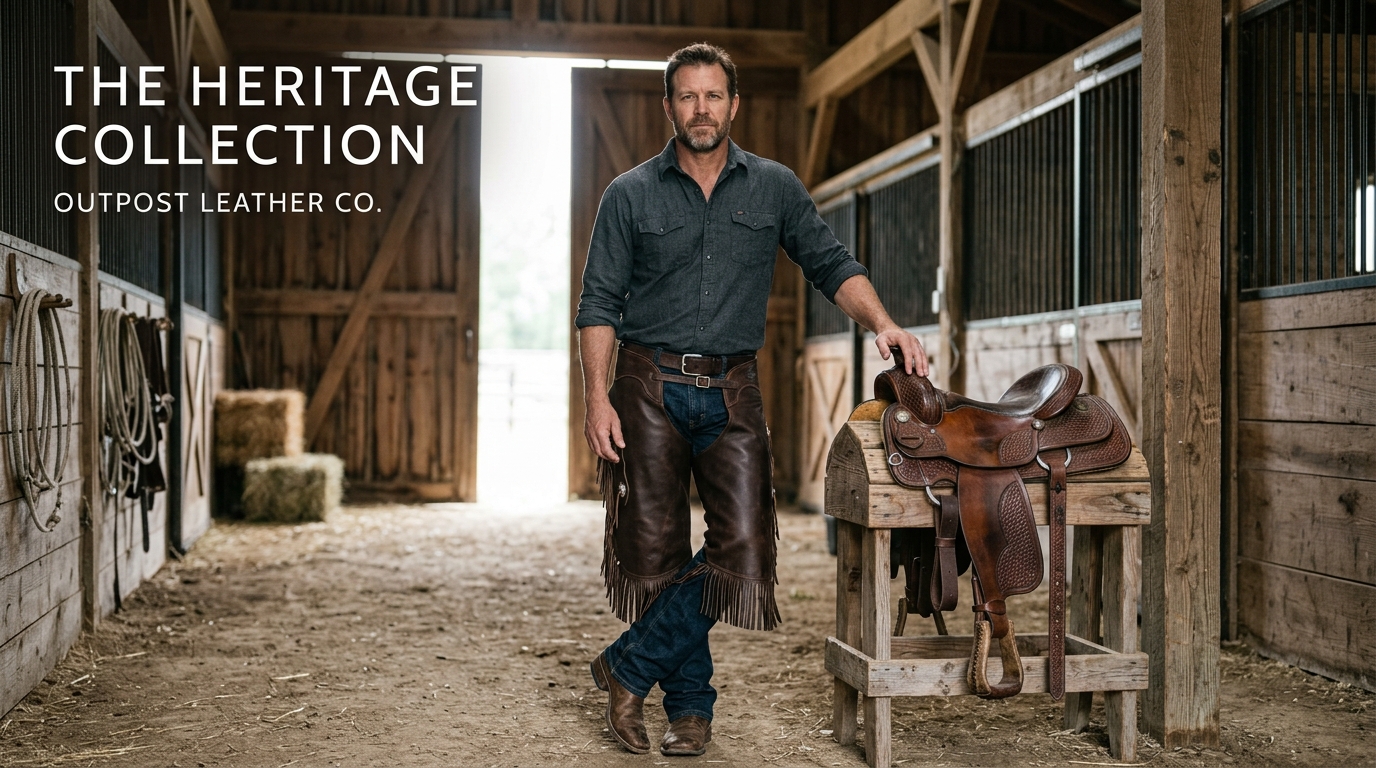
A man in leather chaps represents a long-standing tradition of practical western utility. When managing a ranch, working livestock, or riding through dense, thorny trails, standard denim is simply insufficient. Originally utilized by early Vaqueros and frontiersmen, leather chaps provide a crucial layer of modular armor. They deliver necessary abrasion resistance and saddle grip without the restrictiveness of heavy, full-leather trousers.
Selecting the proper pair requires an understanding of specific western cuts, leather grades, and accurate sizing metrics. This straightforward guide details the functional aspects of men’s western chaps, ensuring your gear provides genuine durability in ranch, trail, and outdoor environments.
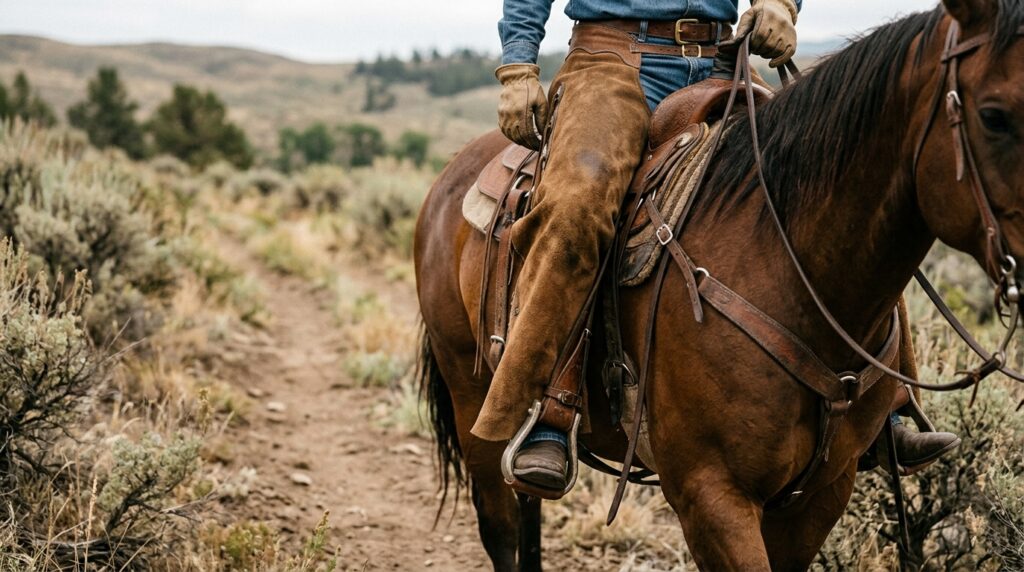
The Practical Advantages of Western Leg Armor
The primary function of western leather chaps is heavy-duty physical protection. Designed to be worn as an over-garment, they offer specific advantages for equestrian and ranch work:
- Brush and Hazard Protection: Thick, premium cowhide acts as a physical barrier against sharp branches, dense brush, and barbed wire. The leather absorbs the friction and impacts that would otherwise tear clothing or cause injury.
- Superior Saddle Grip: When crafted from roughout leather (suede), chaps provide significant friction against a leather saddle. This locks the rider securely in place, maintaining a deep seat during aggressive maneuvers or long trail rides.
- Targeted Weather Defense: Heavy leather is naturally windproof and water-resistant. During cold, early-morning ranch work, chaps trap body heat and deflect freezing winds, preventing leg fatigue.
Primary Western Chap Silhouettes
Men’s western chaps are categorized by how they are cut and how they hang on the leg. Different tasks require different levels of coverage, airflow, and mobility.
Batwing Chaps
Batwing chaps are a staple for working cowboys. They fasten securely around the upper thigh but leave the lower leg open, allowing the thick leather to flare outward. This specific design allows a rider to bend their knees sharply without the leather binding, which is essential for frequently mounting and dismounting a horse. The wide flaps also provide maximum coverage against thorny underbrush.
Chinks
Chinks are essentially a half-length version of the batwing, typically stopping just below the knee and featuring long fringes along the edges. As shown above, they are the standard for hot-weather ranch work. They provide vital upper-leg protection against rope burns and brush while maximizing airflow to the lower leg.
Western Shotgun Chaps
Unlike the modern aerodynamic biker versions, traditional western shotgun chaps offer a straight, narrow cut that fully encloses the leg from the thigh to the ankle. They provide maximum heat retention and complete coverage, making them highly effective for winter trail riding and navigating extremely dense, overgrown terrain.
Sizing Metrics for a Functional Fit
Because chaps are worn over your standard work jeans, accurate measurements are critical to prevent chafing or restricted movement.
1.The Thigh Measurement:
Wrap a flexible measuring tape around the absolute widest section of your upper thigh while wearing your standard riding jeans. Add 1 to 2 inches to this number to allow for muscle expansion when seated in the saddle.
2.The Waistline Fitting:
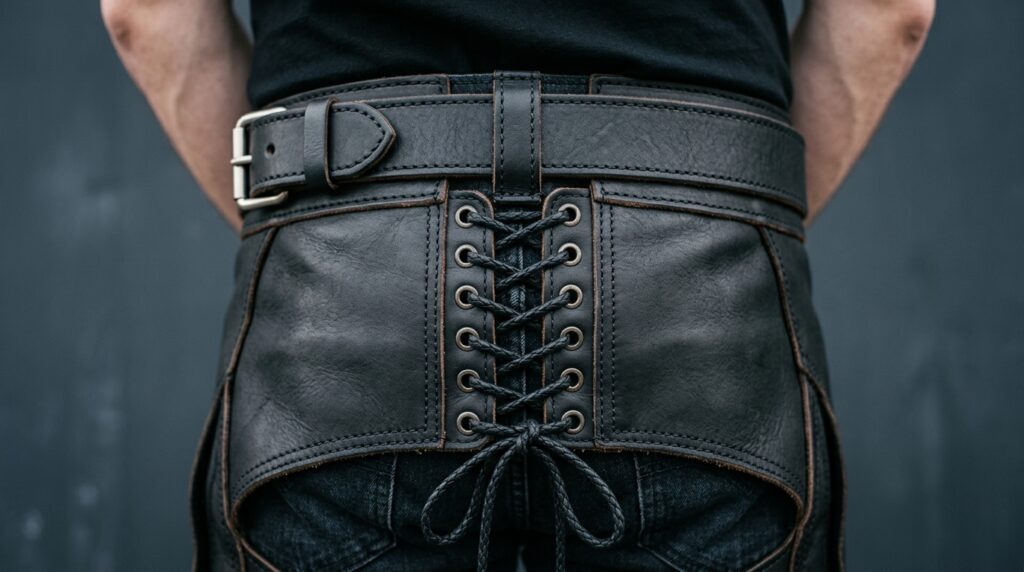
Measure your waistline directly over your jeans and belt. Premium western chaps feature an adjustable front belt buckle and a rear leather lacing system, allowing the waist to expand to accommodate heavy winter coats or contract for summer wear.
3.The Outseam Length Check:
Measure from your belt line straight down the outside of your leg to the top of your boot heel. This ensures proper length coverage without the heavy leather dragging on the ground or catching under your boots.
Maintaining Heavy-Duty Cowhide
To preserve the structural integrity of your gear, routine maintenance is necessary to keep the natural hide from drying out, cracking, or breaking at the seams.
| Hide Finish | Best Environmental Use | Routine Cleaning | Preservation Rule |
| Roughout (Suede) | High-friction saddle work; dusty rings. | Stiff suede brush to lift the nap and remove dust. | Do not apply heavy oils or waxes; use suede-safe protective sprays only. |
| Smooth Top-Grain | Wet, muddy trails; formal show entries. | Wipe with a damp cloth; stiff horsehair brush for seams. | Apply a high-quality leather conditioner every few months to restore natural oils. |
Proper care ensures your investment will endure decades of rigorous ranch use, naturally breaking in to match the unique contours of your stride.