
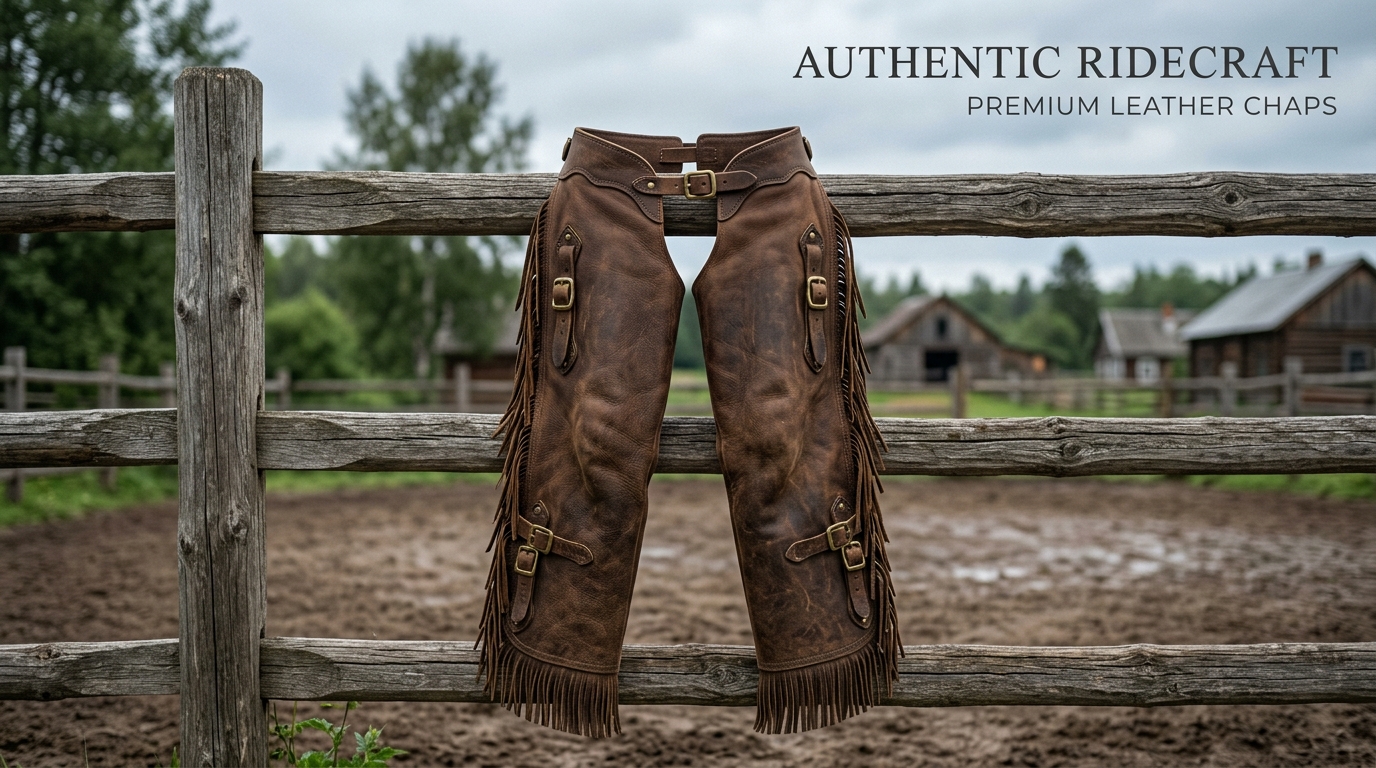
If you spend your days clearing dense brush on an unpaved village trail, managing cattle in tight pens, or training unpredictable horses, you already know that standard denim jeans just don’t cut it. They easily tear, fray, and absorb moisture under high impacts, leading to painful skin abrasions and severe saddle pinches from heavy stirrup leathers.
This is where authentic leather chaps riding gear comes in. Acting as an adjustable, highly flexible personal shield worn directly over your everyday pants, premium full-grain cowhide absorbs intense structural forces, dampens rope burns, and insulates against biting valley winds.
Let’s break down the traditional Western silhouettes, performance-focused leather grades, and the anatomical fitment metrics needed to secure lifelong lower-body protection on the open range.
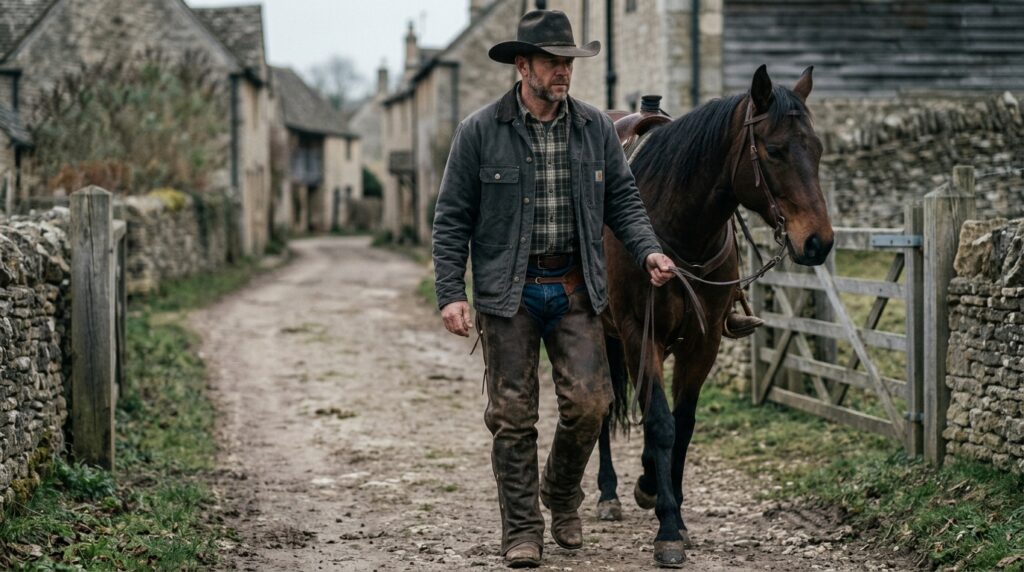
Evaluating Cut Silhouettes: Batwing vs. Shotgun
Professional-grade leather chaps riding apparel is engineered around specific layout profiles, each precisely tailored to balance joint articulation, regional climates, and specific daily equestrian chores.
1. The Full-Length Batwing Profile
The batwing design is the time-tested standard for open-pasture trail riding, rodeo work, and heavy livestock handling. These chaps wrap securely around the upper thigh using a series of reinforced leather straps and heavy brass buckles, but from the mid-thigh down to the boot heel, the leather panels flare outward completely unfastened.
This intentional flare provides completely unrestricted knee flexion, allowing a rider to fluidly mount and dismount a horse or crouch to examine a calf without the leather binding up or restricting circulation. The wide flaps also ensure excellent airflow during warm-weather fieldwork.
2. The Classic Shotgun Cut
The shotgun style is a streamlined, low-profile design that fully encloses the rider’s leg from the hip all the way down to the ankle joint, fastening tightly along the outer seam via a heavy-duty brass zipper.
This straight, snug design minimizes the risk of the leather catching on dense undergrowth or heavy brush. Because it seals out the elements entirely, the shotgun cut is the primary choice for cold-weather insulation and navigating through dense, thorny thickets.
Technical Hide Selection: Smooth vs. Roughout Finishes
The overall saddle grip, weather defiance, and maintenance routine of your leather chaps riding investment rely completely on the specific finish of the cowhide:
- Smooth Full-Grain Leather: This is the most weather-resistant option available. Rain, early morning dew, and thick trail mud easily slide off the smooth exterior, making it remarkably simple to wipe clean with a damp cloth after a long shift. Smooth full-grain leather naturally contours to your leg shape over time and develops a beautiful, rich patina.
- Roughout Suede Leather: Roughout features the textured, fibrous inner side of the hide facing outward. The natural nap of suede acts like a mechanical lock against your saddle flaps, generating high friction that stabilizes your lower leg position during sudden livestock movements, aggressive riding, or rugged trail climbs.
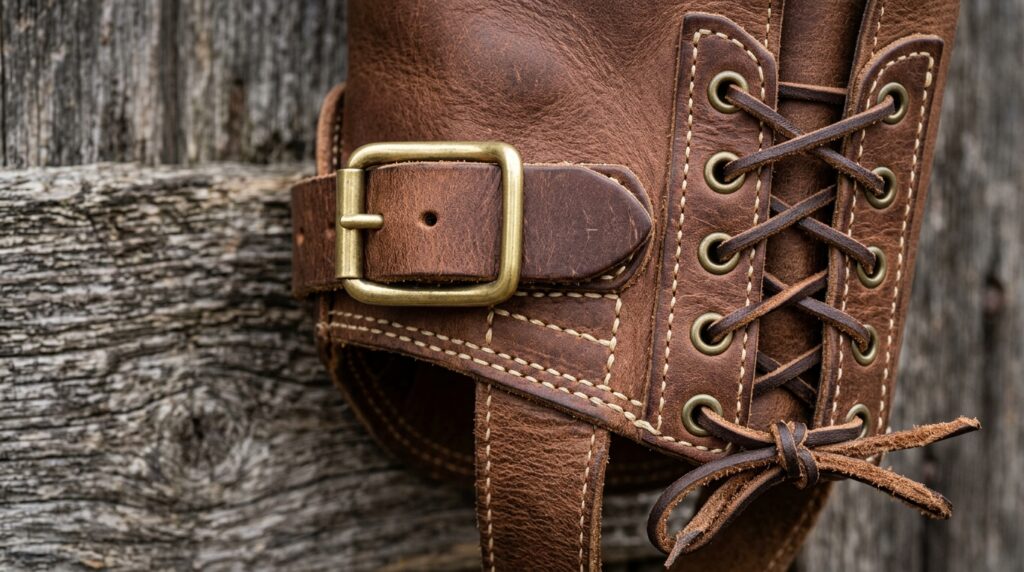
Sizing Metrics Tailored for an Anatomical Fit
Because genuine thick leather does not stretch significantly across its width, obtaining exact physical measurements while wearing your thickest riding jeans and work boots is mandatory prior to acquiring your leather chaps riding protection:
| Measurement Zone | Measurement Technique | Field Utility |
| Upper Thigh Circumference | Wrap a flexible tape around the absolute widest section of your upper thigh muscle. | Add 1.5 to 2 inches to ensure your leg muscles can expand comfortably when seated deep in a saddle or crouching. |
| Mid-Calf Clearance | Measure the widest part of your calf muscle over your work denim. | Critical for full-length shotgun cuts to ensure the heavy side zippers close smoothly without restricting blood flow. |
| Outseam Length | Measure straight down the outside of your leg from your belt line to the base of your boot heel. | Ensures the main panels completely cover the ankle joint, keeping trail debris entirely out of your footwear. |
Routine Maintenance for Lifelong Value
Heavy-duty cowhide absorbs a relentless combination of horse sweat, trail dust, and mud. To ensure your gear does not dry out, crack, or break down along the load-bearing stress points, implement these strict care steps:
- Debris Removal: After a long day on a dusty village path, allow any wet mud to dry completely at room temperature. Use a stiff-bristled horsehair brush to vigorously sweep the dried crust out of the leather grain, fringe strands, and buckle tracks.
- Conditioning Smooth Hides: Every six months, apply a light coat of natural beeswax balm or high-quality leather conditioner to smooth-grain chaps to keep the organic fibers supple and completely windproof.
- Suede Restoration: Never apply standard oils or heavy paste waxes to roughout suede chaps, as this will permanently flatten the textured grip. Use a dedicated suede wire brush to lift the loose fibers and restore the high-friction nap needed for saddle stability.