
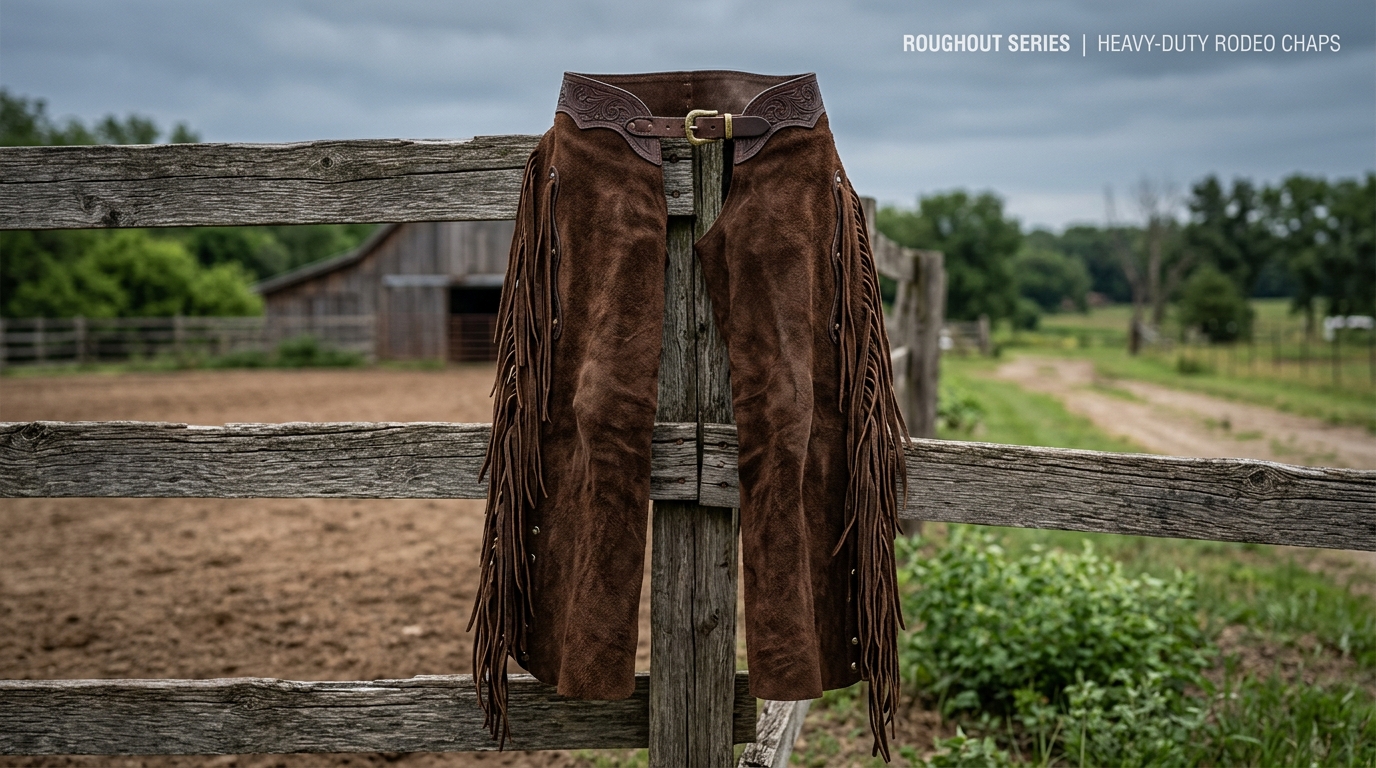
Leather rodeo chaps represent the absolute pinnacle of specialized western athletic gear, engineered specifically to protect riders during the most violent and unpredictable eight seconds in sports. For roughstock athletes—whether riding aggressive bucking bulls, bareback horses, or saddle broncs—standard riding denim offers zero defense against crushing hoof impacts, sharp arena fencing, or the intense friction generated by heavy braided rigging ropes.
In the arena, a professional pair of leather rodeo chaps functions as both tactical body armor and a performance enhancer. Crafted from exceptionally thick, tear-resistant cowhide, this gear absorbs catastrophic friction while locking the rider’s lower body into position. Furthermore, the extensive fringe details are strategically designed to accentuate the rider’s spurring motion, catching the judges’ eyes to maximize scoring.
This comprehensive guide breaks down the structural anatomy, hide selections, and precise fitting metrics required to build a set of chaps that can survive the professional rodeo circuit.
The Essential Silhouette: Batwing Dominance
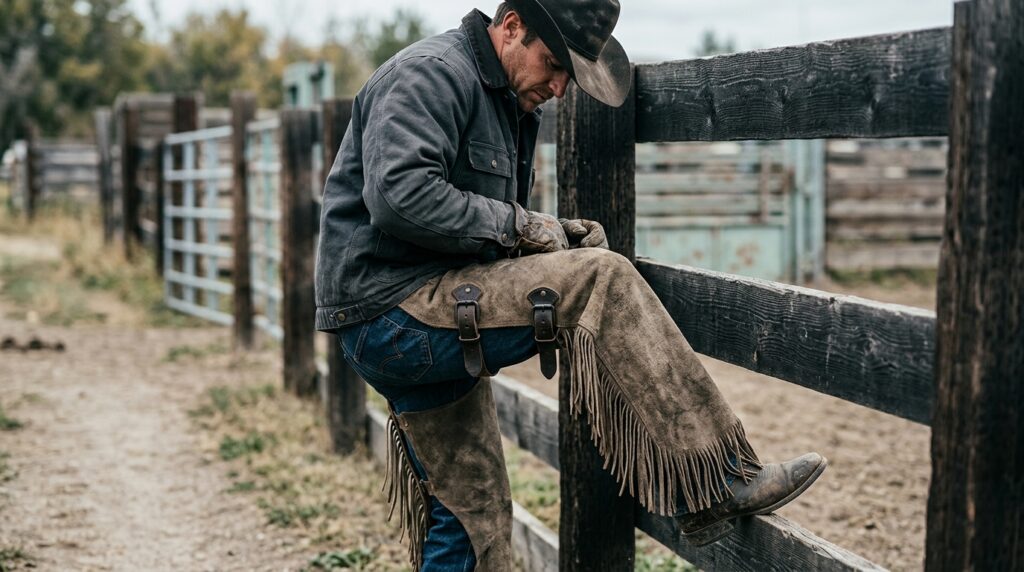
Unlike trail riders or working ranch hands who might choose streamlined shotgun cuts or short chinks, roughstock athletes rely almost exclusively on the full-length batwing profile for their leather rodeo chaps:
- Unrestricted Joint Articulation: Batwing chaps secure tightly around the upper thigh using reinforced leather straps, but the entire lower leg panel remains unfastened. This open-flap design allows for absolute, unrestricted knee flexion. When a bull rider is completely extended or a bareback rider is kicking in time with the horse, the chaps never bind or restrict blood flow.
- The Mechanics of Fringe: The iconic, extra-long leather fringe cascading down the sides of leather rodeo chaps is not merely decorative. As the roughstock animal bucks, the heavy fringe snaps and flows in tandem with the rider’s spurring action. This visual extension creates an optical illusion of wilder, more aggressive movement, which directly translates to higher performance scores from arena judges.
Technical Hide Selection: Grip and Tear Resistance
The survival of the athlete and the structural lifespan of the leather rodeo chaps rely completely on selecting the correct leather finish and weight (typically a dense 4oz to 6oz hide):
- Roughout Suede (The Industry Standard): Roughout leather features the textured, fibrous inner side of the hide facing outward. For roughstock riders, this is critical. The aggressive nap of suede acts like a mechanical lock against the animal’s hide, bareback rigging, or bull rope. This high-friction grip helps the rider maintain a solid center of gravity when centrifugal forces are actively trying to rip them off the animal’s back.
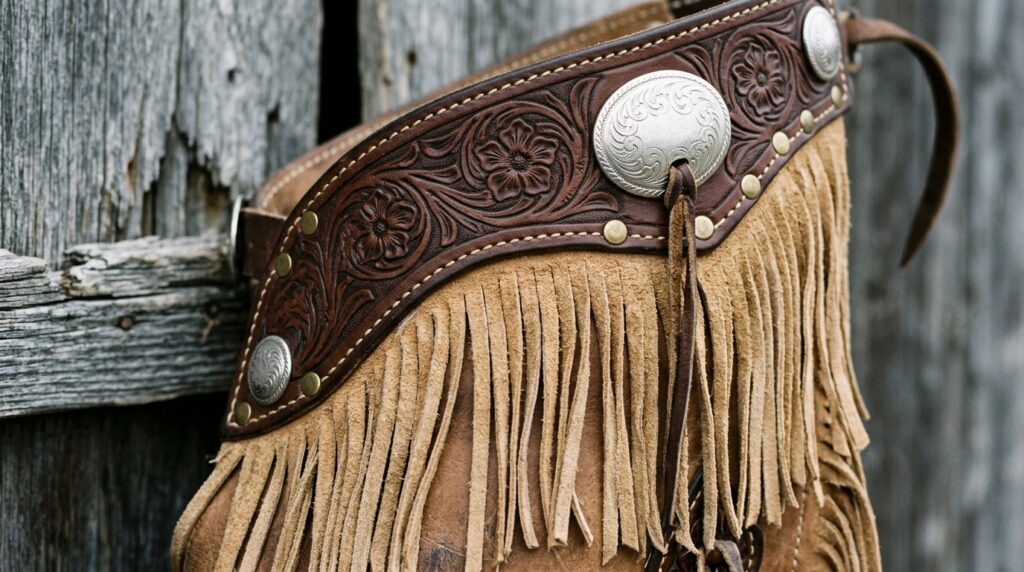
- Smooth Full-Grain Leather (The Show Finish): Smooth leather is frequently utilized for the structural “yoke” (the waistband) and the reinforced side panels. It provides a dense, rigid anchor point that resists tearing and allows for intricate, customized floral tooling and painted details that represent the rider’s personal brand.
Structural Anatomy of Roughstock Armor
A bespoke pair of leather rodeo chaps is built with heavy-duty reinforcements designed to withstand extreme torque:
| Structural Component | Engineering Standard | Arena Defense |
| The Tooled Yoke | A reinforced, double-layered leather waistband wrapping the hips. | Distributes the heavy hanging weight of the chaps evenly across the rider’s pelvis, preventing lower back fatigue. |
| Thigh Buckle Straps | Thick, riveted leather straps utilizing solid brass or stainless steel hardware. | Locks the chap securely to the upper leg so the heavy panels do not dangerously spin backward during a violent bucking rotation. |
| Protective Side Welts | Hidden internal leather strips stitched into the outer seams. | Prevents the heavy stitching thread from blowing out or tearing when scraping aggressively against arena chute gates. |
Routine Maintenance for Extreme Utility
Arena dirt, animal sweat, and rosin (the sticky pine sap bull riders use for grip) will rapidly degrade even the toughest cowhide if left untreated. Implement these strict care steps for your leather rodeo chaps:
- Rosin and Dirt Evacuation: After an event, never pack damp chaps into a gear bag. Allow them to dry completely, then use a stiff wire brush to aggressively sweep caked arena dirt and dried rosin out of the suede nap and fringe strands.
- Yoke Conditioning: Apply a light coat of natural beeswax balm to the smooth leather yoke and buckle straps every few months. This prevents the load-bearing waist sections from drying out and cracking under high tension.
- Preserving Roughout Grip: Never apply oils or leather conditioners to the roughout suede panels of your leather rodeo chaps. Oils will permanently flatten the textured fibers, destroying the critical friction grip you need against the rigging rope.