
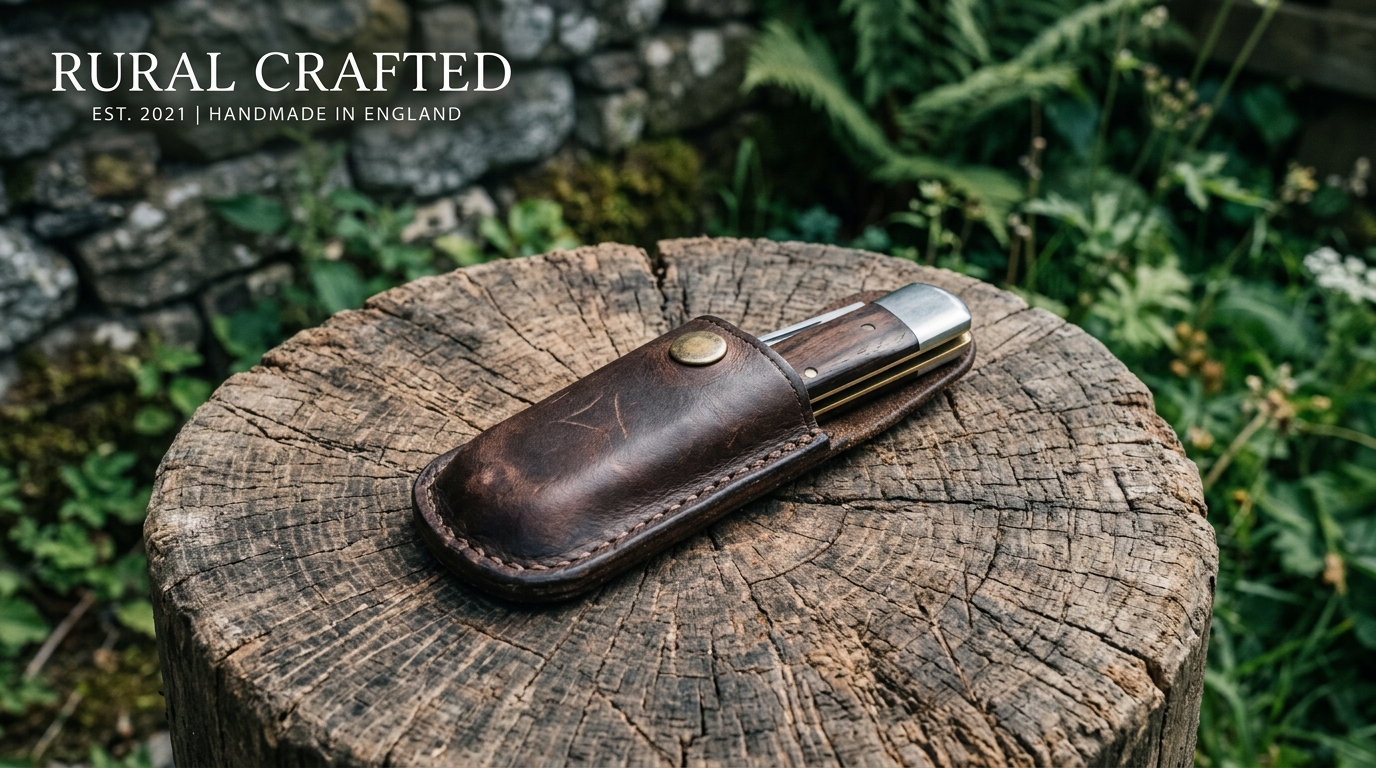
A knife pocket sheath—frequently referred to as a pocket slip—provides a highly efficient storage solution for folding knives and traditional slip-joint blades. Carrying a pocket knife loosely alongside keys, coins, and mobile phones leads to scratched handle scales, damaged device screens, and the accumulation of pocket lint within the knife’s pivot mechanism. A dedicated pocket sheath isolates the tool, ensuring it remains clean, protected, and easily accessible.
Selecting the appropriate pocket sheath requires an understanding of material properties, retention mechanics, and dimensional sizing. This guide details the structural advantages of leather pocket slips, ensuring your everyday carry (EDC) equipment is organized and maintained properly for daily utility.
The Functional Advantages of Pocket Slips
Unlike belt sheaths, which mount externally, a pocket sheath is designed strictly for internal pocket carry. This low-profile method offers specific mechanical and organizational benefits:
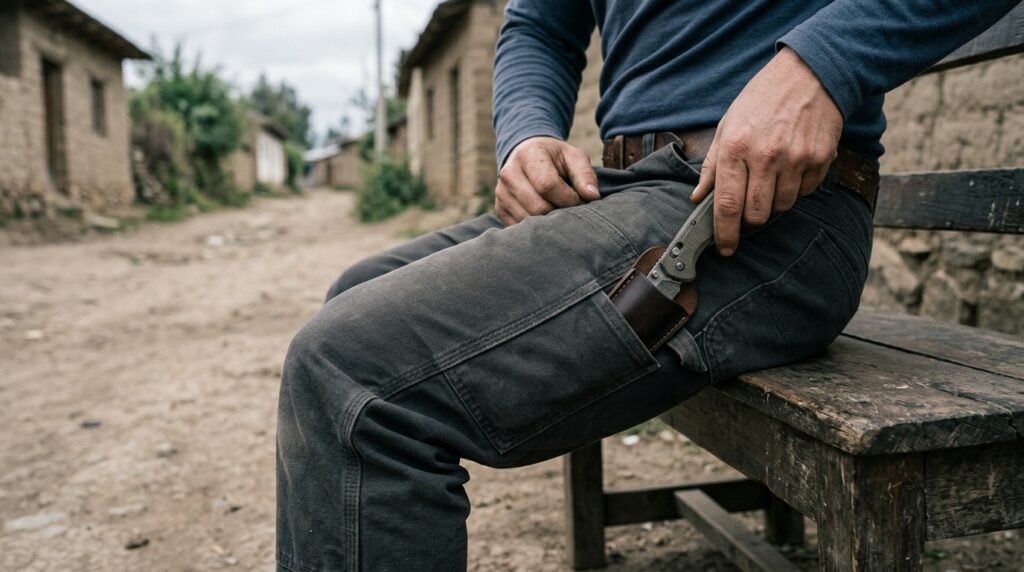
- Vertical Orientation: A well-fitted leather pocket sheath adds just enough width and friction to keep the knife oriented vertically within the pocket. This prevents the knife from turning horizontally and settling uncomfortably at the bottom of the pocket, allowing for a consistent, smooth draw.
- Pivot Protection: Traditional folding knives utilize mechanical pivots that are highly sensitive to debris. A pocket sheath completely encloses the closed blade, preventing dust, dirt, and lint from clogging the internal mechanics.
- Friction Retention: Premium sheaths rely on a tight, custom-molded friction fit. The leather securely grips the handle of the knife, ensuring it does not accidentally slip out when sitting or moving actively throughout the day.
Choosing the Right Material: Full-Grain Leather
The structural integrity of a pocket sheath relies almost entirely on the quality of the hide. Synthetic materials and cheap PU plastics lack the durability and structural memory required for consistent daily use.
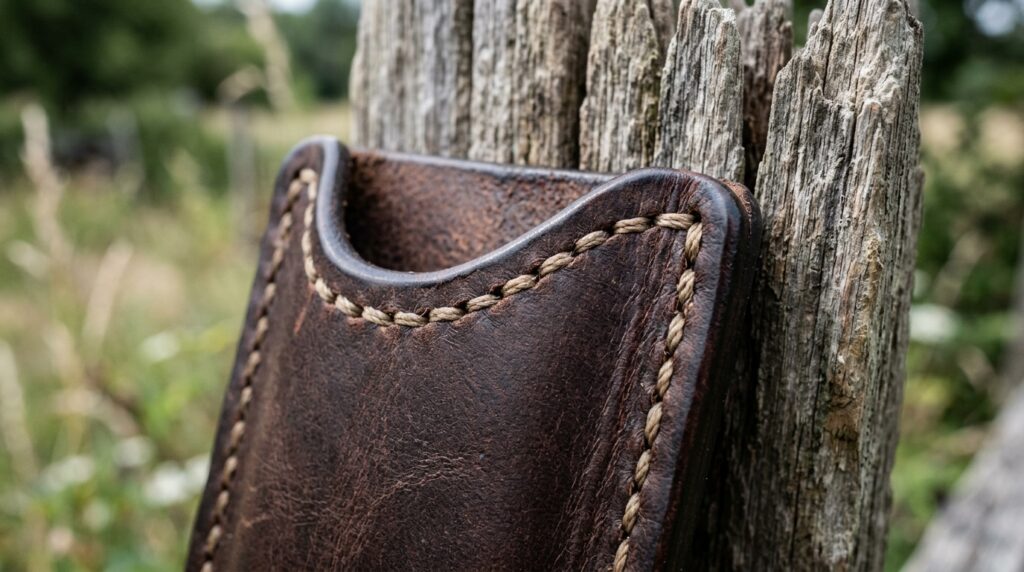
Authentic pocket sheaths are constructed from premium full-grain vegetable-tanned leather. This specific grade of leather is necessary because it is highly dense and possesses a strong structural memory. When a knife is inserted tightly into a vegetable-tanned slip, the leather naturally stretches and permanently molds to the exact contours of the knife handle. Over time, the leather absorbs natural oils and develops a rich patina, softening the exterior while maintaining a rigid, protective interior hold.
Sizing Metrics for a Flawless Fit
A pocket sheath must fit the specific knife with absolute precision. A slip that is too large will fail to retain the tool, while one that is too small will make deployment difficult and eventually tear the stitching.
1.Measure the Closed Length:
Measure your folding knife from end to end while completely closed. The sheath should be slightly shorter than the overall length of the knife, leaving approximately half an inch of the handle exposed at the top so you can easily pinch and draw the tool.
2.Verify Width and Thickness:
Measure the absolute widest part of the knife handle, taking care to factor in any protruding thumb studs, flipper tabs, or pocket clips. The internal capacity of the leather slip must accommodate these elements without tearing the edge thread lines.
3.Execute the Break-In Protocol:
A new, correctly sized leather pocket sheath will feel extremely tight at first. To break it in without over-stretching the hide, wrap your knife in a single layer of wax paper, insert it firmly into the sheath, and leave it overnight. The wax paper provides just enough physical expansion while lightly lubricating the interior leather walls.
Pocket Slip Material & Performance Matrix
To balance bulk against long-term carry protection, map out how premium vegetable-tanned leather compares to alternative pocket storage profiles:
| Material Type | Retention Method | Average Break-In Time | Maintenance Needs | Long-Term Durability |
| Vegetable-Tanned Full-Grain Leather | Custom friction-molded structural fit. | 3 to 7 days of active carry. | Occasional conditioning (every 3 to 4 months). | Lifetime; develops a rich patina and softens with use. |
| Chrome-Tanned Soft Leather | Loose, non-molded flexible enclosure. | Immediate (zero break-in required). | Minimal; prone to over-softening. | Moderate; stretches out over time and loses friction grip. |
| Synthetic Nylon / Kydex Slips | Mechanical snap-fit or loose pocket barrier. | Immediate (unchanging profile). | Wipe or rinse clean with water. | High; completely weather-proof but can scratch delicate handle scales. |
Routine Maintenance for Leather Slips
Because pocket sheaths are constantly exposed to body heat, natural perspiration, and environmental dust, routine maintenance is required to prevent the organic leather from degrading.
- Debris Removal: Once a week, remove the knife and use a dry cotton swab or a quick burst of compressed air to clear out any lint, sand, or dust that has accumulated at the bottom corner of the sheath.
- Leather Hydration: Every three to four months, apply a very light coat of natural beeswax balm or high-quality leather conditioner to the exterior of the sheath. Rub it in gently with a clean microfiber cloth to replenish the natural oils and keep the leather supple. Never over-condition the leather, as making it too soft will ruin the friction-fit retention properties.