
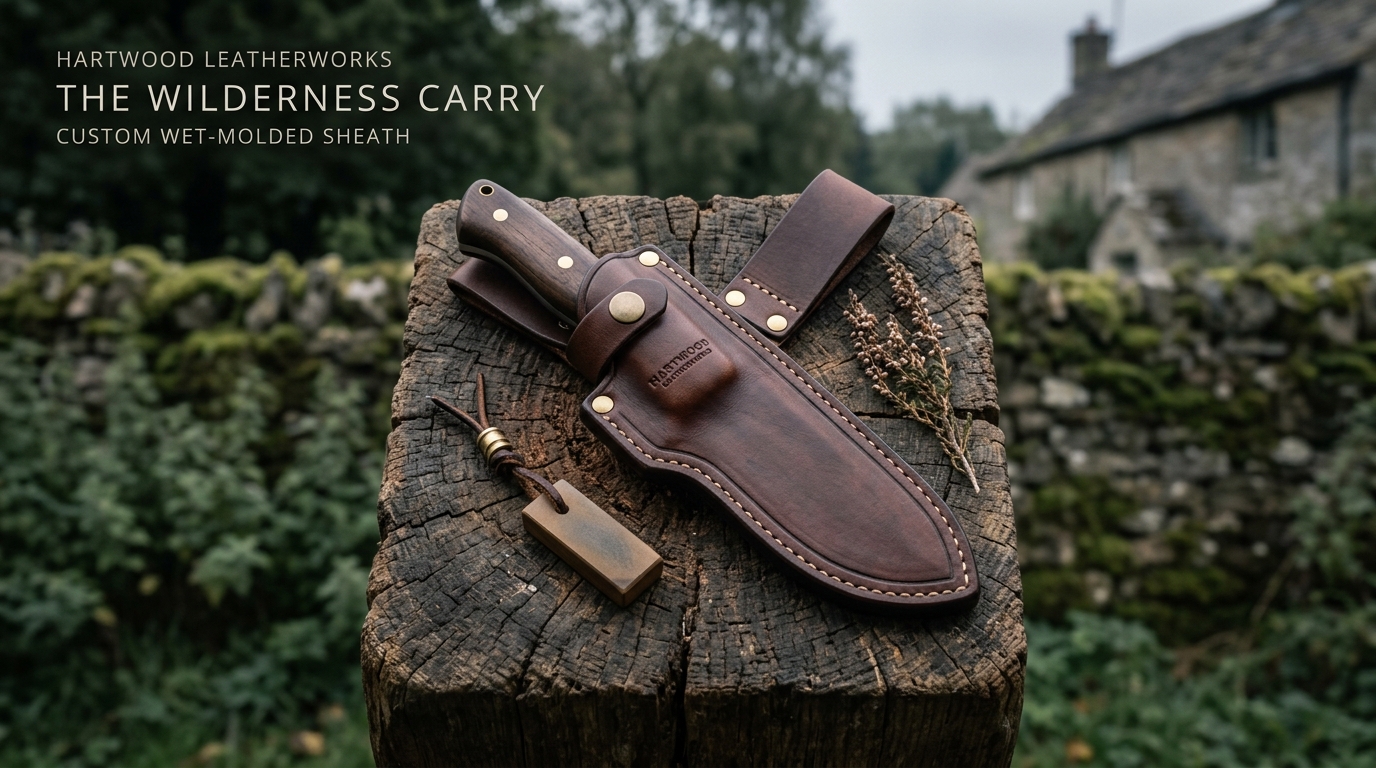
A custom leather knife sheath is the ultimate upgrade for any serious outdoorsman, agricultural worker, or everyday carry (EDC) enthusiast. Factory-produced knives frequently ship with generic, mass-produced sheaths designed to fit a wide range of blade shapes. This results in a loose, rattling fit that can easily allow the knife to slip out during heavy physical labor.
Commissioning or crafting a bespoke leather sheath solves this problem entirely. By utilizing wet-molding techniques and premium materials, a custom sheath acts as a second skin for your specific tool, locking the blade securely in place using exact friction while protecting the sharp edge from environmental damage. This guide details the structural advantages of custom leathercraft, ensuring you understand exactly what to look for when upgrading your primary cutting tool.
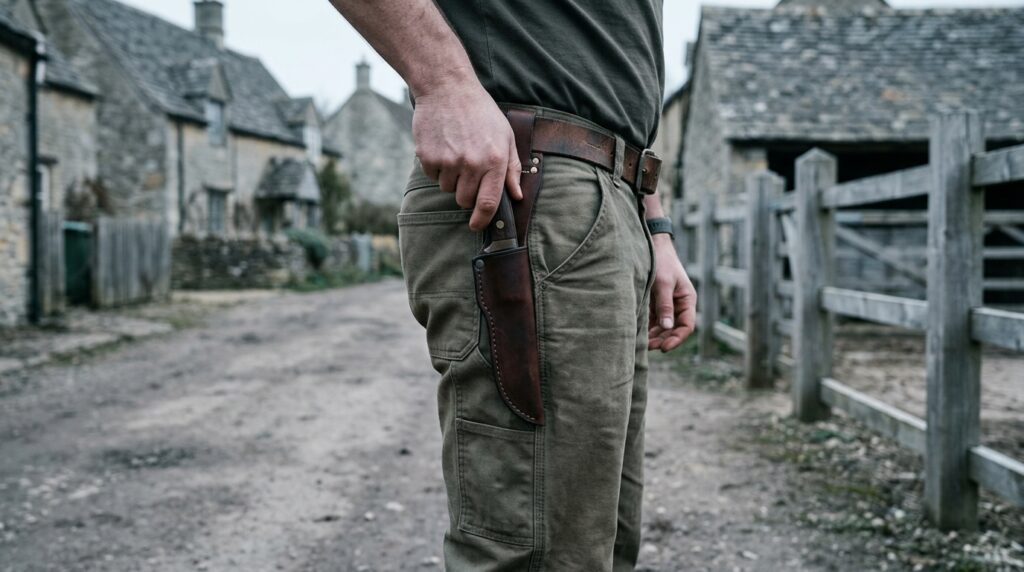
The Structural Advantages of Bespoke Leathercraft
Investing in a custom-built sheath provides significant mechanical and safety advantages over off-the-shelf plastic or machine-stitched nylon alternatives.
- Exact Friction Fit: A custom maker uses your actual knife (or an exact replica) to wet-mold the leather. The wet hide is aggressively pressed into every contour, finger guard, and handle scale. When the leather dries, it permanently memorizes that exact shape, creating a secure “snap” fit that holds the knife firmly without the need for cumbersome retention straps.
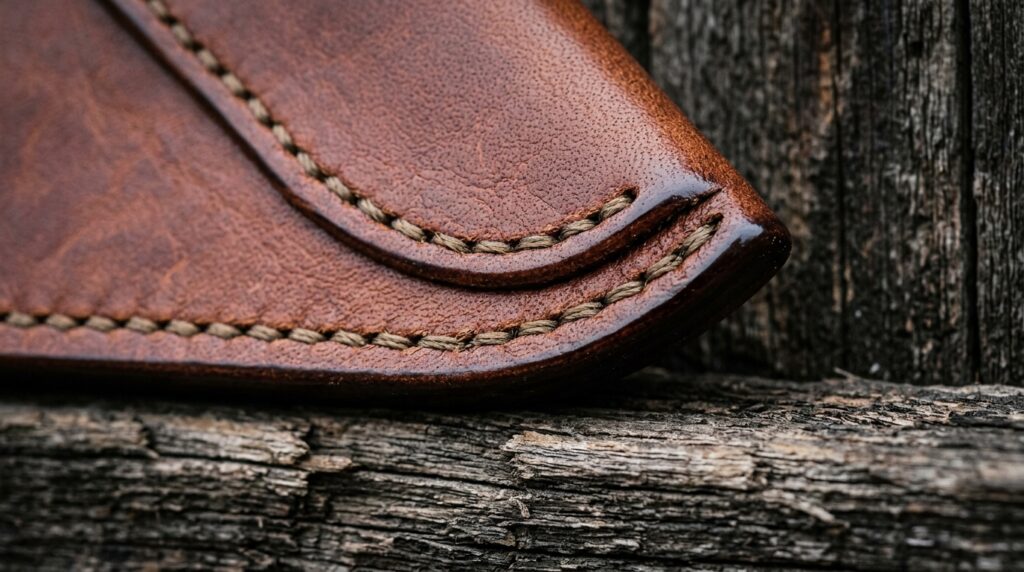
- The Protective Welt: A mandatory safety feature in any high-quality custom sheath is the leather welt. This is a thick, separate strip of leather glued and stitched specifically along the cutting edge profile between the two main halves of the sheath. It prevents the razor-sharp blade from slicing through the stitching and injuring the user when drawing or sheathing the tool.
- Traditional Saddle Stitching: Mass-produced sheaths utilize machine lock-stitching. If one thread breaks, the entire seam unravels rapidly. Custom leatherworkers utilize a traditional hand-sewn saddle stitch, passing two separate needles through the same hole. If a thread is severed in the field, the second independent thread keeps the sheath structurally intact.
Selecting the Correct Leather Grade
The longevity of a custom sheath is entirely dependent on the chemical tanning process of the hide. You must specify the correct leather type when having a sheath built.
Always demand premium vegetable-tanned full-grain leather. This organic tanning process utilizes tree bark and natural tannins, resulting in a dense, highly durable material that easily absorbs water for wet-molding. Furthermore, vegetable-tanned leather naturally develops a rich, protective patina over time.
Critical Warning: You must strictly avoid chrome-tanned leather for knife sheaths. Chrome tanning utilizes heavy chemical salts that are highly corrosive to steel. Storing a high-carbon or stainless steel knife in a chrome-tanned sheath will rapidly cause severe rust, oxidation, and pitting on the blade.
Sizing and Break-In Blueprint
When crafting or breaking in a newly molded custom sheath, specific mechanical steps ensure you achieve perfect retention without binding.
1.Protect the Core Steel:
Before introducing a knife into a newly constructed or tight sheath for fit refinement, wrap your actual knife tightly in a thin layer of plastic wrap or wax paper. This crucial step prevents residual moisture from attacking the steel and causing flash rust.
2.Execute the Strategic Seating:
Firmly seat the wrapped blade fully into the leather pocket. Press the leather using your thumbs around the primary handle contours, finger guards, or the bolster line to emphasize the friction lock mechanism.
3.Complete the Controlled Curing:
Allow the sheath to rest at room temperature with the wrapped blade inside for 24 to 48 hours. Never expose the hide to artificial heat sources like hair dryers, ovens, or direct summer sunlight, as accelerated drying permanently shrinks and cracks full-grain leather fibers.
Specific Carry Orientations
A custom build allows you to dictate exactly how the tool sits on your body, optimizing it for your specific rural, tactical, or daily tasks.
| Carry Orientation | Belt Position | Primary Benefit | Ideal Environment |
| Traditional Vertical | Hip (Dominant Side) | Fast, natural downward draw; handles heavy fixed blades easily. | Open backcountry trails; hunting camps. |
| Scout Carry | Small of the Back (Horizontal) | Completely discreet profile; out of the way when bending or sitting. | Riding in vehicle cockpits or horse saddles. |
| Cross-Draw | Front Waist (Opposite Hip) | Smooth draw using the non-dominant side hand; avoids gear clashing. | Working alongside heavy tool belts or backpacks. |
Maintenance for Lifelong Utility
To ensure your bespoke leatherwork outlasts the knife itself, routine maintenance is required to protect the organic fibers.
- Moisture Management: Never sheath a wet or damp blade. Always wipe the steel completely dry to prevent moisture from absorbing into the leather interior, which can cause mold and blade rust.
- Hydrating the Hide: Every few months, apply a light coat of natural beeswax balm or high-quality leather conditioner to the exterior of the sheath. Massage it in gently with a clean cloth to replenish the natural oils. Do not over-saturate the leather, as making it too soft will ruin the custom friction fit retention.