
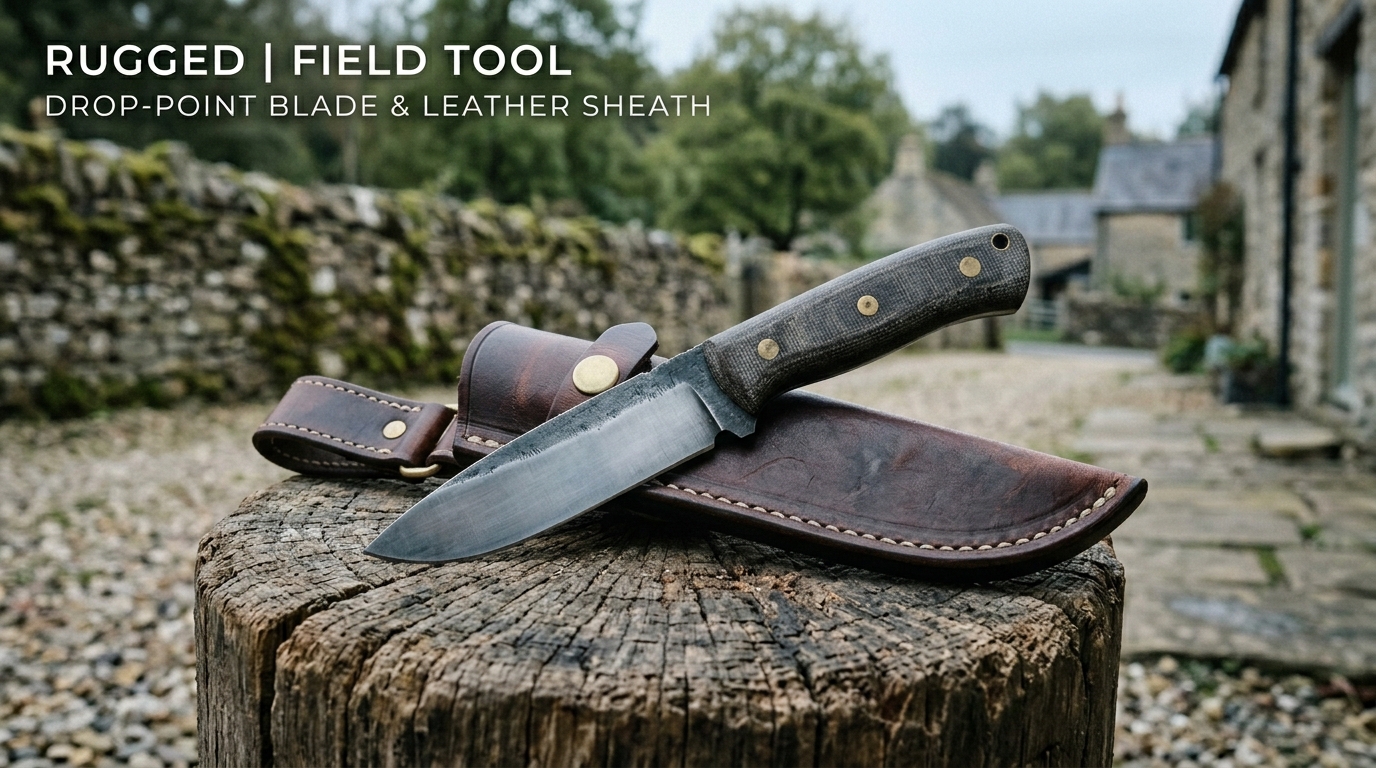
A high-quality hunting knife with sheath setup is the single most critical tool combination an outdoorsman, tracker, or rural agricultural hand can carry. In demanding field environments—whether processing game, clearing thick brush on an unpaved village trail, or managing heavy livestock chores—a pocket knife lacks the structural integrity required for heavy physical labor. A fixed-blade hunting knife delivers absolute structural dependability, while its matching sheath ensures the razor-sharp edge is safely contained and ready for immediate deployment.
Investing in a proper blade-and-sleeve pair requires a firm understanding of steel types, handle ergonomics, and structural retention. This guide details how to evaluate a premium hunting knife setup, ensuring you acquire a tool built for lifelong reliability in the rugged outdoors.
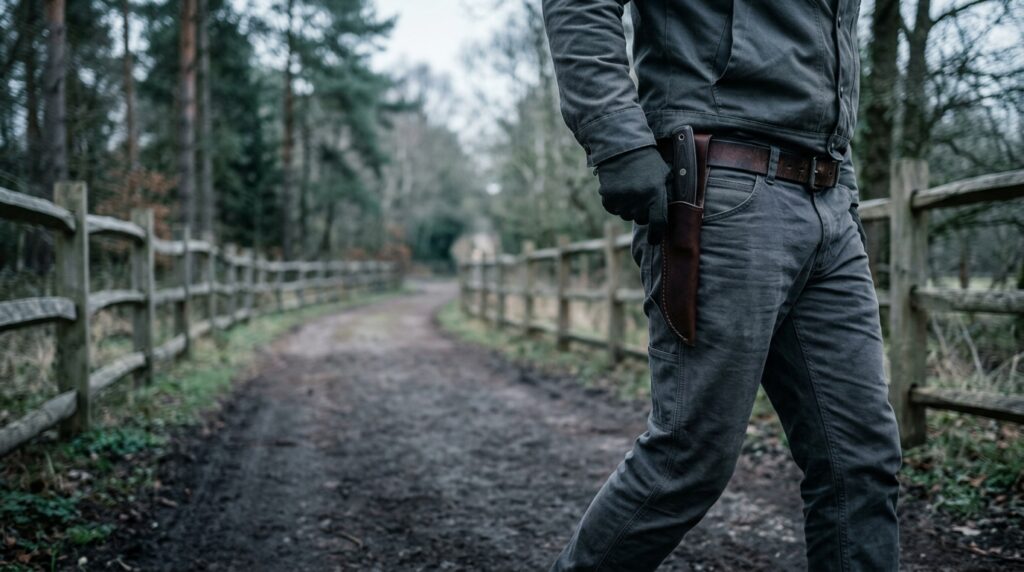
1. Fixed-Blade Ergonomics and Structural Advantages
Unlike folding knives that rely on mechanical pivots, a professional hunting knife with sheath configuration utilizes a rigid, fixed-blade design that offers distinct mechanical advantages:
- Uncompromising Full-Tang Strength: Premium hunting knives feature a full-tang construction, meaning the steel blade extends continuously from the tip all the way through the base of the handle scales. This eliminates weak joints, allowing you to execute heavy prying, batoning, and chopping tasks without the risk of the knife snapping under high tension.
- Hygienic and Easy to Clean: Mechanical folding knives trap blood, dirt, and animal fat within their internal pivot recesses, creating a breeding ground for bacteria. A fixed-blade knife features a seamless profile that can be wiped completely clean with a damp cloth on a village path or by a campfire.
- Instant, Reliable Deployment: When handling unpredictable livestock or clearing thickets, you cannot afford to fumble with a folding mechanism. A fixed-blade hunting knife can be drawn smoothly from its sheath with a single hand, providing immediate utility.
2. Onboarding Lifecycle: Sizing and Workspace Calibration
To guarantee your field setup provides clean ergonomics and remains securely anchored to your waistline during dynamic movement, follow this step-by-step sizing protocol:
1.Verify Handle-to-Blade Weight Balance:
Hold the un-sheathed knife at its primary finger choil or guard. The center of gravity should rest precisely where the blade meets the handle scale. Proper balance ensures maximum wrist fatigue reduction during long processing hours on the trail.
2.Audit Belt Loop Clearance Limits:
Measure the vertical aperture of the sheath’s belt attachment loop against your primary heavy-duty leather work belt. The loop should allow smooth threading while maintaining a tight, vertical lock to prevent the tool from sagging or canting.
3.Test Friction Retention Compliance:
Insert the clean blade into the molded leather channel. Push the handle forward until the wet-molded lip snaps firmly around the finger guard. Fasten the secondary security strap over the bolster to check that it restricts movement completely.
3. Tool Utility: Edge Geometry and Housing Material Matrix
Selecting the right metal alloy and protective wrapper determines how your utility tool performs across various regional microclimates and field operations:
| Tool Component Class | Underlying Material Type | Core Mechanical Advantage | Primary Maintenance Requirement |
| Traditional High-Carbon | 1095 Premium Tool Steel | Extreme impact toughness; exceptionally easy to field-sharpen on standard stones. | Requires a regular light coat of mineral oil to prevent moisture oxidation. |
| Advanced Stainless | S35VN Specialized Steel | Superior rust resistance; outstanding edge longevity in high-humidity zones. | High abrasive resistance requires specialized diamond plates to re-hone. |
| Vegetable-Tanned Cowhide | Full-Grain Natural Leather | Dense, rigid structure that can be custom wet-molded for exact friction-lock fits. | Periodic external application of beeswax balm to preserve hide rigidity. |
4. Essential Structural Components of a Field Sheath
A high-quality hunting sheath is a complex piece of safety equipment. When inspecting a matching sleeve, verify that it includes these mandatory structural features:
The Mandatory Internal Leather Welt
A high-quality custom leather sheath must feature a thick, separate internal leather welt glued and saddle-stitched precisely between the main panels along the cutting edge path. This welt acts as a physical bumper, preventing the razor-sharp blade from slicing cleanly through your structural threads when you draw or house the tool.
Heavy-Duty Saddle Stitching
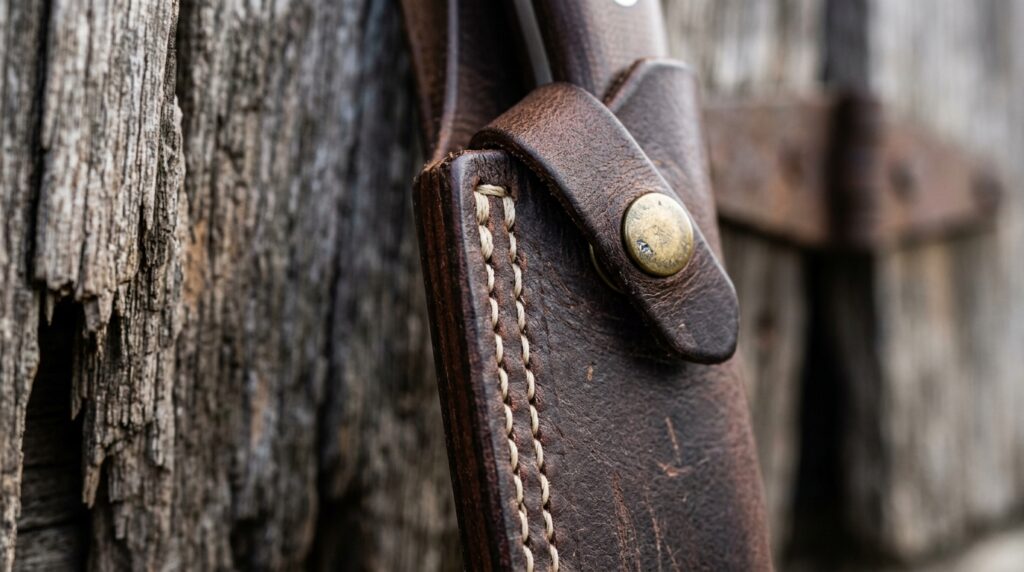
Look for sheaths constructed using a hand-sewn saddle stitch technique, where two independent needles pass through the same hole with heavy waxed thread. If a single thread loop is severed by thick brush or a wire fence snag, the independent opposite thread keeps the entire seam from unravelling.
Secure Friction Lock or Snap Retention
An aggressive custom-molded contour around the bolster, supplemented by a heavy-duty snap strap, guarantees total field security. This setup ensures the knife remains locked flat against your belt frame, preventing it from jostling free or falling into the brush when climbing fences or riding a horse.
5. Routine Maintenance for Lifelong Reliability
Because a hunting knife with sheath combination is exposed to a relentless mix of trail dust, animal fat, and sweat, you must follow strict care protocols to preserve your tool:
The Dry Blade Protocol
Never insert a wet, bloody, or damp hunting knife back into its leather housing. Leather is an organic, porous material that easily absorbs and traps moisture. Housing a wet blade will create a humid microclimate inside the slip, accelerating deep pitting and rust. Always wipe the steel completely clean and dry before sliding it home.
Debris Evacuation
Once a month, remove the knife and use a dry cotton swab or a clean stick to clear out any trail dust, animal hair, or lint that has settled at the bottom tip of the sheath container.
Leather Hydration Guidelines
Twice a year, apply a light coat of natural beeswax balm or high-quality leather conditioner to the exterior of the sheath to keep the hide supple and prevent it from cracking under intense sun exposure.
Retention Warning: Never over-saturate the leather core with soft liquid oils like neatsfoot. Maintaining an absolute baseline structural stiffness in the hide is required to keep the friction-lock retention functioning safely for life.
6. Conclusion: Shielding Your Field Operations
Equipping yourself with a balanced hunting knife with a matching full-grain leather sheath ensures you carry an authoritative shield over your everyday cutting tasks. By choosing a full-tang tool steel that satisfies your regional moisture parameters and keeping the internal leather welt well-maintained, you maximize both workspace safety and edge resilience. Implementing dry housing rules and targeted wax preservation guarantees your trail companion handles unpredictable workloads across a lifetime of rugged utility.
For Leather Spur Your trusted partner for premium, authentic western wear, heavy-duty leather armor, and rugged trail equipment built for the modern ranch hand.