
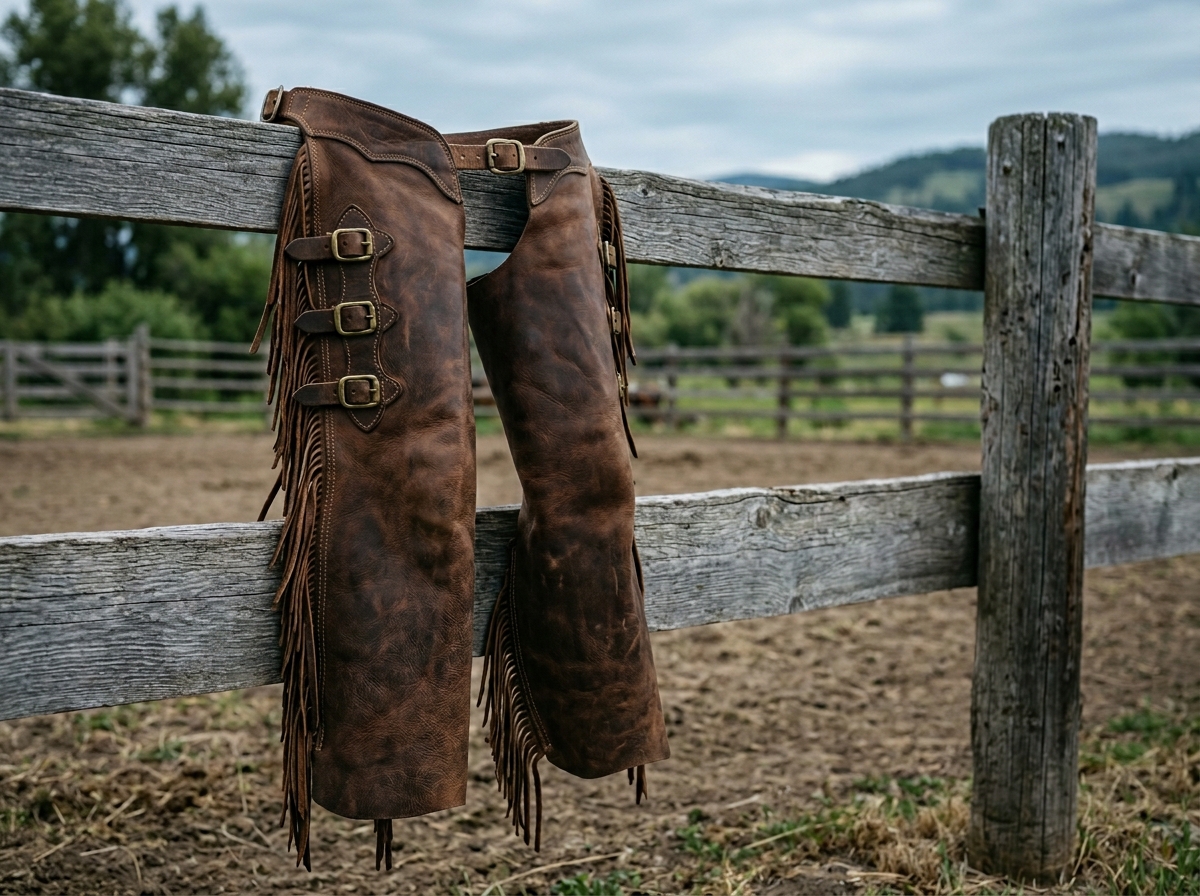
Let’s face it: standard work jeans and light riding breeches might be comfortable, but they offer almost zero physical defense when you are clearing thorny brush, working unpredictable livestock in tight quarters, or spending ten hours straight in the saddle.
That is exactly where a proper pair of female leather chaps comes in. Acting as a flexible, heavy-duty second skin, genuine cowhide shields your legs from deep scrapes, absorbs intense saddle friction, and finally puts an end to that awful stirrup leather pinch.
But here is the catch—you cannot just settle for generic, unisex gear. If you do, you will likely end up with chaps that sag awkwardly at the waist or bunch up painfully behind your knees. You need leg armor that is actually tailored to a woman’s frame. Let’s break down how to choose the right cut, material, and fit so you can ride comfortably and confidently.
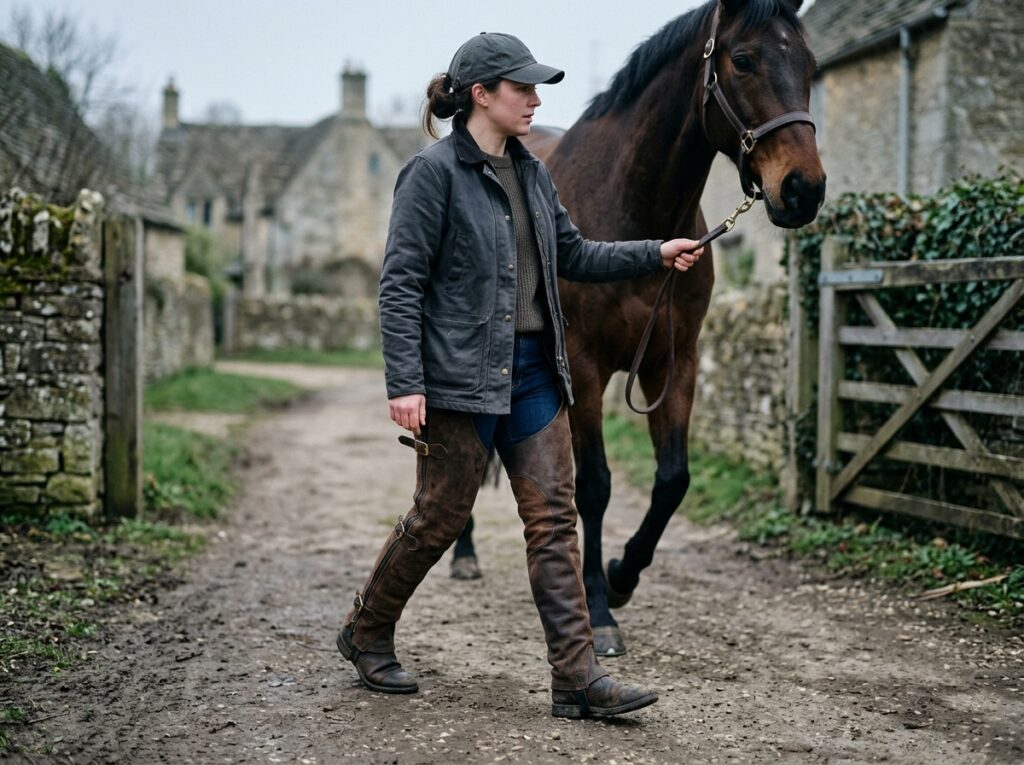
1. Finding Your Cut: Batwing vs. Chinks
When you are shopping for high-quality female leather chaps, your decision usually comes down to two classic western silhouettes. Your choice should depend on your climate and how you move throughout the day:
- The Batwing Cut (Full-Length Defense): This is the undisputed go-to for working ranch hands and long-distance trail riders. Batwings secure snugly around your upper thigh with heavy brass buckles, but they stay completely unfastened from the mid-thigh down to your boot. This open-flap design gives you completely unrestricted knee movement for mounting and dismounting, while still offering 360-degree protection against brush and freezing morning winds.
- Traditional Western Chinks (Lightweight Flexibility): If you ride in hot, humid weather, chinks are your best friend. They are a shorter alternative that stops right below the knee crease, usually finished with long, flowing fringe. They protect your upper thighs from saddle friction and abrasive rope burns, but leave your lower legs completely exposed to the cooling breeze.
2. Choosing Your Leather: Smooth vs. Roughout
The grip you feel in the saddle and the way you clean your gear at the end of the day depends entirely on the finish of the cowhide:
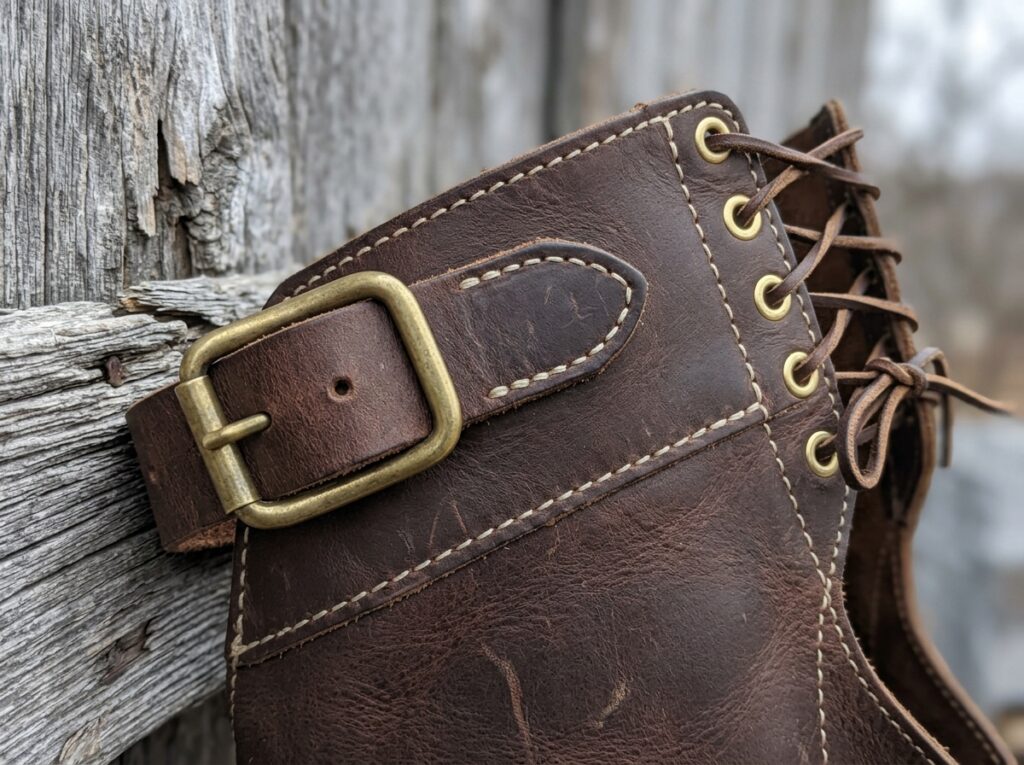
- Smooth Full-Grain Leather: Think of this as your ultimate weather shield. Rain, morning dew, and thick trail mud slide right off the smooth exterior, making it incredibly easy to just wipe them clean with a damp cloth after a tough shift. Over time, smooth leather beautifully contours to your leg and develops a rich, personalized patina.
- Roughout Suede Leather: If you need to stay glued to your seat, go with roughout. This style places the textured, fibrous inner side of the hide facing outward. That natural suede nap acts like sandpaper against your saddle flaps, generating intense friction that helps you keep a deep, stable seat when a horse suddenly spooks or you are navigating a steep, rocky trail.
3. Measuring for a Flawless Fit
Because thick, genuine leather does not stretch much, buying your exact size is absolutely mandatory. Grab a flexible measuring tape and make sure you are wearing your thickest riding jeans and work boots before taking these numbers:
| Measurement Zone | How to Measure It | Why It Matters on the Trail |
| Upper Thigh | Wrap the tape around the absolute widest part of your upper thigh. Add 1.5 to 2 inches to this number. | The extra space ensures your muscles can expand comfortably without binding when your knees are bent deep in the stirrups. |
| Mid-Calf | Measure around the thickest part of your calf muscle right over your jeans. | Crucial if you are buying fitted, full-length cuts; you need to ensure side zippers close smoothly without cutting off your circulation. |
| Outseam Length | Measure straight down the outside of your leg from your belt line to the base of your boot heel. | This guarantees the leather panels and fringe completely cover your ankle joint, keeping gravel and trail debris out of your boots. |
4. Routine Care to Make Them Last a Lifetime
Heavy-duty cowhide absorbs a relentless mix of horse sweat, trail dust, and mud. If you want your female leather chaps to survive decades without drying out or cracking at the stress points, stick to these simple care rules:
- Brush Away the Grit: After a long, dusty ride, let any wet mud dry completely at room temperature. Once dry, take a stiff-bristled horsehair brush and vigorously sweep the crust out of the leather grain, the fringe, and the hardware tracks.
- Condition Your Smooth Hides: Every six months, treat your smooth-grain chaps to a light coat of natural beeswax balm or a high-quality leather conditioner. This replenishes the natural oils, keeping the fibers supple and completely windproof.
- Restore Your Suede (Carefully!): Never apply standard oils, liquid dressings, or heavy paste waxes to roughout suede chaps! Those products will permanently flatten the texture and destroy your saddle grip. Instead, just use a dedicated suede wire brush to lift the loose dirt and restore that grippy nap.