
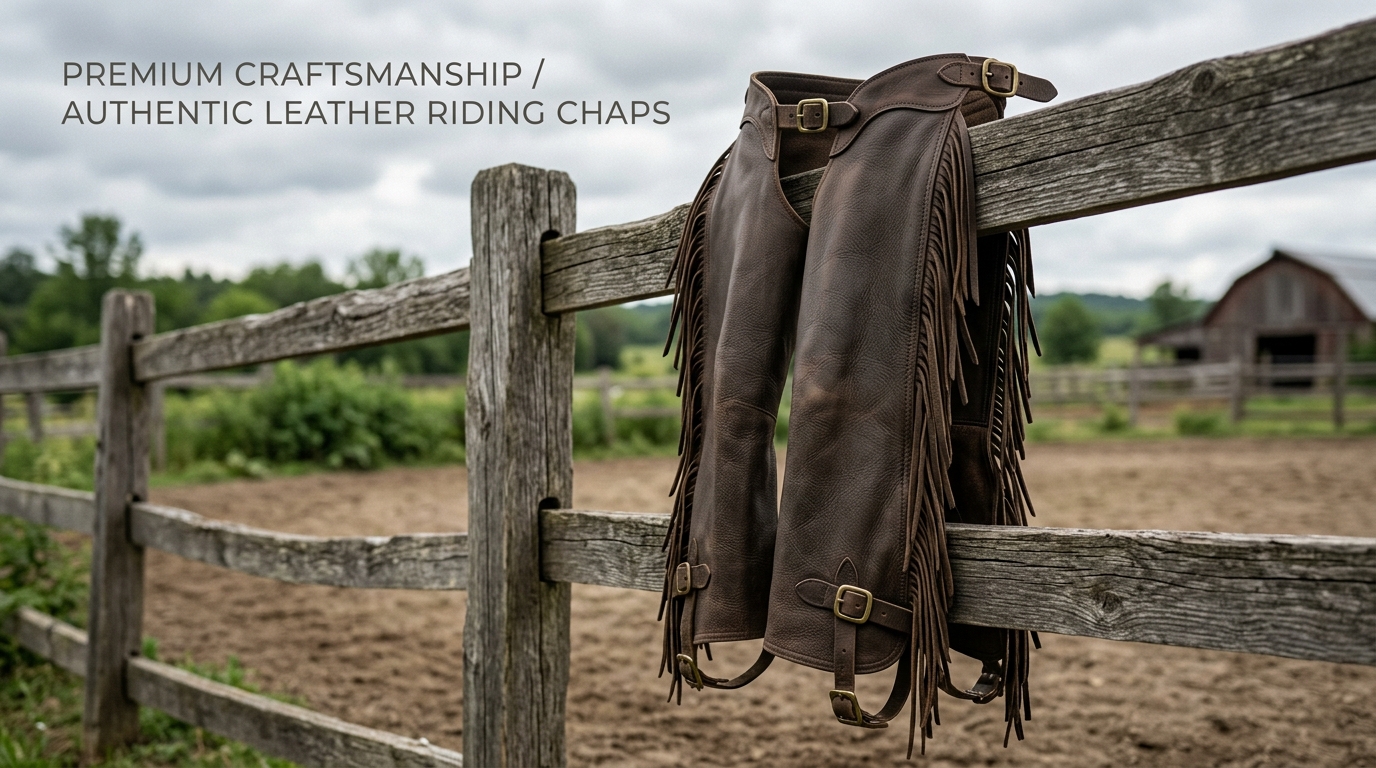
If you spend your days managing farm operations, guiding trails, or working horses in tight quarters, you already know the painful truth: standard denim jeans just can’t handle the stress. The constant friction between your inner thigh and a heavy leather saddle quickly leads to blown-out fabric, chafing, and painful skin pinches from the stirrup leathers.
That is exactly where a dedicated pair of riding leather chaps comes in. Acting as a flexible suit of armor, this traditional western gear shields your legs from jagged barbed wire snags, deflects heavy brush, and insulates you against harsh weather.
If you are ready to upgrade your field gear, here is everything you need to know to choose the right cut, material, and fit for a lifelong pair of chaps.
1. Choosing Your Cut: Full Chaps vs. Half Chaps
The right silhouette depends entirely on your climate, riding discipline, and how you move throughout the day.
- Full-Length Riding Chaps: The undisputed industry standard for western riders and livestock handlers. These extend from your upper hip down to your boot heel, securing at the waist with a heavy-duty belt. They offer 360-degree protection against freezing morning winds, arena sand, and trail debris. You’ll typically see these in two styles: wide, open-sided batwings (which offer great knee mobility and ventilation) and tailored shotguns (which zip tight against the leg for a sleek, windproof fit).
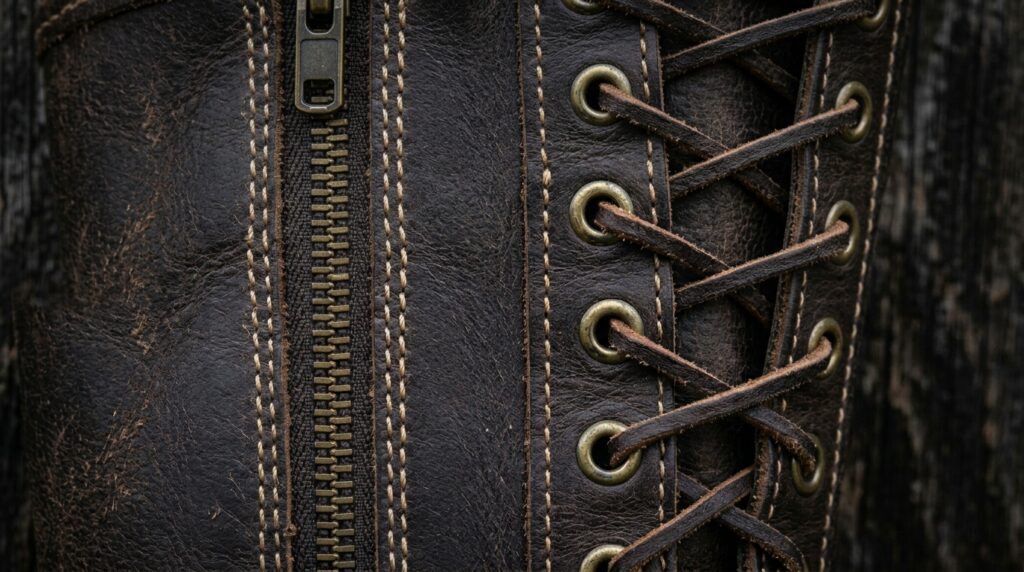
- Equestrian Half Chaps: A minimalist, modern alternative that covers only the lower leg from the knee to the ankle. Secured with a heavy zipper and an under-boot elastic strap, you pair these with short paddock boots. Half chaps are perfect for hot-weather utility and training—they give you the vital inner-calf friction you need against the saddle, while leaving your upper thigh completely open for maximum airflow.

2. Leather Finishes: Smooth vs. Roughout
The grip you get in the saddle and the way you clean your gear depends entirely on the finish of the cowhide you choose:
- Smooth Full-Grain Leather (The Weather Shield): This is your best defense against the elements. Rain, morning dew, and trail mud easily slide right off the smooth exterior, making them incredibly easy to wipe clean with a damp cloth after a long shift. Over time, smooth leather naturally molds to your leg and develops a beautiful, rich patina.
- Roughout Suede Leather (The Saddle Grip): Roughout features the textured, fibrous inner side of the hide facing outward. The natural nap of the suede creates a mechanical lock against your saddle flaps. If you need a highly secure, locked-in seat during sudden livestock movements or rugged trail climbs, roughout provides unmatched friction and stability.
3. How to Measure for a Flawless Fit
Because thick genuine leather doesn’t stretch, buying your exact size is non-negotiable. Always take these measurements while wearing your thickest work denim and riding boots.
| Measurement Zone | How to Measure | Why It Matters |
| Upper Thigh | Wrap the tape around the widest part of your upper thigh. Add 1.5 to 2 inches. | The extra space ensures your leg muscles can expand naturally without binding when you bend your knees in the stirrups. |
| Widest Calf | Measure around the thickest part of your calf muscle over your jeans. | Crucial for half chaps and shotgun cuts so the heavy-duty zipper closes smoothly without cutting off circulation. |
| Outseam Length | Measure from your belt line down the outside of your leg to the base of your boot heel. | Ensures the leather and fringe completely cover your ankle joint, keeping gravel and debris out of your boots. |
4. Routine Care: Making Them Last a Lifetime
Genuine cowhide absorbs a relentless mix of horse sweat, trail dust, and mud. If you want your riding leather chaps to survive decades without cracking at the stress points, stick to these care rules:
Brush Off the Trail Grit
After every dusty ride, let any wet mud dry completely at room temperature. Once dry, vigorously sweep a stiff-bristled horsehair brush over the leather to knock the crust out of the grain, fringe, and zipper tracks.
Condition Smooth Hides
Every six months, apply a light coat of natural beeswax balm or a high-quality leather conditioner to smooth-grain chaps. This replenishes the natural oils, keeping the fibers supple and windproof.
Restore Suede (Without Ruining It)
Never apply smooth leather oils, liquid dressings, or paste waxes to roughout suede chaps. Oiling suede permanently flattens the texture and instantly destroys the friction grip you need in the saddle. To clean them, simply use a specialized suede wire brush to lift the loose dirt and restore the grippy nap.