
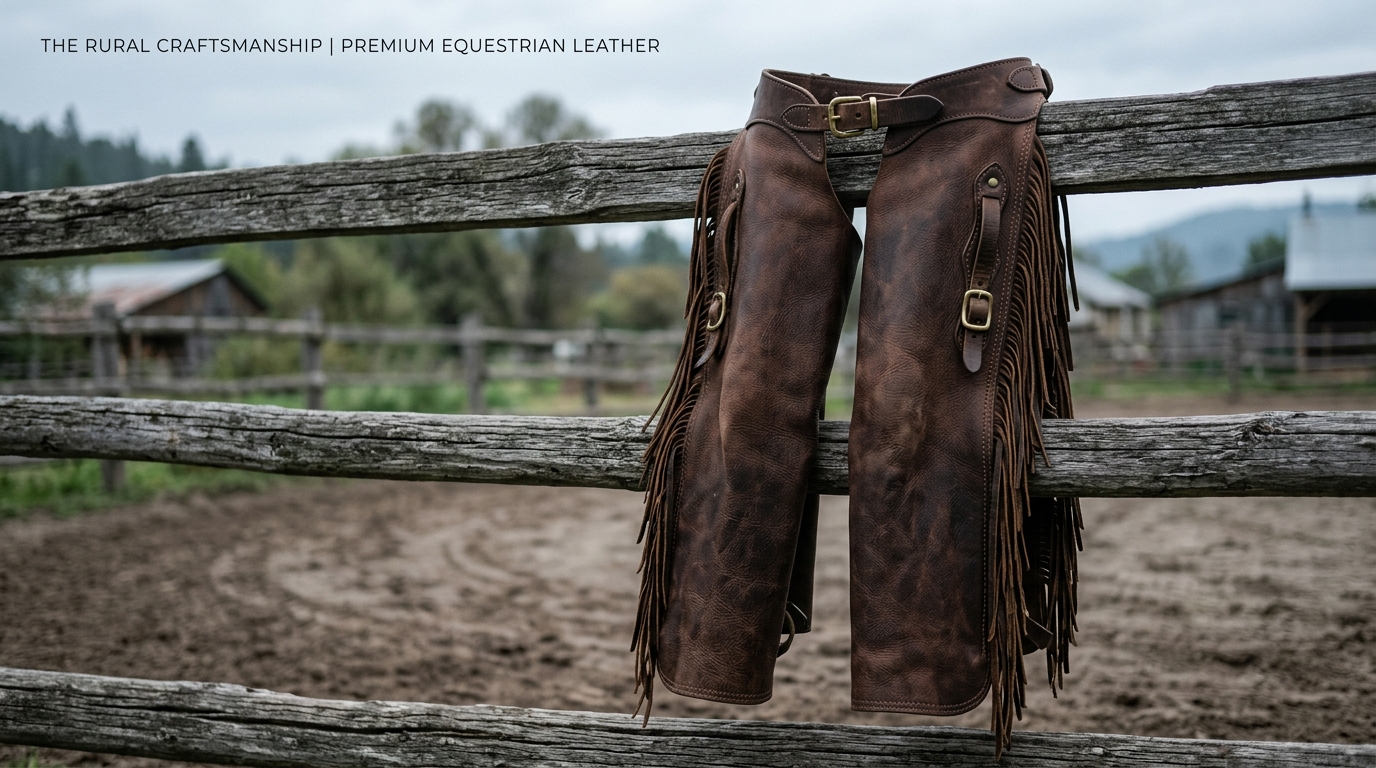
Investing in high-quality equestrian leather chaps is one of the most critical decisions a dedicated rider can make to improve their performance, comfort, and safety in the saddle. When working horses on a rural farm, training in a riding pen, or navigating a dusty trail, standard denim jeans or casual trousers fail to provide adequate durability. The constant friction between a rider’s inner leg and the rough surface of a leather saddle leads to rapid clothing wear and painful skin pinching.
A dedicated pair of genuine equestrian leather chaps acts as a heavy-duty, flexible shield. They eliminate saddle sores, absorb intense structural abrasion from trail brush or corral fencing, and provide the precise lower-body grip required to maintain an athletic, balanced seat. This comprehensive guide details the material variations, traditional silhouettes, and precise sizing metrics required to choose the optimal leg protection for your riding discipline.
1. Technical Silhouette Options: Full Chaps vs. Half Chaps
When exploring different equestrian leather chaps for sale, you must choose a cut profile that aligns with your specific riding discipline, climate, and mobility requirements.
  [FULL-LENGTH CHAPS] ──► Waist-to-boot 360° shield. Ideal for Western, ranch labor, & winter tracking.
  [EQUESTRIAN HALF CHAPS] ──► Knee-to-ankle inner sleeve. Ideal for English disciplines & hot-weather utility.
- Full-Length Equestrian Chaps: Full-length equestrian leather chaps extend completely from the upper thigh down to the boot heel, securing at the waist with a heavy-duty adjustable belt. This traditional style provides comprehensive 360-degree protection, making them the industry standard for Western riders, ranch hands, and trail explorers. Full chaps enclose the entire leg, offering maximum cold-weather insulation and defending the rider from dense, thorny undergrowth or loose arena sand. They are available in open-sided batwing styles for maximum knee flexibility or zipped shotgun styles for a streamlined, aerodynamic fit.
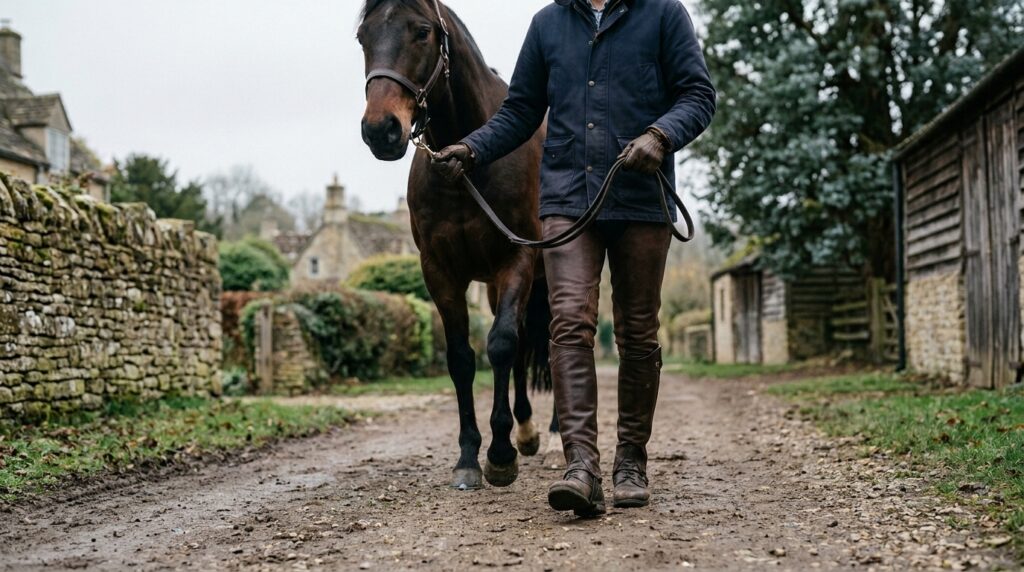
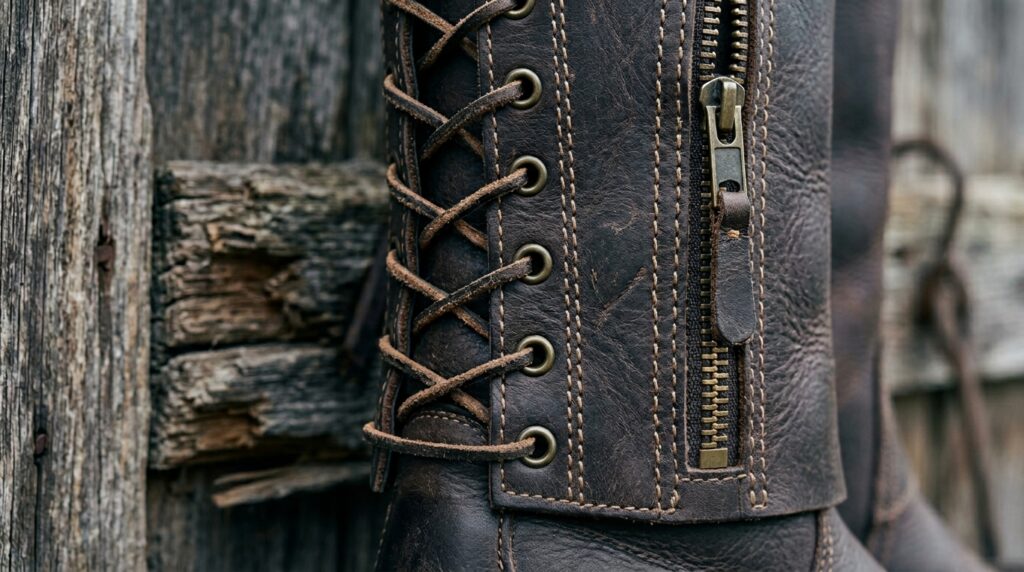
- Equestrian Half Chaps: Half chaps provide a modern, minimalist alternative that covers only the lower leg from the knee down to the ankle. Secured with a full-length zipper and a protective under-boot elastic strap, half chaps are designed to be paired with short paddock boots. This configuration is exceptionally popular in English disciplines, young rider training, and hot-weather utility tasks. They offer the necessary lower-leg inner protection and stirrup leather grip of a full chap while keeping the upper thigh completely open for maximum airflow and cooling.
2. Fitment Pipeline: Sizing Protocol for an Anatomical Fit
Because genuine leather lacks synthetic elasticity, obtaining exact physical measurements while wearing your standard thick riding breeches or denim jeans is mandatory before acquiring your chaps. Follow this sequential adjustment routine to guarantee safety:
1.Calculate Thigh Expansion Clearance:
Wrap a flexible measuring tape around the widest part of your upper thigh muscle. For full chaps, you must add 1.5 to 2 inches to this baseline. This extra spacing ensures your muscles can expand comfortably when your knees are bent deeply in the stirrups.
2.Verify Widest Calf Circumference:
Measure the thickest part of your calf muscle directly over your riding pants. This calculation is absolutely critical for half chaps and shotgun cuts, ensuring the heavy-duty zipper can close smoothly without restricting lower limb circulation.
3.Map the Outseam Drop Length:
Measure from your natural waistline (for full chaps) or knee crease (for half chaps) down to the base of your boot heel. This precise alignment ensures the leather completely covers the ankle joint while riding, keeping trail debris, twigs, and gravel entirely out of your footwear.
3. Tool Utility: Material Finish Performance Matrix
The overall performance and longevity of your equestrian leather chaps rely completely on the specific cut and finish of the cowhide:
| Leather Finish Class | Structural Surface Profile | Primary Functional Advantage | Recommended Maintenance Pipeline |
| Smooth Full-Grain | Polished, tight outer hide facing outward. | Superior weather and mud defense; rain, morning dew, and trail mud slide off easily. Developed a rich, professional patina. | Condition every 6 months with natural beeswax balm or high-quality leather cream. |
| Roughout Suede | Textured, high-friction fibrous nap facing outward. | Maximum mechanical saddle friction; locks the lower leg into position during jumping or sudden horse movements. | Brush regularly with a specialized brass suede wire brush to lift compressed fibers. |
4. Routine Maintenance for Premium Riding Leather
Genuine cowhide absorbs a relentless combination of horse sweat, trail dust, and leather saddle oils. To ensure your equestrian leather chaps do not dry out, crack, or rot along the seams, implement these strict care steps:
Brush Off Trail Grit
After every ride along a path or inside a sandy arena, allow any wet mud to dry completely on the leather surface. Use a stiff-bristled horsehair brush to vigorously sweep the dried crust out of the leather grain, fringe, and zipper tracks. Always brush in the direction of the seams to protect the structural threads from premature abrasive wear.
Condition Smooth Hides
Every six months, apply a light coat of natural beeswax balm or high-quality leather conditioner to smooth-grain equestrian leather chaps to keep the organic fibers supple and completely windproof against intense sun and rain exposure.
Restore Suede Nap
For roughout suede chaps, never apply standard paste waxes, liquid dressings, or heavy conditioning oils. Applying these compounds will permanently flatten the suede texture, instantly destroying the high-friction grip required to ride safely. Use a specialized suede wire brush to lift the loose fibers and restore the high-friction grip required for a stable seat.
5. Conclusion: Future-Proof Your Riding Protection
Equipping yourself with a properly configured set of equestrian leather chaps balances traditional heritage utility with robust, dependable leg defense. By selecting between a comprehensive full-length western silhouette or a streamlined knee-high half chap, and verifying explicit muscle expansion tolerances over your riding gear, you maximize lower-leg stability while insulating your tools from rapid wear. Implementing material-specific, heat-free clearing strategies ensures your physical barrier remains quiet, supple, and completely operational for years in the saddle.
For Leather Spur Your trusted source for premium, high-performance equestrian wear, handcrafted leather armor, and rugged trail protection engineered for the dedicated modern horseman.