
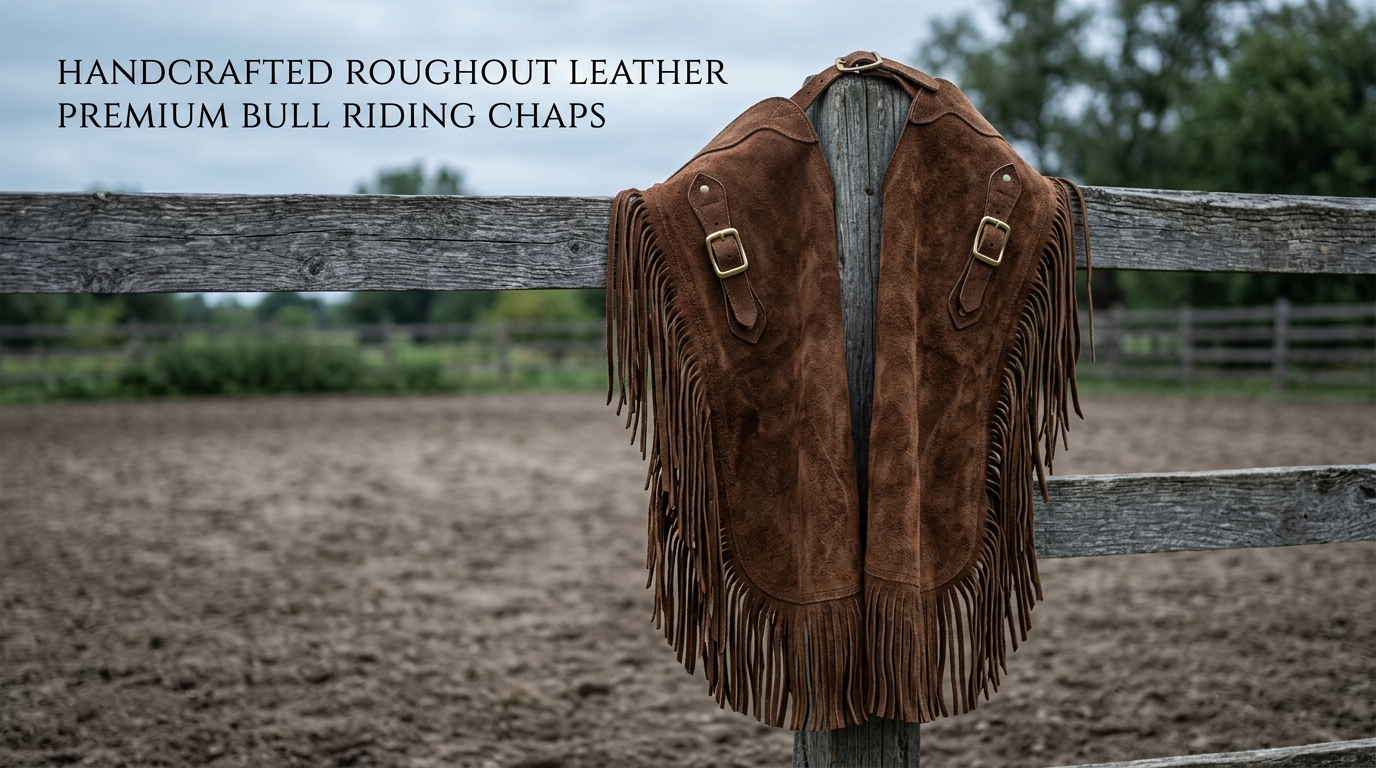
In the sport of roughstock rodeo, outfitting yourself with authentic leather chaps bull riding gear is a fundamental safety requirement. When mounting a 2,000-pound bucking bull, standard denim riding jeans fail completely under the intense physical forces. The extreme friction generated by the animal’s hide, combined with the risk of impact against steel bucking chutes, demands a specialized, heavy-duty protective barrier.
Unlike casual trail-riding gear, professional rodeo chaps are highly engineered personal protective equipment (PPE). They are built to absorb direct abrasions from horns and hooves, lock the rider firmly into their rigging via texture friction, and flex seamlessly across complex athletic maneuvers. This comprehensive guide details the structural components, material specifications, and fitment rules required for professional bull riding chaps.
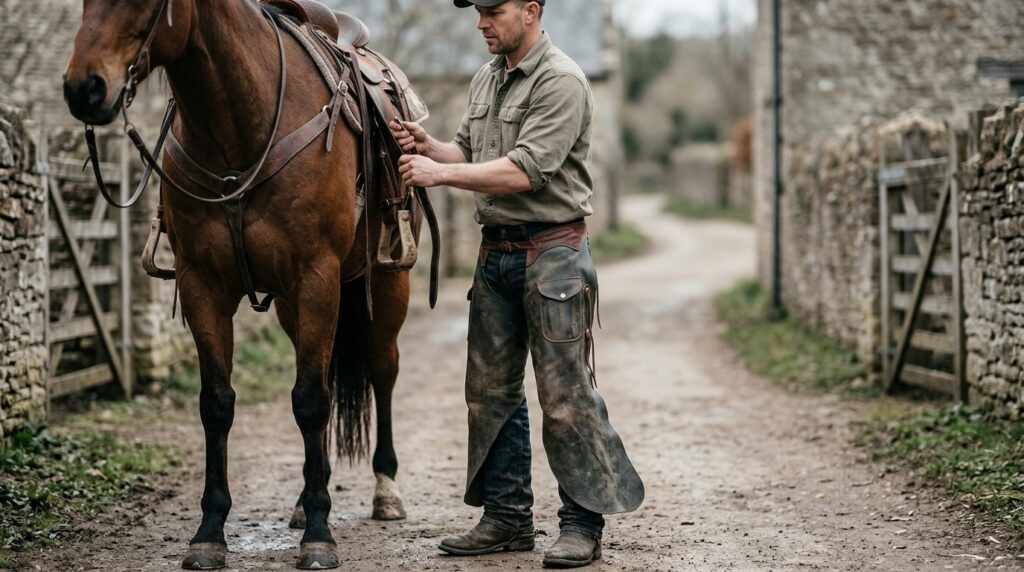
1. The Mechanical Architecture of Roughstock Chaps
Every design element of a professional bull riding chap is optimized for survival and performance inside the arena box:
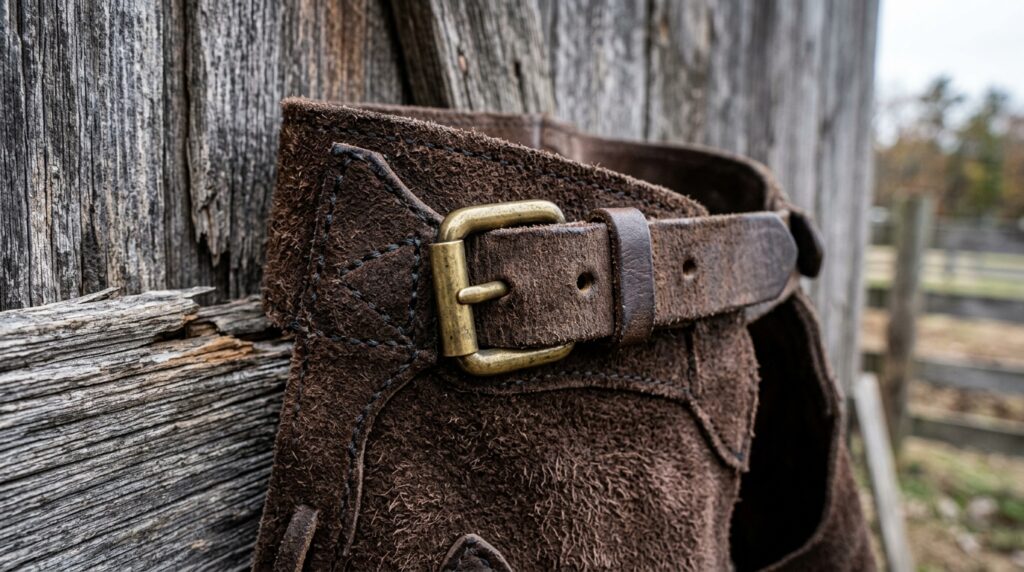
- Intense Friction Adhesion: The vast majority of professional bull riding chaps are manufactured using heavy roughout (suede) cowhide. The textured nap of roughout leather creates high-friction adhesion when pressed against the bull’s hide and the rider’s rope rigging. This tactile grip assists the athlete in maintaining a deep, stable center of gravity during erratic spinning motions.
- Impact and Cleat Defense: The sheer thickness of premium cowhide distributes the focal energy of a blunt blow—such as an accidental stomp or a hard collision against the arena fence—minimizing deep tissue bruising and severe skin lacerations.
- The Weighted Fringe Matrix: The thick leather fringe along the outer seams serves an operational purpose. The fringe adds physical weight to the loose edges of the leather, ensuring the protective batwing panel immediately pulls back down into a defensive position after an explosive spurring motion.
2. Fitment Pipeline: Sizing for Arena Armor
Because professional bull riding chaps must remain perfectly stabilized under extreme stress, guessing your size will result in gear that either restricts your circulation or slides out of place during a ride. Follow this precise sizing protocol:
1.Calculate Thigh Flex Capacity:
Wrap a flexible measuring tape around the absolute widest section of your upper thigh while wearing your standard arena riding jeans. You must add 1 to 1.5 inches to this baseline number to allow your thigh muscles to swell and flex comfortably without binding when you squat on your rigging.
2.Anchor the Spinal Waistband:
Measure your natural waistline just above your denim belt loops. Authentic bull riding chaps bypass front buckles, utilizing an adjustable rear leather lacing system (conchos) to clamp the main chassis tightly against your spine for impact stabilization.
3.Map the Outseam Drop Length:
Measure from your top belt line straight down the outside profile of your hip to the absolute bottom of your boot heel. The leather panel must cover your boot top cleanly to prevent trailing dirt, manure, and arena arena dust from packing into your footwear.
3. The Batwing Silhouette: Tailored for Bull Riding
When evaluating leather chaps bull riding gear, the traditional batwing cut is the mandatory industry standard. Batwing chaps secure tightly around the upper thigh using a series of reinforced leather straps and heavy-duty brass buckles. However, from the mid-thigh downward, the leg panels are left completely unfastened. This creates a wide leather flap that flares outward dramatically during an 8-second ride.
This specific open-leg design serves two vital functions:
- Unrestricted Joint Articulation: It provides a 100-percent free range of motion for the knee and hip joints, allowing the rider to flex, spur, and adjust their lower body instantly without the leather binding or trapping the leg.
- Visual Scoring Metrics: The wide, flaring panel exaggerates the visual tracking of the rider’s legs, helping rodeo judges accurately score the aggressiveness and control of the rider’s spurring action.
4. Professional Arena Chaps Specification Matrix
To choose a chassis built for professional roughstock configurations, verify how the base material weights and fastening structures match up against the performance metrics:
| Specification Metric | Top-Grain Finished Leather Base | Heavy Roughout Suede Leather Base | Lightweight Faux / Performance Blends |
| Material Weight Class | Standard 3oz to 4oz premium hide cuts. | Heavy-duty 4oz to 6oz dense cowhide panels. | Light 2oz to 3oz composite layers. |
| Saddle Friction Rating | Moderate; slick finish can slide against wet hair if un-rosined. | Maximum; natural textured nap locks directly into the bull’s hide and rope rigging. | Low; relies almost entirely on secondary decorative overlays to establish traction. |
| Blunt Impact Absorption | Good deflection against fencing; vulnerable to surface scratching. | Elite protection; dense fiber matrix cushions stomp energy and chute collisions. | Minimal; fails to prevent deep tissue bruising from direct impacts or arena cleats. |
| Stress-Point Security | Single-stitch lines; vulnerable to tearing at the upper thigh buckles. | Double-reinforced overlays with hand-riveted copper hardware fasteners. | Glued or light machine stitching; splits easily under intense bucking tension. |
5. Routine Maintenance for Heavy Arena Hide
The structural integrity of your arena leather depends heavily on consistent post-ride maintenance, especially when exposed to a mix of sweat, arena dirt, and livestock grease:
Debris Evacuation
After a ride, allow any wet arena mud to dry completely. Use a stiff-bristled horsehair brush to vigorously sweep the dried crust out of the roughout grain, fringe strands, and buckle straps. Always brush with the grain lines to preserve the hide’s stitching structural integrity.
Maintaining the Roughout Nap
Bull riding chaps must never be treated with smooth leather oils, liquid dressings, or paste waxes. Applying these compounds will permanently flatten the suede texture, instantly destroying the high-friction grip required to ride safely. Use a specialized steel suede brush or brass-wire brush to lift the crushed fibers and restore the high-grip nap.
Stress Point Inspection
Regularly check the structural stitching along the upper thigh strap attachments and the rear lacing conchos. If any thread begins to fray under the immense tension of roughstock riding, have it repaired with heavy-duty waxed saddle thread before backing into the bucking chute again.
6. Conclusion: Lock Down Your Arena Safety
Investing in specialized bull riding batwing chaps provides a critical line of defense against the punishing impacts and extreme stress of the roughstock arena. By opting for a heavy roughout suede base cut, implementing explicit upper thigh muscle expansion clearance, and avoiding smooth texturizing waxes, you protect your body while maximizing your judging visibility. Consistent clearing of post-ride arena mud and target wire brushing ensures your protective shell handles explosive spurring mechanics across a demanding competitive lifecycle.
For Leather Spur Your trusted source for authentic, arena-grade rodeo PPE, custom western chaps, and rugged trail protection engineered for the serious stock contractor and athlete.