
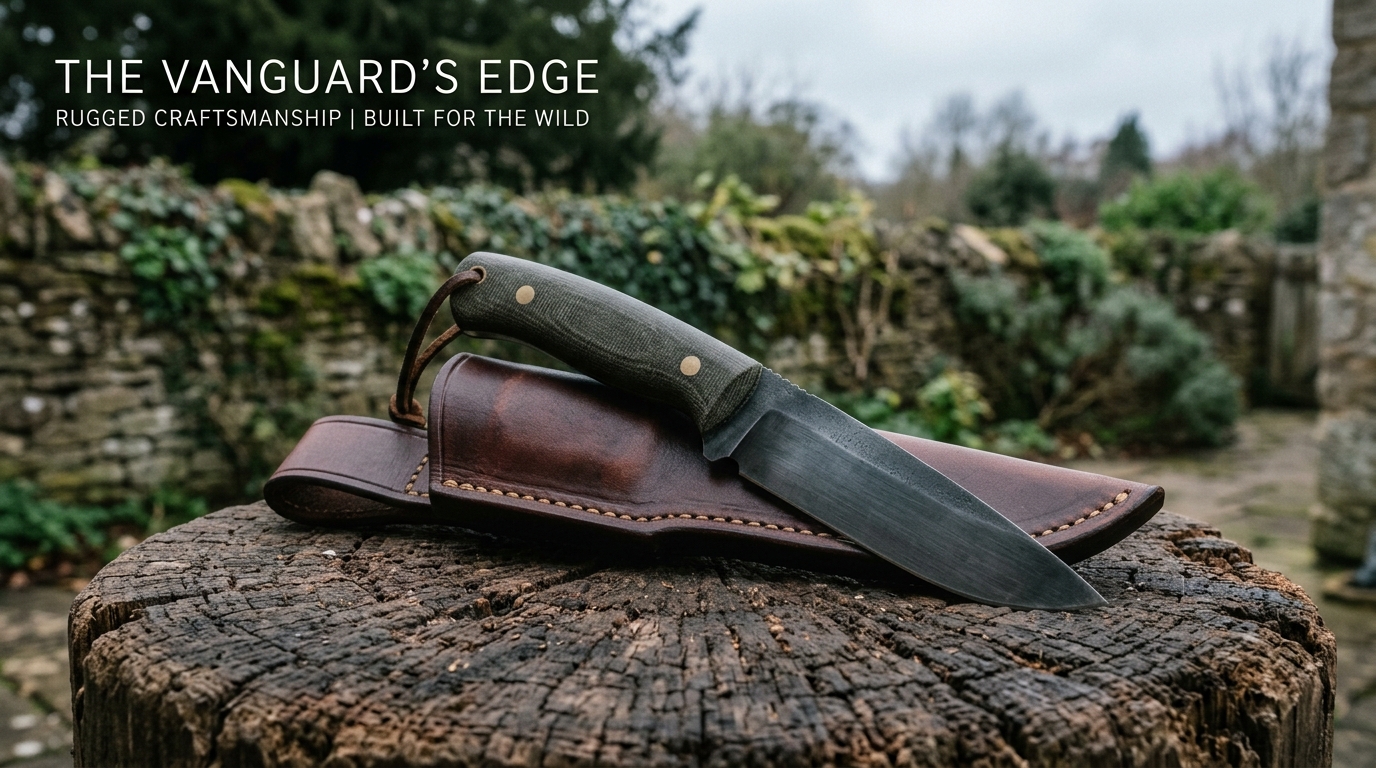
A custom knife sheath is the single best investment you can make to protect your premium blade, ensure your own safety, and seriously elevate your everyday carry setup. While a factory-issued cover might do the bare minimum to keep a blade temporarily covered, it rarely offers the precise retention, structural durability, or personalized comfort of a high-quality custom knife sheath.
Whether you are a bushcraft enthusiast, an everyday carry (EDC) minimalist, or a hunter preparing for the backcountry, choosing the right custom knife sheath is just as important as selecting the steel itself.
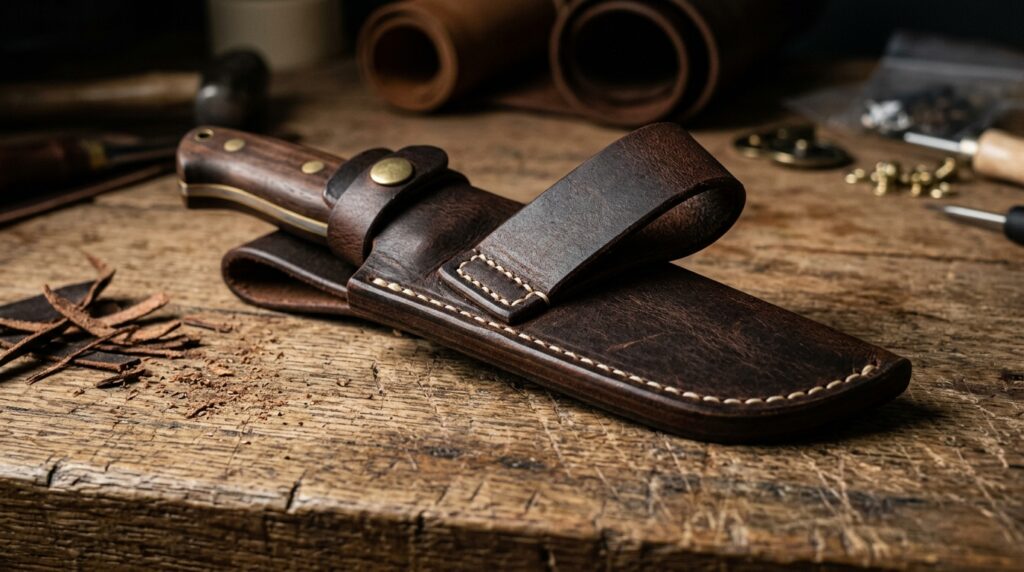
The Great Material Debate: Leather vs. Kydex
When designing a bespoke custom knife sheath, your first and most critical decision is selecting the foundational material. The vast majority of designs for a custom knife sheath fall into two distinct camps: traditional leather or modern thermoplastics.
| Material | Best For | The Pros | The Cons |
| Traditional Leather | Classic hunting knives, heirloom blades, and traditional bushcraft tools. | Exceptionally silent to draw; highly comfortable against your body. | Requires regular oiling; absorbs moisture in heavy rain. |
| Modern Kydex | Tactical blades, survival setups, and hard-use outdoor tools. | Completely waterproof; immune to chemical damage; offers a satisfying locking “click.” | Can scratch highly polished blade finishes over time. |
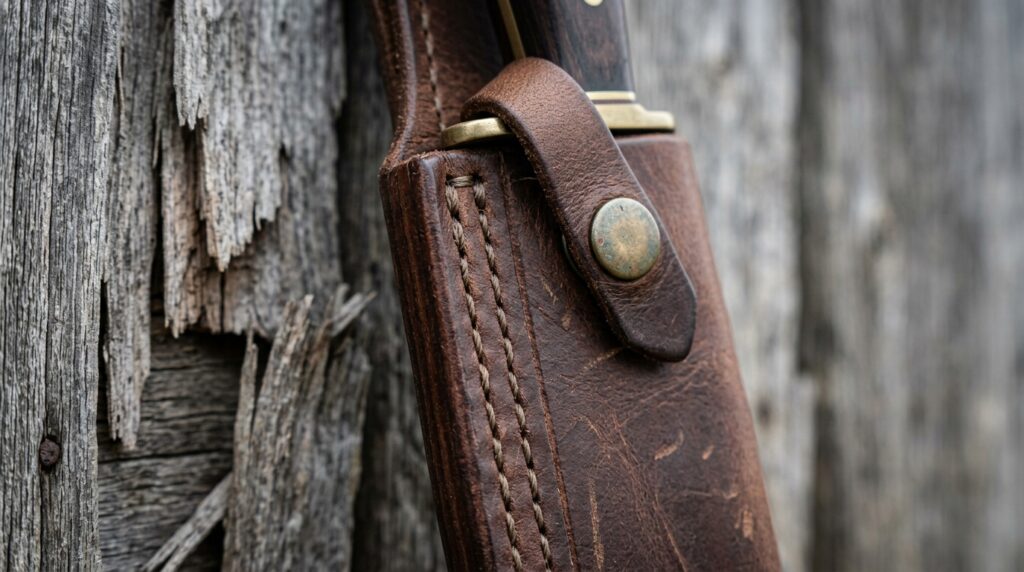
Why Precise Fitment Matters
The core purpose of any custom knife sheath is to strike the absolute perfect balance between secure, unwavering blade retention and rapid, intuitive deployment. When you rely on a generic, mass-produced cover, the loose tolerances inevitably allow the knife to rattle and shift around as you move. Over time, this constant internal friction not only dulls your meticulously sharpened edge against the interior walls, but it also creates a severe physical safety liability. If you are navigating steep terrain, climbing over trail obstacles, or moving quickly through dense brush, a poorly fitted sheath risks the knife slipping out entirely—which can lead to catastrophic injury or the permanent loss of an expensive tool.
A master craftsman eliminates these risks by shaping a custom knife sheath around the exact, millimeter-specific dimensions of your unique knife model.
For a traditional leather custom knife sheath, the maker utilizes techniques like wet-molding—pressing the damp leather directly against the blade and handle so that it dries into a rigid, glove-like fit. Furthermore, they pay careful attention to the “welt.” This is a thick, independent strip of leather placed strategically between the stitched outer layers. The welt acts as an internal bumper, preventing your razor-sharp edge from ever touching or slicing through the heavy-duty structural threads during insertion or withdrawal.
Conversely, in a thermoplastic or Kydex custom knife sheath, the manufacturing process involves extreme heat and vacuum pressure to mold the shell exactly to the knife’s unique physical profile. The retention mechanism is adjusted precisely around the finger guard, handle scales, and the primary bevel. This meticulous engineering ensures the knife stays firmly locked in place—even when violently shaken or worn completely upside down on a tactical rig—yet releases smoothly and instantly the moment you apply deliberate thumb pressure to the sheath’s ramp.
Final Thoughts
At the end of the day, a premium knife is ultimately only as reliable, safe, and accessible as the housing system you use to carry it. Spending top dollar on high-end blade steel is completely counterproductive if the tool is trapped inside a flimsy, unsecure scabbard that you cannot trust.
By opting to invest in a dedicated custom knife sheath, you instantly gain access to a tier of superior, weather-resistant materials, highly personalized attachment options (ranging from horizontal scout carry to modular MOLLE backpack clips), and a flawless mechanical lockup that mass-produced, off-the-shelf alternatives simply cannot duplicate.
Take the time to honestly assess your specific outdoor environment, evaluate your daily physical movements in the field, and pick the foundational material that best matches your workflow. Whether you prefer the timeless, silent elegance of wet-molded leather or the rugged, waterproof indestructibility of tactical Kydex, commission the perfect custom knife sheath to complete your gear system and give your blade the professional-grade home it truly deserves.