
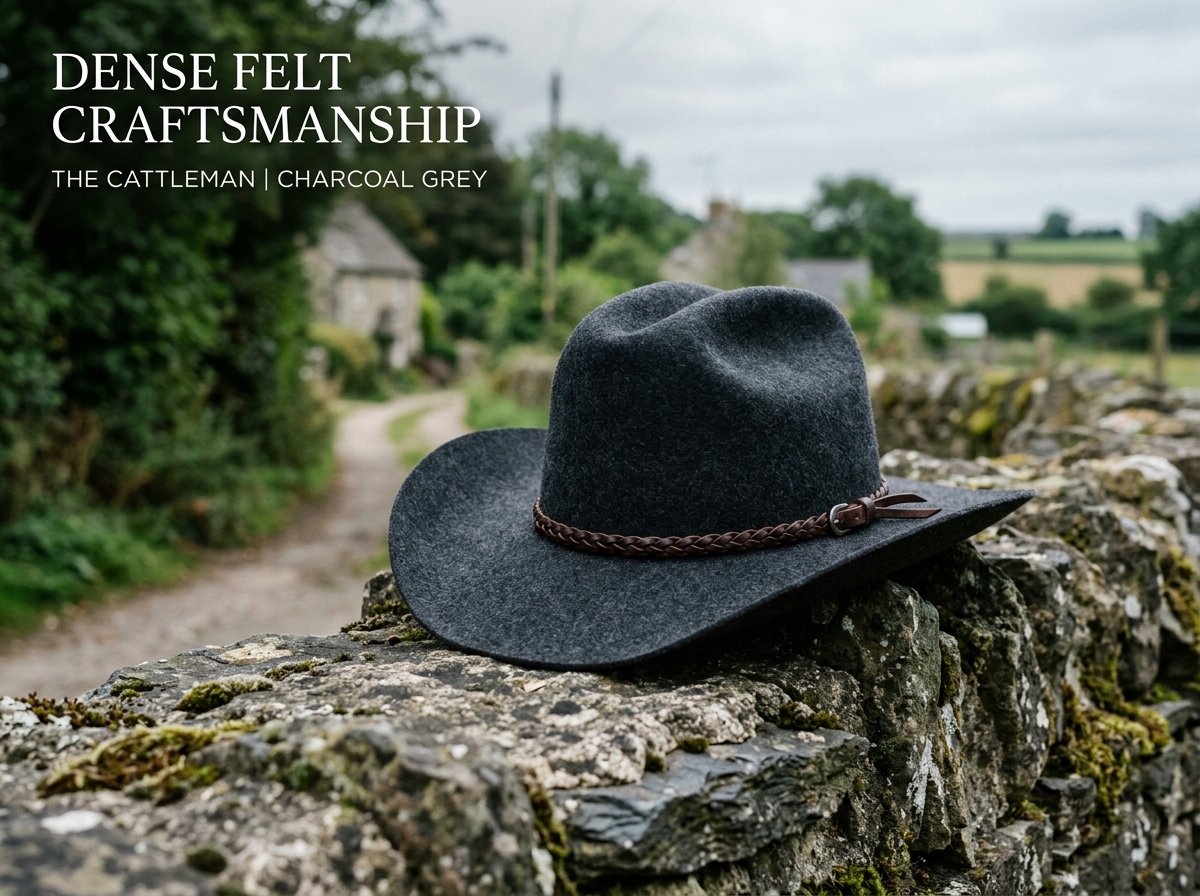
Investing in premium cowboy hats felt headwear is an absolute necessity for riders, ranch hands, and wilderness trackers who manage daily outdoor operations across demanding rural landscapes. Spending long shifts in open, wind-swept pastures, working cattle in close quarters, or walking along an unpaved village trail exposes your face, eyes, and neck to intense weather transitions. While lightweight straw options provide basic summer shade, a high-density felt hat functions as a structural personal shelter, keeping freezing winter winds, morning dew, and heavy downpours entirely off your brow.
However, selecting high-utility western headwear requires a clear understanding of felt hair blends, traditional crown creases, and specific fitting metrics. Buying cheap synthetic alternatives usually results in a floppy crown that warps permanently under moisture or loses its wind resistance. This comprehensive guide details the functional mechanics, material attributes, and routine maintenance protocols necessary to ensure your cowboy hats felt selection delivers proven durability and authentic western utility in the great outdoors.

Technical Material Grades: The X-Factor Breakdown
The overall weather defiance, shape retention, and structural lifespan of traditional cowboy hats felt gear rely completely on the specific blend of animal fibers used in the felting process. Authentic hats are traditionally graded by an “X” rating system stamped inside the crown:
- Premium Wool Felt: Typically representing the baseline entries, pure wool felt is an excellent, budget-friendly option for light utility work and cold-weather insulation. Wool felt blocks wind completely but requires careful handling when wet to avoid shrinking.
- Fur-Felt Blends (Rabbit & Beaver Hides): High-end cowboy hats felt models incorporate tight matrices of rabbit and beaver fur fibers. Beaver fur is uniquely adapted for aquatic life, meaning its microscopic fibers are completely hollow and coated in natural water-repellent proteins. As the “X” rating increases (e.g., 10X up to 100X), the percentage of beaver fur rises. This dense interlocking structure produces a hat that is incredibly lightweight, completely waterproof, and capable of springing back into its exact shape after a heavy mountain storm.
Iconic Crown Creases and Their Purpose
The specific shapes and indentations on the top of premium cowboy hats felt crowns serve distinct functional purposes designed to handle different environmental challenges:
The Cattleman Crease
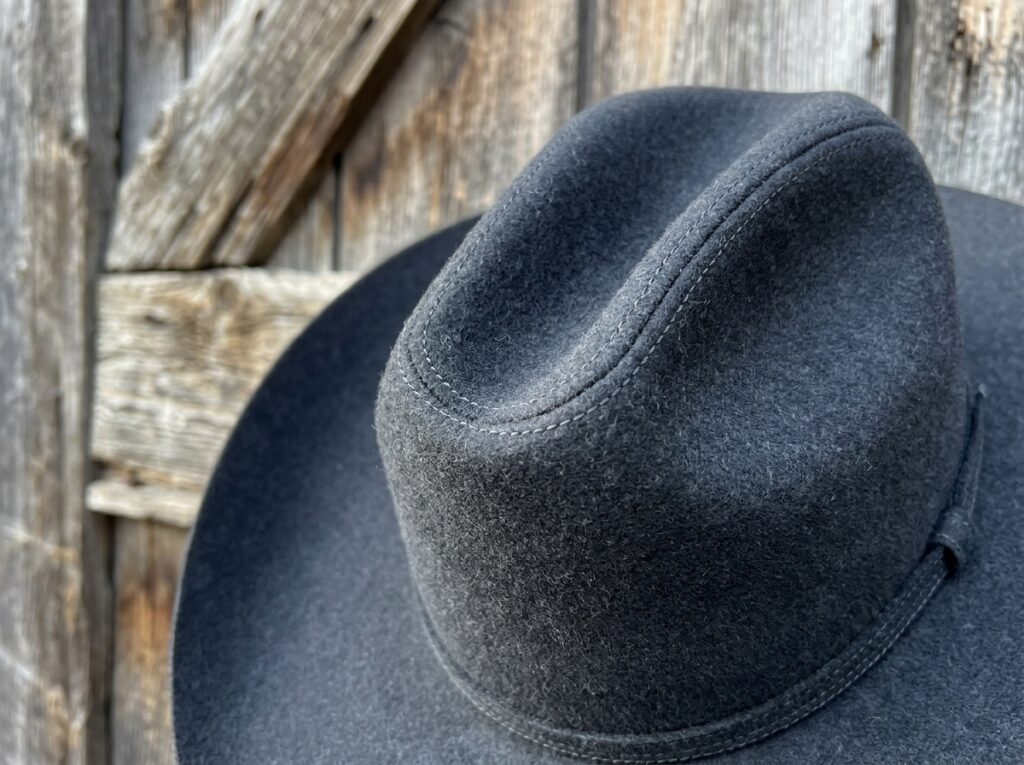
This is the most recognized silhouette in western heritage, featuring a single deep crease directly down the center of the crown flanked by two parallel side dents. The Cattleman crease was engineered specifically for high-wind environments; the deep central groove lowers the overall wind resistance of the tall crown, ensuring your hat remains firmly anchored to your head during a sudden valley trail storm.
The Pinch Front Crown
The Pinch Front design features a sharp teardrop or diamond-shaped indentation on top, with two tight pinches at the very front of the crown. This layout is highly ergonomic; the sharp front pinches create a natural grip point for your fingers, preventing you from repeatedly grabbing and warping the delicate brim edge when adjusting or removing the headwear.
Sizing Metrics for a Flawless Friction Fit
Because a high-quality fur-felt hat is a dense piece of equipment, achieving a secure fit is mandatory to prevent it from sliding down or causing pressure headaches during a long shift:
| Fitting Component | Design Mechanism | Field Utility |
| Fractional Measurement | Precision sizing based on the exact circumference of your skull just above the ears (e.g., 7 1/4, 7 1/2). | Prevents the hat from wobbling or shifting when running or working livestock. |
| Internal Leather Sweatband | A genuine sheepskin or soft calfskin lining running along the inner rim. | Absorbs heavy perspiration during manual labor while contouring naturally to your brow over time. |
| The Stampede String | An adjustable leather chin cord running through reinforced hidden eyelets. | Essential insurance for fast horseback riding, keeping your hat from flying off into thick brush. |
Routine Maintenance for Lifelong Value
Heavy-duty felt absorbs a relentless combination of trail dust, horse sweat, and mud. To ensure your cowboy hats felt investment survives decades of rugged field use without losing its structural shape, implement these traditional care rules:
- The Crown-Down Storage Rule: Never rest your hat flat on its brim. Forcing the brim to support the weight of the heavy felt crown will permanently flatten its custom side curves and front dip. Always store the hat upside down on its crown or hang it safely from a dedicated wall peg.
- Handling Etiquette: Always adjust and lift the hat by gripping the front pinches of the crown. Repeatedly pulling on the brim edge will break down the internal stiffening agents, causing the border to sag prematurely.
- Soil Evacuation and Nap Realignment: After working on a dusty path, allow any wet mud to dry completely at room temperature. Use a soft-bristled horsehair brush to clean the fibers. Always sweep counter-clockwise around the crown to align with the natural directional nap of the fur fibers, keeping the texture smooth and water-shedding.