
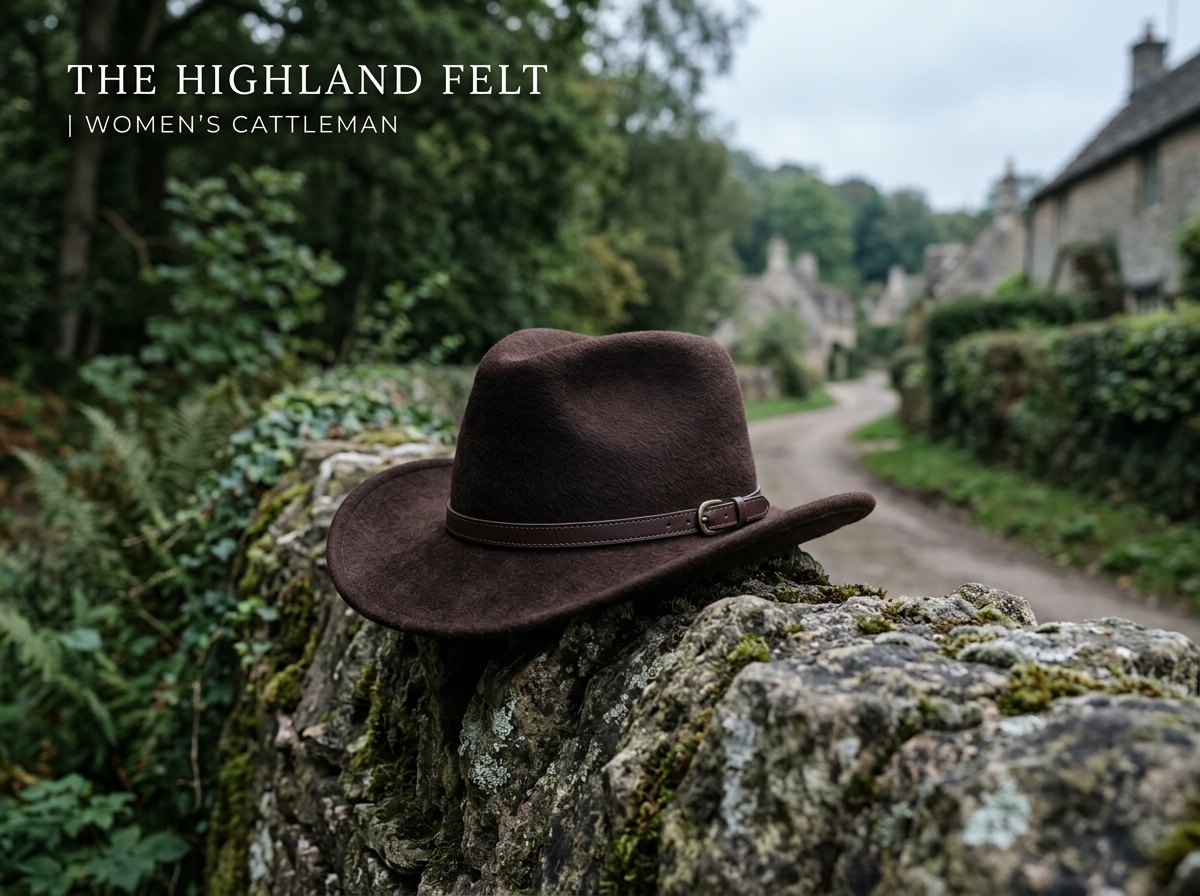
Finding the right cowboy hat women can wear comfortably from sunrise to sundown is about much more than pulling off a classic western look—it is about serious trail defense. When you spend your days working open pastures, managing livestock, or simply riding out on a dusty trail, your face, neck, and shoulders take a beating from the sun and unpredictable weather. A wide-brimmed western hat is essentially your personal, wearable shelter.
Here is a straightforward look at what makes a high-quality hat work, from the materials to the shape, so you can pick gear that handles the outdoors as tough as you do.
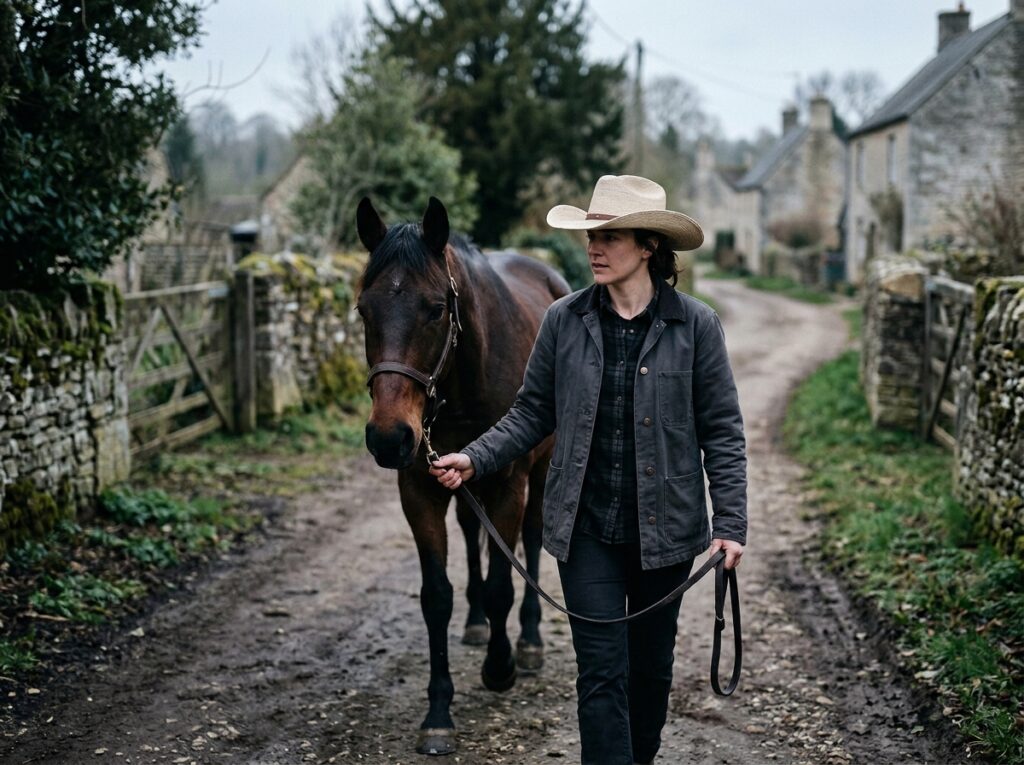
Choosing Your Material: Felt vs. Straw
The lifespan of your hat depends almost entirely on what it is made of. Most authentic headwear falls into two categories based on the season:
1. Premium Fur-Felt (For the Cold)
If you need true durability, fur-felt is the way to go. The best cold-weather options are made from beaver or rabbit fur-felt. The felting process locks these tiny animal fibers together so tightly that they naturally repel water. A premium felt hat will easily block freezing winter winds, shrug off a heavy downpour, and survive years of scraping against thorny brush.
2. Woven Straw and Palm Leaf (For the Heat)
When summer hits, you need your head to breathe. A lightweight straw hat is a practical solution for hot days in the saddle. If you want something incredibly tough and budget-friendly, look into natural palm leaf. It is surprisingly water-tolerant—if a palm leaf hat gets crushed or loses its shape, you can dunk it in water and mold it right back by hand. Tightly woven straw options give you excellent airflow, letting trapped heat escape while providing a stiff, sun-blocking brim.
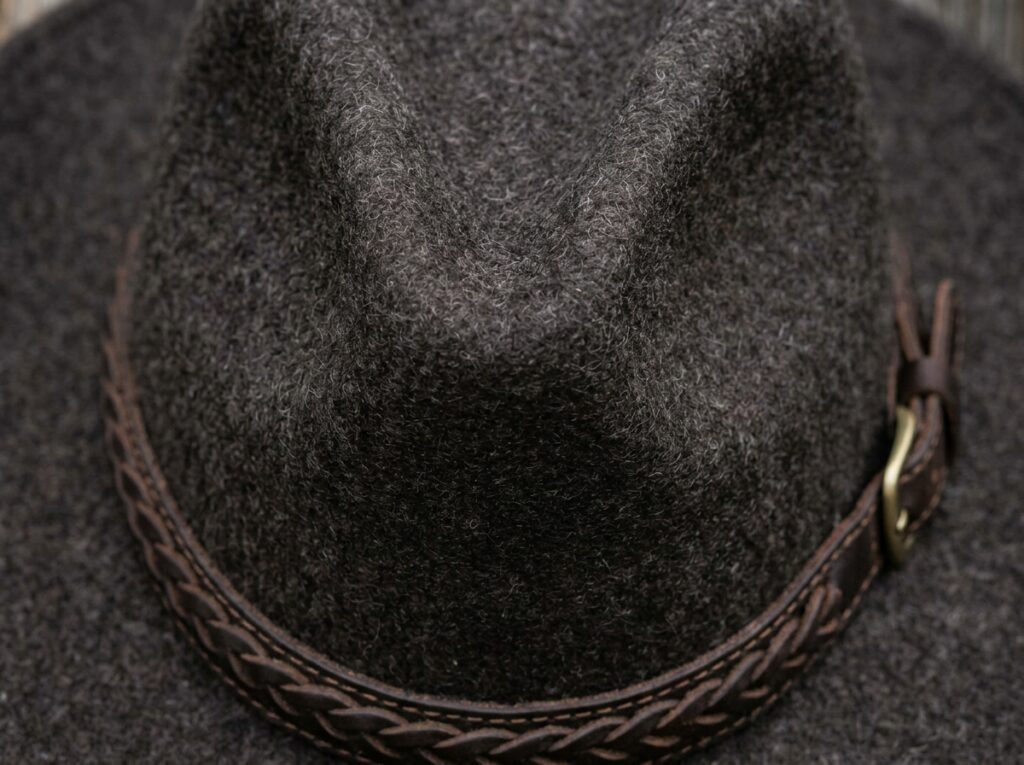
Why the Crown Shape Actually Matters
Those dents on top of a cowboy hat are not just there for decoration. They serve specific, practical purposes when you are out in the elements.
The Cattleman Crease
This is the classic western silhouette you see everywhere: one deep crease down the middle with two parallel dents on the sides. The Cattleman was originally designed for high winds. That deep center groove lowers the hat’s wind resistance, which helps it stay firmly planted on your head when a sudden storm rolls across the pasture.
The Pinch Front Crown
This style features a teardrop or diamond-shaped dip on top, pinched tightly at the front. It is a very popular profile because it looks flattering while remaining completely functional. Those sharp front pinches give your fingers a natural place to grab the hat, which keeps you from constantly pulling on—and eventually ruining—the delicate brim.
Getting the Right Fit
A hat does you no good if it blows away or gives you a headache after an hour. High-quality hats are sized in exact fractional inches based on the measurement of your head right above your ears.
If your hat feels just a little too loose, you can stick some adhesive foam sizing tape behind the inner sweatband for a custom, secure hold. If you do a lot of active horseback riding or work in windy areas, do yourself a favor and add a “stampede string”—a traditional leather chin cord. It is a simple way to make sure your gear doesn’t blow off into the brush.
Simple Care Rules to Make It Last
If you want your premium hat to survive decades of rugged use, follow these basic care rules:
- The Crown-Down Rule: Never set your hat down flat on its brim. The weight of the hat will permanently flatten out that beautiful custom curve. Always rest it upside down on its crown, or hang it safely on a proper wall peg.
- Hands Off the Brim: Always pick up and adjust your hat by pinching the crown. Repeatedly grabbing the brim breaks down the stiffening agents inside, leading to a sad, floppy edge.
- Brush Away the Trail Dust: After a long, dusty day, give your hat a quick sweep with a soft-bristled horsehair brush. For felt models, always brush counter-clockwise around the crown. This trains the natural nap of the fur fibers to lay flat, keeping the texture smooth and ready to shed water.