
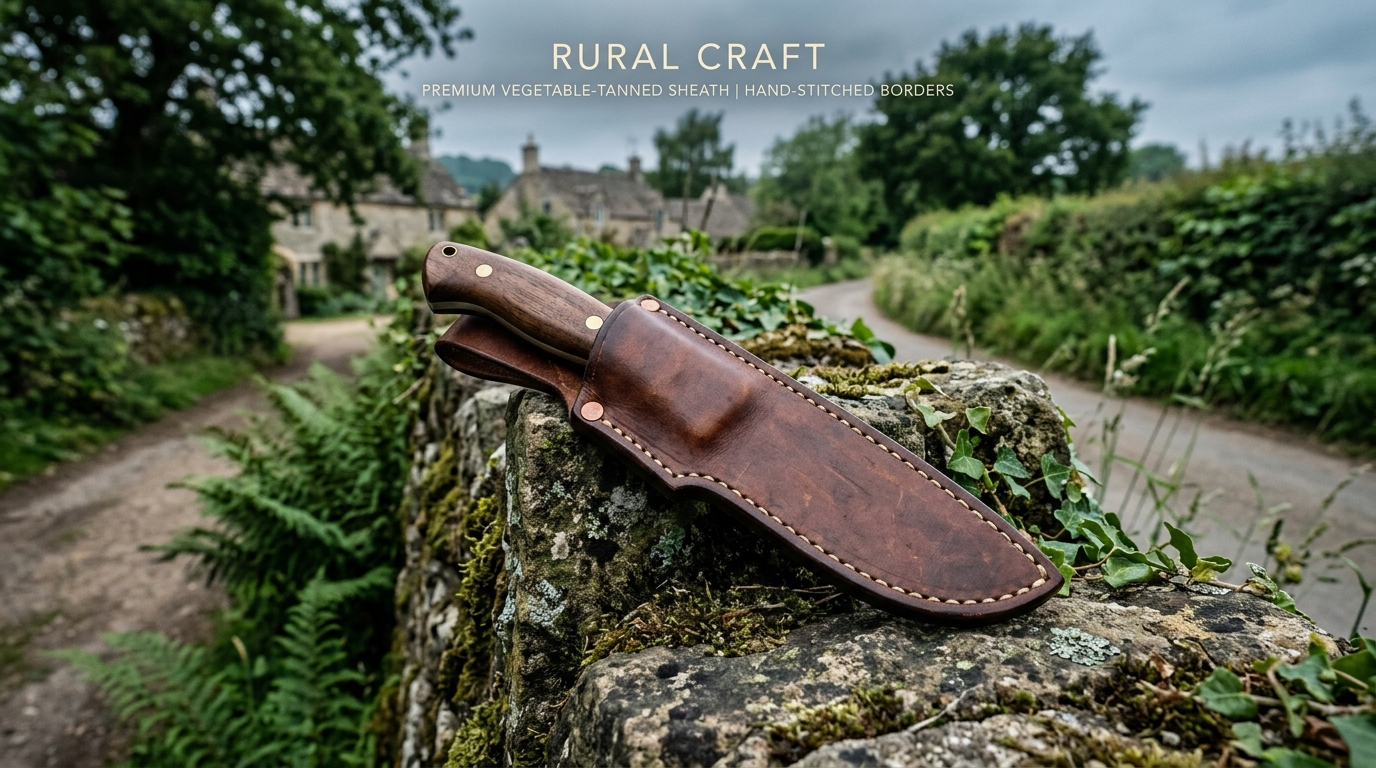
A belt knife sheath is an absolute necessity for outdoorsmen, ranch trackers, and manual field hands who demand uncompromised performance and immediate access to their cutting tools. In grueling outdoor environments—whether clearing thick brush on an unpaved village trail, processing game, or handling daily farm chores—carrying a fixed-blade knife loosely in a pocket or in a flimsy synthetic sleeve is a serious safety hazard. Mass-produced stock covers rarely align with the precise bolster lines of a specialty blade, causing the razor edge to shift dynamically, dulling the steel geometry, and risking accidental puncture wounds.
A professional belt knife sheath treats the housing as an integrated piece of defensive armor and tactical utility. By wet-molding full-grain cowhide directly over the exact spatial contours of your knife, master leather craftsmen create a friction lock that keeps the tool anchored flat against your waist across high-impact physical movements. This comprehensive guide breaks down the core architectural styles of bespoke belt carry design, ensuring you secure a layout built for lifelong durability on the open trail.
Evaluating Carry Profiles: Drop-Loop, Pancake, and Scout
Every high-end belt knife sheath is engineered around a specific waist-carry profile optimized for distinct tasks, clearing heights, and accessibility preferences:
1. Traditional Vertical Drop-Loop Style
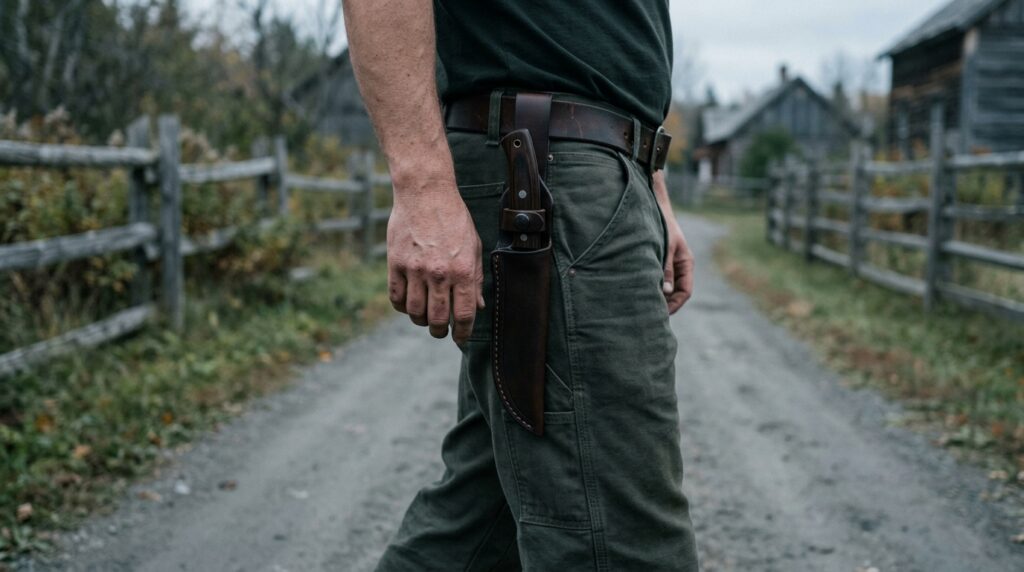
The drop-loop configuration features a deep, single-piece pouch that securely swallows the blade and a significant portion of the handle scales, suspending the knife entirely below your belt frame. By dropping the center of gravity, this style allows the holster to swing naturally with your leg. This provides excellent joint mobility, ensuring the handle will not dig into your ribs when sitting deep in a horse saddle or crouching to fix a low wire fence.
2. The Low-Profile Pancake Layout
Built by sandwiching two independent, heavy-gauge leather panels together, pancake-style sheaths feature wide outer wings with integrated belt slots punched directly through the leather. When threaded onto your work belt, the tension forces the entire belt knife sheath to curve tightly against your torso. This layout completely eliminates horizontal wobbling and lowers the tool’s profile, keeping the handle from snagging on thick brush or farm machinery controls.
3. Horizontal Scout Carry Orientation
Mounting parallel to your waist belt along the lower back, scout carry is optimized for immediate, fluid cross-draw accessibility. This orientation clears your hips completely, allowing for unrestricted movement when climbing corral fences or operating heavy equipment, while offering a highly discreet footprint.
Technical Material Metrics and Construction Standards
The operational lifespan and weather defiance of your belt knife sheath rely completely on strict engineering principles implemented during fabrication:
| Structural Component | Engineering Standard | Operational Defense |
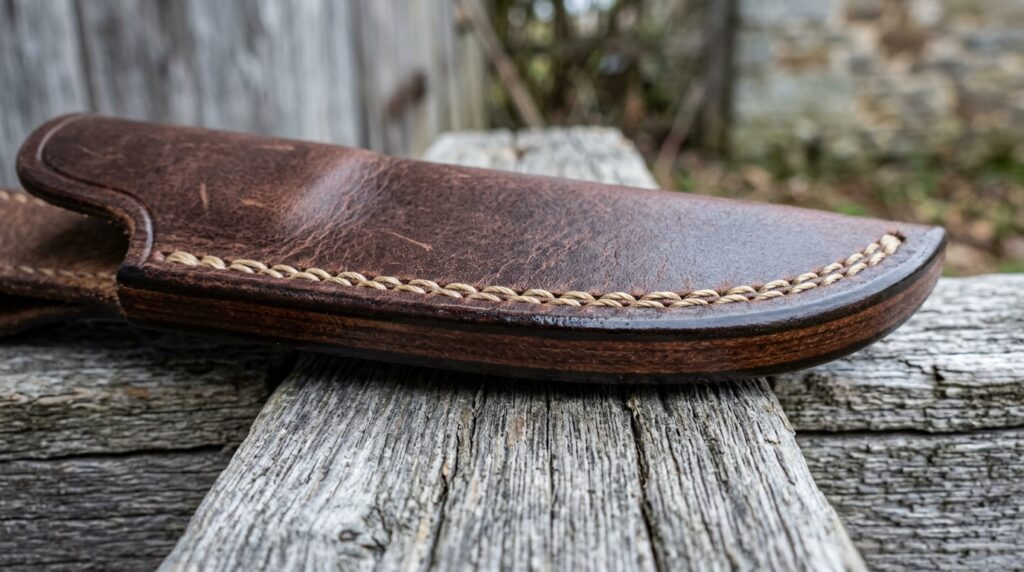
| The Safety Welt | A 1/2-inch leather strip glued and stitched between the main faces. | Prevents the razor-sharp blade from slicing through your load-bearing thread lines. |
| Vegetable Tanning | Hides processed exclusively with natural tree bark tannins. | Contains no chemical salts, ensuring the lining remains completely non-corrosive to blade steel. |
| Saddle Stitching | A manual technique using two independent needles per hole. | If a thread snaps on the trail, the opposite stitch remains locked, preventing seam unraveling. |
Routine Maintenance Protocols for Bespoke Leather
A premium belt knife sheath is built to outlast decades of field use, but because it rests flat against your hip, it absorbs a persistent combination of body heat, trail dust, and outdoor moisture.
- Debris Removal: After finishing a grueling shift navigating dusty village paths or damp pastures, allow any wet mud on the leather to dry completely at room temperature. Use a stiff-bristled horsehair brush to sweep the dried crust completely out of the seams, slots, and hardware tracks.
- Leather Hydration: Twice a year, apply a light, even coat of natural beeswax balm or premium leather conditioner to keep the organic hide fibers supple and windproof.
- Preserve the Lock: Avoid over-saturating the core with soft oils; preserving the leather’s structural rigidity is vital to maintaining the custom friction lock of your belt knife sheath for life.