
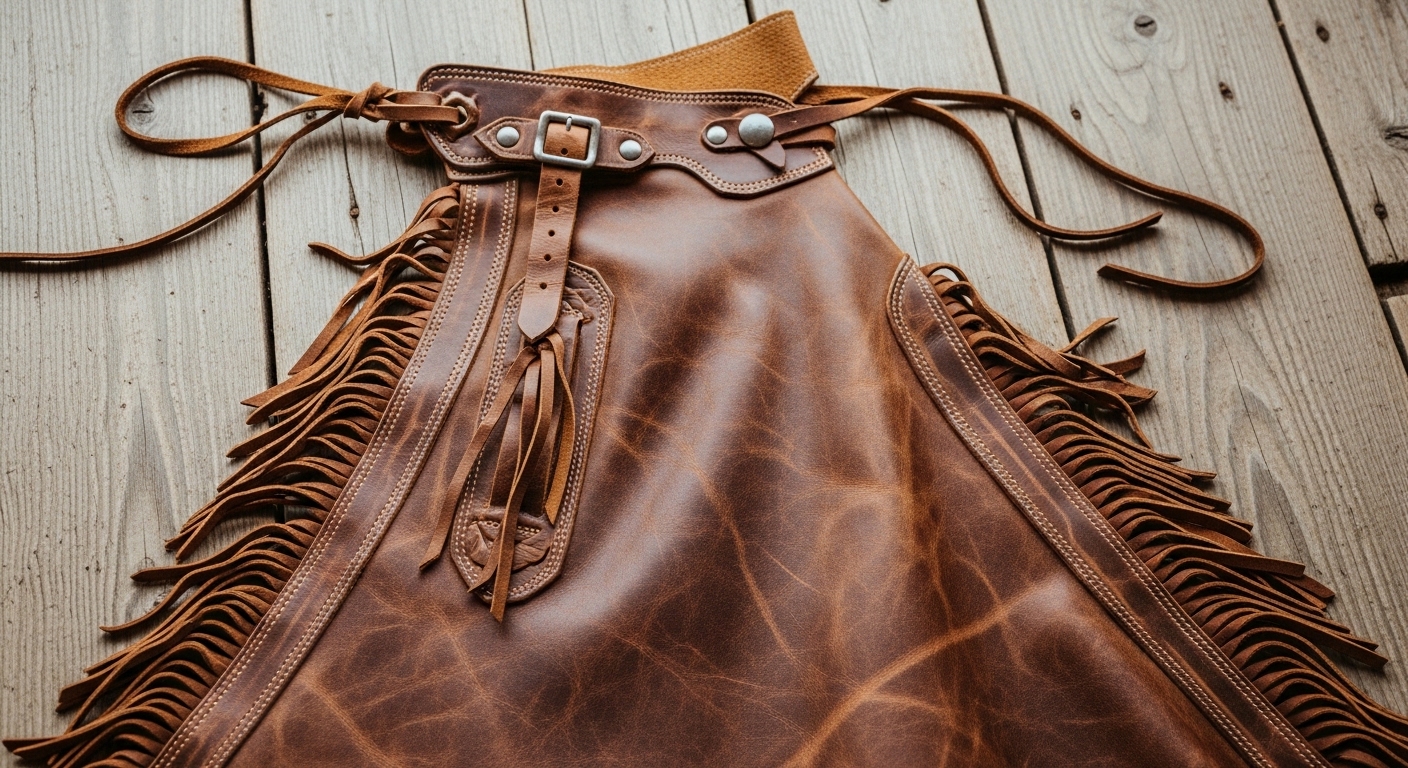
When you think of the American West, your mind likely drifts to images of rugged landscapes, galloping horses, and the iconic silhouette of a rider. At the heart of that silhouette, providing both utility and a distinct aesthetic, are leather cowboy chaps. These are not just decorative leg coverings; they are a vital piece of personal protective equipment that has survived centuries of changing fashion to remain a staple in the equestrian and ranching worlds.
“I remember my first week working on a ranch in Montana,” says Silas, an old-timer with skin like weathered oak. “I thought I could get away with just heavy denim. By noon on the third day, after pushing through a thicket of buckbrush and sage, my legs were shredded and bruised. My boss threw me a pair of heavy-duty leather cowboy chaps and said, ‘In this country, skin is expensive, but leather is cheap.’ I never rode without them again.”
Defining the Essential Legging
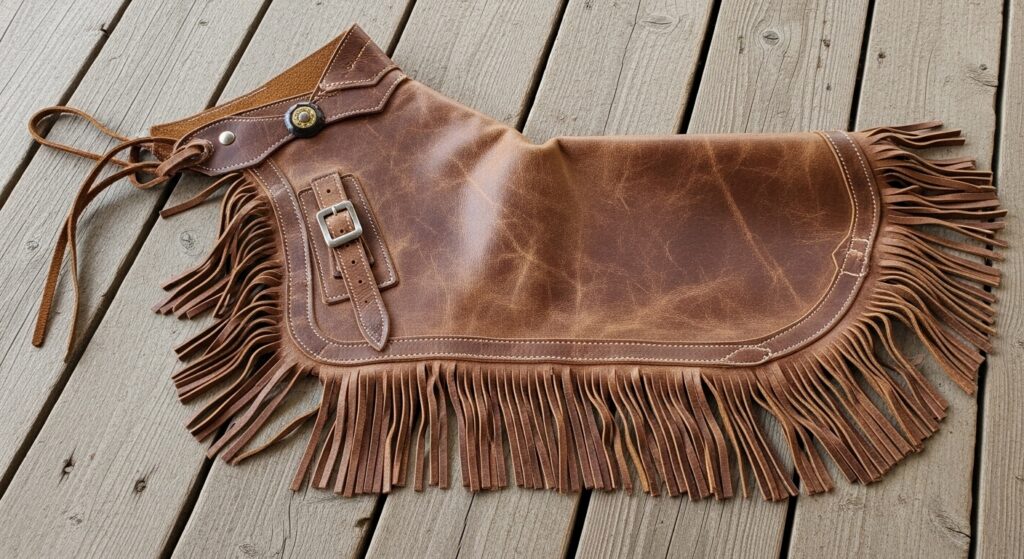
At their core, leather cowboy chaps (pronounced ‘shaps’, from the Spanish chaparreras) are sturdy leggings consisting of heavy-duty leather legs and a belt. They are worn over trousers to protect a rider’s legs from various hazards encountered while riding a horse. Whether it’s the friction of the saddle, the thorns of the brush, or the unpredictable kick of a calf, these leggings act as a secondary skin. Historically, they evolved from the armas and chaparreras used by Mexican vaqueros. As cattle driving moved north, the design adapted to different climates and terrains, leading to the various styles we see today, from batwings to shotguns.
Understanding Primary Style Categories
Not all leather cowboy chaps are created equal. Depending on your specific needs—be it ranch work, rodeo performance, or casual trail riding—the style you choose matters significantly.
1. Shotgun Chaps
So named because they are straight and narrow, like a shotgun barrel. These fit snugly around the entire leg and usually zip or buckle all the way down. They are excellent for retaining body heat, making them a favorite for riders in colder climates. Because they fit closely, they prevent the leather from snagging on dense undergrowth.
2. Batwing Chaps
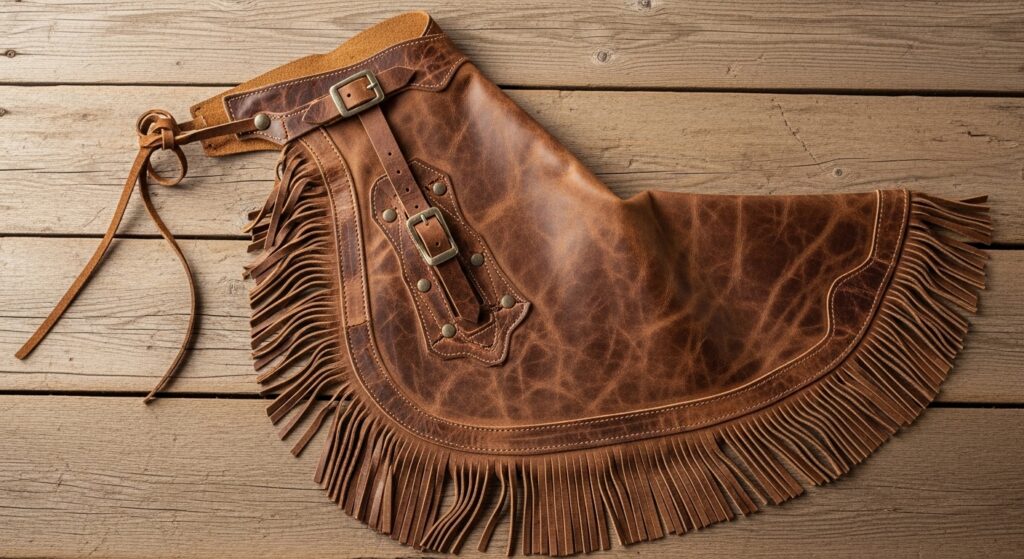
These are cut wide and usually fasten only around the thigh, allowing the bottom of the leather to flap freely. This design provides great airflow, which is a blessing in the hot summers of the Southwest. Furthermore, the wide “wing” offers protection against a horse’s kicks while allowing the rider to move their legs with maximum freedom during rodeo events.
3. Chinks
Chinks are shorter versions of leather cowboy chaps, typically ending just below the knee. They are incredibly popular among working cowboys today because they are lighter, cooler, and allow for a greater range of motion when the rider has to dismount and work on the ground.
The Functional Benefits of Quality Leather
Investing in leather cowboy chaps is an investment in your safety and comfort. Here is why every serious rider should own a pair:
- Abrasion Resistance: Top-grain leather is incredibly tough. It protects your jeans and your skin from being rubbed raw by the saddle or pinched by stirrup leathers.
- Weather Protection: High-quality hides are naturally wind-resistant and can be treated to be water-resistant, keeping you dry and warm in harsh conditions.
- Saddle Grip: The texture of leather against the seat provides a “sticky” surface, helping you stay balanced during sudden movements or when dealing with a fresh colt.
- Livestock Safety: If you are working livestock, leather cowboy chaps provide a buffer against horns, hooves, and biting insects.
The Professional Fitting Process: A Step-by-Step Guide
A poorly fitted pair of chaps is worse than no chaps at all. Follow these steps to ensure a perfect fit:
- Measure Your Thigh: Use a flexible measuring tape to measure the widest part of your thigh while wearing your typical riding jeans. Add about 1 to 2 inches to this measurement for comfort and movement.
- Check the Inseam: Measure from your crotch to the floor (or your boot heel). Leather cowboy chaps should be long enough to cover your boot tops when you are seated in the saddle. Remember, leather “creases” and moves up when you bend your knees.
- Waist Adjustment: Most chaps have an adjustable back belt. It should sit comfortably on your hips, not your natural waist. It should be snug enough to stay put but loose enough that you can breathe and lean forward.
- The “Saddle Test”: If possible, sit in a saddle or on a fence to simulate the riding position. Ensure the leather cowboy chaps don’t pinch your inner thigh or pull too tight across the back.
Maintenance: Preserving the Hide
A good pair of leather cowboy chaps can last thirty years or more if properly cared for. Since they are made of animal hide, they need moisture to remain supple.
- Cleaning: Always brush off loose dirt and mud after a ride. Use a damp cloth for stubborn spots.
- Conditioning: Once or twice a year, apply a high-quality leather conditioner or neatsfoot oil.
- Suede Care: For suede or roughout leather, use a specialized brass brush to keep the nap looking fresh.
Conclusion: Buy with Confidence
Whether you are a professional ranch hand, a competitive rider, or a Western enthusiast, leather cowboy chaps are a definitive piece of gear. They represent a bridge between the functional demands of a hard day’s work and the pride of Western heritage.