
Let me take you back to a freezing late-season trip a few years ago that completely changed the way I look at outdoor gear. The sun was rapidly setting behind the timberline, dropping the temperature well below freezing in a matter of minutes. We had just successfully tracked our game, and it was time to get to work. My hands were stiff, and the fading light meant we had to move quickly.
I reached down to my hip for my blade. At the time, I was carrying a cheap, mass-produced knife housed in a rigid plastic and nylon pouch. The cold weather had caused the cheap plastic retaining clip to freeze shut. I had to rip my gloves off and wrestle with the pouch just to get my tool out. Once it was finally free, the flimsy handle felt slippery and dangerous in my numb hands. It was a miserable, unsafe experience.
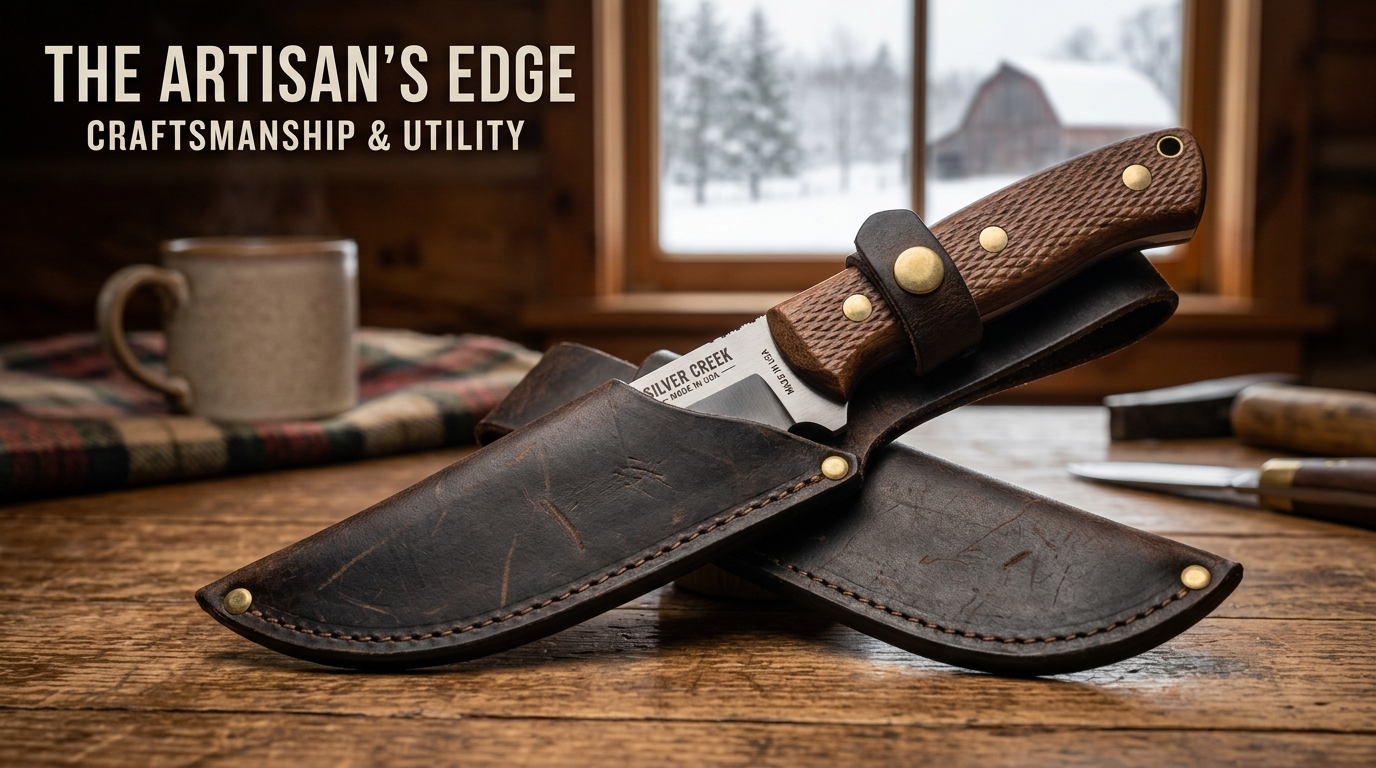
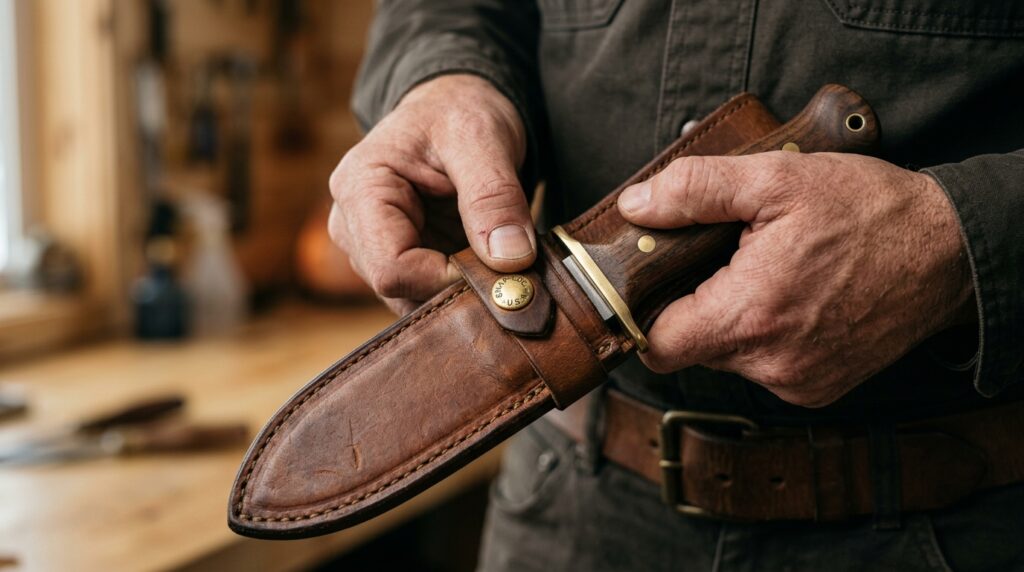
My guide, on the other hand, was an absolute professional. He reached down to a stunning, meticulously handcrafted hunting knife with sheath combination secured to his belt. With one fluid, effortless motion, he unsnapped the heavy brass closure and drew a beautiful fixed blade knife. The rich leather had protected his blade perfectly, and the ergonomic handle provided total control, even in the freezing cold.
The Crucial Partnership: Why the Sheath Matters Just as Much as the Steel
When preparing for a hunting trip, most people spend weeks obsessing over the type of steel used in their knife. However, they completely ignore the vessel that carries it. A premium leather sheath is not a luxury accessory; it is a critical piece of safety equipment.
- Impact Protection: A proper hunting knife is razor-sharp. If you trip or slip on a muddy embankment, a cheap synthetic pouch can easily be pierced by the tip of the blade. True leather craftsmanship utilizes thick layers of hide and a hardened “welt”—an extra strip of leather sewn into the seam—to guarantee the blade can never cut through the stitching and injure you.
- Silent Operation: Hard plastic sheaths click, rattle, and echo, easily spooking game. Genuine leather holds the knife in a completely silent, custom-molded friction lock.
- Ergonomic Weight Distribution: A high-quality belt knife sheath rests comfortably on your hip, distributing the weight perfectly so you completely forget it is there until the exact moment you need it.
Step-by-Step Guide: How to Choose the Perfect Hunting Knife with Sheath
The outdoor market is flooded with options. Follow this simple process to find a reliable tool that will last for generations.
Step 1: Look for Full Tang Construction The solid steel of the blade must extend all the way through the base of the handle. A full tang guarantees maximum structural integrity; partial tangs will snap under the pressure of heavy tasks like splitting wood or cutting through thick joints.
Step 2: Choose the Right Blade Shape For field dressing, the “drop point” blade is the gold standard. The spine slopes gently to meet the tip, creating a controllable, strong point that prevents accidental punctures of internal organs while working quickly.
Step 3: Demand Full-Grain Leather Never accept “genuine leather” or PU synthetic leather. These materials dry out and crack after one season of rain and mud. Demand full-grain leather. It is the toughest layer of the hide and develops a breathtaking patina as it ages.
Step 4: Verify the Retention System For active hunters who are running or climbing, look for a sheath that offers a tight friction fit plus a sturdy, heavy-duty brass snap-closure strap. This provides a secondary layer of unshakeable security.
Step-by-Step Guide: Maintaining Your Gear for a Lifetime
A premium tool can be passed down for generations if you follow a few minutes of routine maintenance.
- Clean and Dry Immediately: After a hunt, wipe the blade completely clean and remove any mud from the leather. Never put a wet knife back into a leather sheath, as it will trap moisture and cause the steel to rust.
- Hydrate the Hide: Every 3–4 months, apply a light coat of premium leather conditioner or natural beeswax balm to the exterior. This keeps the fibers tight and highly water-resistant.
- Oil the Steel: If you are storing your knife for the off-season, apply a very thin coat of food-safe mineral oil to the blade before placing it inside the sheath.
Secure Your Legacy: Buy With Absolute Confidence
Continuing to rely on a cheap, mass-produced knife and a flimsy synthetic pouch is a disservice to your skills. It puts your safety at risk and guarantees a frustrating experience when you need your tools to perform flawlessly.
Upgrading to a meticulously crafted hunting knife with sheath combination is a profound step forward. When you strap on a piece of exceptional leather craftsmanship, you instantly feel the difference. The balanced weight, the razor-sharp edge, and the silent accessibility elevate your confidence in the field.
Do not wait until you are struggling with a broken plastic clip in the woods. Explore premium outdoor tools today, embrace the legendary durability of full-grain leather, and secure your new outdoor companion with absolute, unshakeable confidence.