
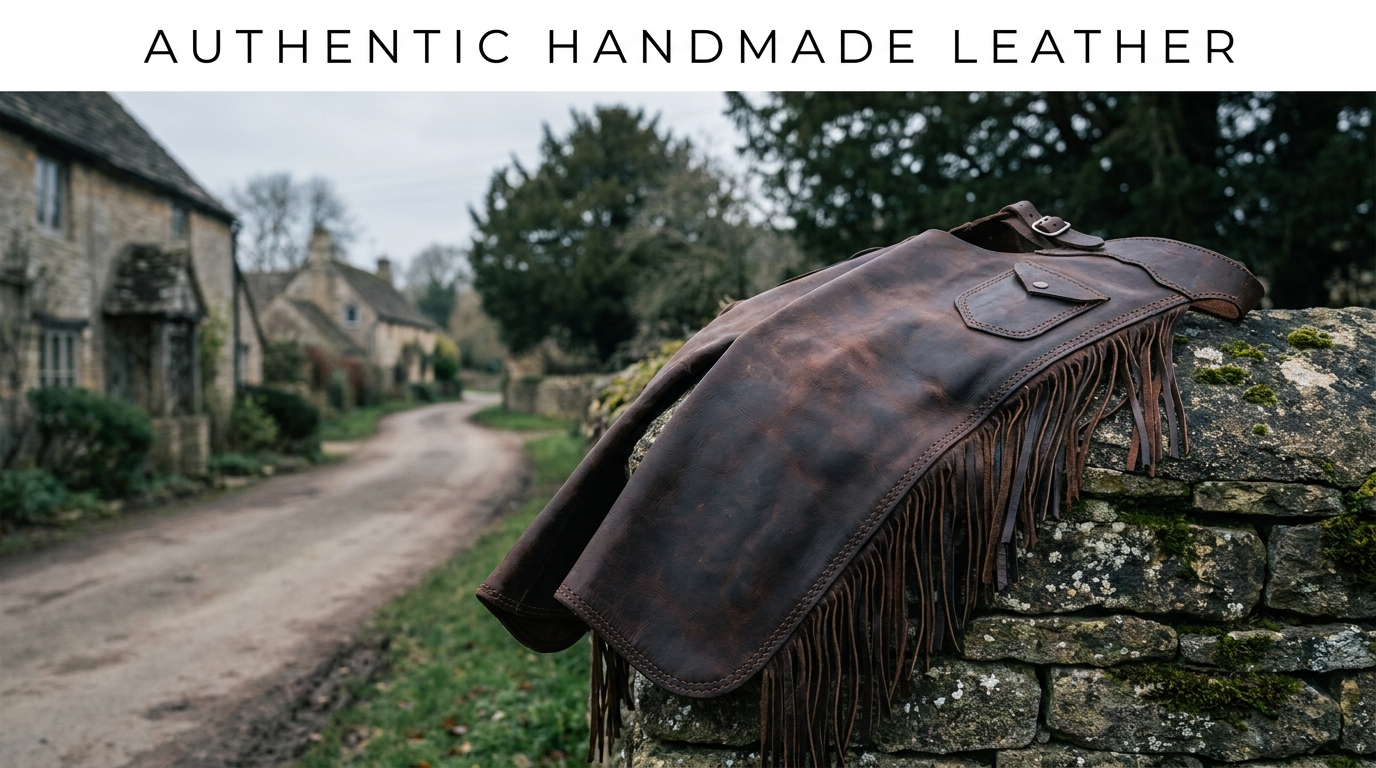
Genuine leather chaps represent the absolute best investment for serious equestrians, ranch hands, and rodeo athletes who demand uncompromised lower-body protection from their gear. When operating in grueling outdoor environments—whether you are clearing thick, thorny brush on an unpaved village trail, managing cattle in difficult terrain, or pushing through dense mountain timber—riding in standard denim jeans is a dangerous liability.
A professional set of custom legwear treats your lower body to an integrated layer of defensive armor. When you buy premium genuine leather chaps, you are securing a thick, heavy-duty barrier that absorbs catastrophic friction, dampens painful rope burns, and completely insulates you against biting valley winds. If you want amazing durability and comfort on the open trail, selecting the right custom fit is mandatory to prevent accidental skin abrasions and severe saddle pinches from heavy stirrup leathers. This is why owning high-quality western gear is the first step for any serious rider.
The Best Material Grades for Amazing Longevity
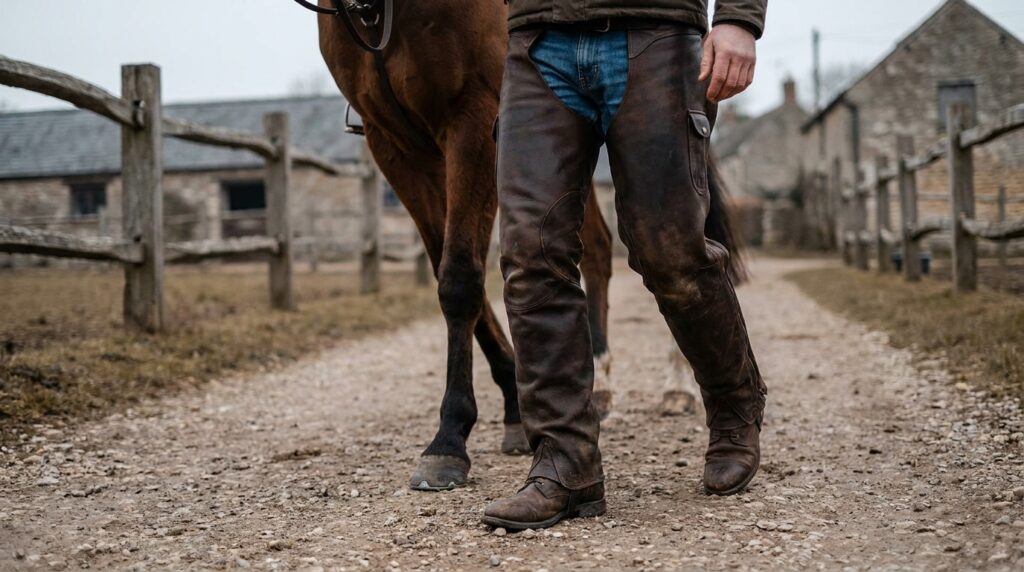
Quality construction relies completely on strict engineering principles and premium hide selection. The absolute best protective builds are crafted exclusively from durable cowhide or steerhide. The specific finish of your genuine leather chaps determines your overall saddle grip and weather defiance while out in the field.
Smooth full-grain hides are the most weather-resistant option available for trail work. Rain, early morning dew, and thick trail mud easily slide off the smooth exterior of these garments, making them remarkably simple to wipe clean after a long, hard day. Over time, smooth genuine leather chaps naturally contour to your specific leg shape and develop a beautiful, rich patina that makes your gear look even better as it ages.
Conversely, roughout suede designs feature the textured, fibrous inner side of the hide facing outward. The natural nap of this material acts like a mechanical lock against your saddle flaps, generating the high friction that stabilizes your lower leg position during sudden livestock movements or aggressive riding. When you choose roughout leather, you are choosing maximum stability and safety.
Top 3 Amazing Riding Profiles
Genuine leather chaps are engineered around specific layout profiles optimized for distinct equestrian tasks and regional climates. Here are the most effective structural options for your trail gear:
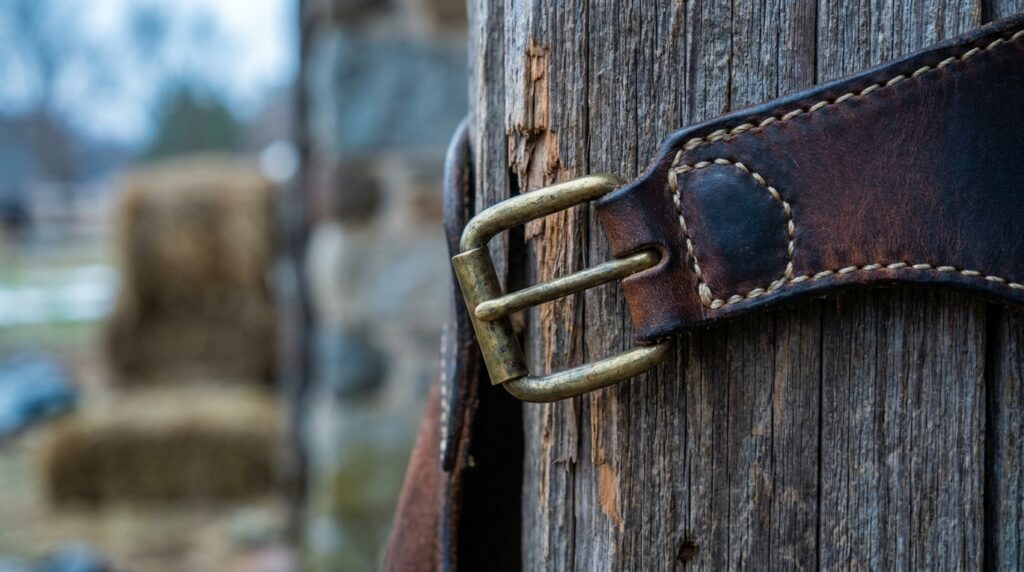
- The Full-Length Batwing Profile: The batwing design is the time-tested standard in western arenas. These garments wrap securely around the upper thigh using a series of reinforced straps and heavy brass buckles. However, from the mid-thigh down to the boot heel, the side panels flare outward completely unfastened, providing completely unrestricted knee flexion.
- The Classic Shotgun Style: This cut offers a streamlined, low-profile design. Shotgun-style genuine leather chaps fully enclose the rider’s leg from the hip all the way down to the ankle joint, fastening tightly along the outer seam via a heavy-duty brass zipper. Because they seal out the elements entirely, these pieces are the primary choice for cold-weather insulation.
- Traditional Chinks: Chinks provide an exceptionally practical, lightweight alternative for warmer climates. Finishing mid-calf just below the knee crease, these protective aprons are highly optimized for scorching summer environments, leaving the lower calf open and perfectly ventilated while protecting the upper thigh where saddle friction is highest. When the heat is intense, this style is the superior choice.
Proper Care and Field Maintenance
Maintenance protocols are simple but absolutely necessary for maximum longevity. Amazing genuine leather chaps are built to outlast decades of hard field use, but because they absorb persistent horse sweat, trail dust, and outdoor moisture, they require consistent care to keep them in top condition.
After a grueling shift on a dusty path, allow any wet mud on your gear to dry completely at room temperature. Use a stiff-bristled horsehair brush to vigorously sweep the dried crust completely out of the seams, fringe strands, and buckle tracks. Twice a year, apply a light, even coat of natural beeswax balm or premium leather conditioner to smooth-finished genuine leather chaps to keep the organic hide fibers supple and completely windproof.
Never apply standard oils or heavy paste waxes to roughout materials, as this will permanently flatten the textured grip needed for your saddle work. Proper, consistent maintenance guarantees your genuine leather chaps will provide flawless protection for the rest of your riding career. Always store your equipment in a cool, dry place to ensure it remains ready for your next ride