
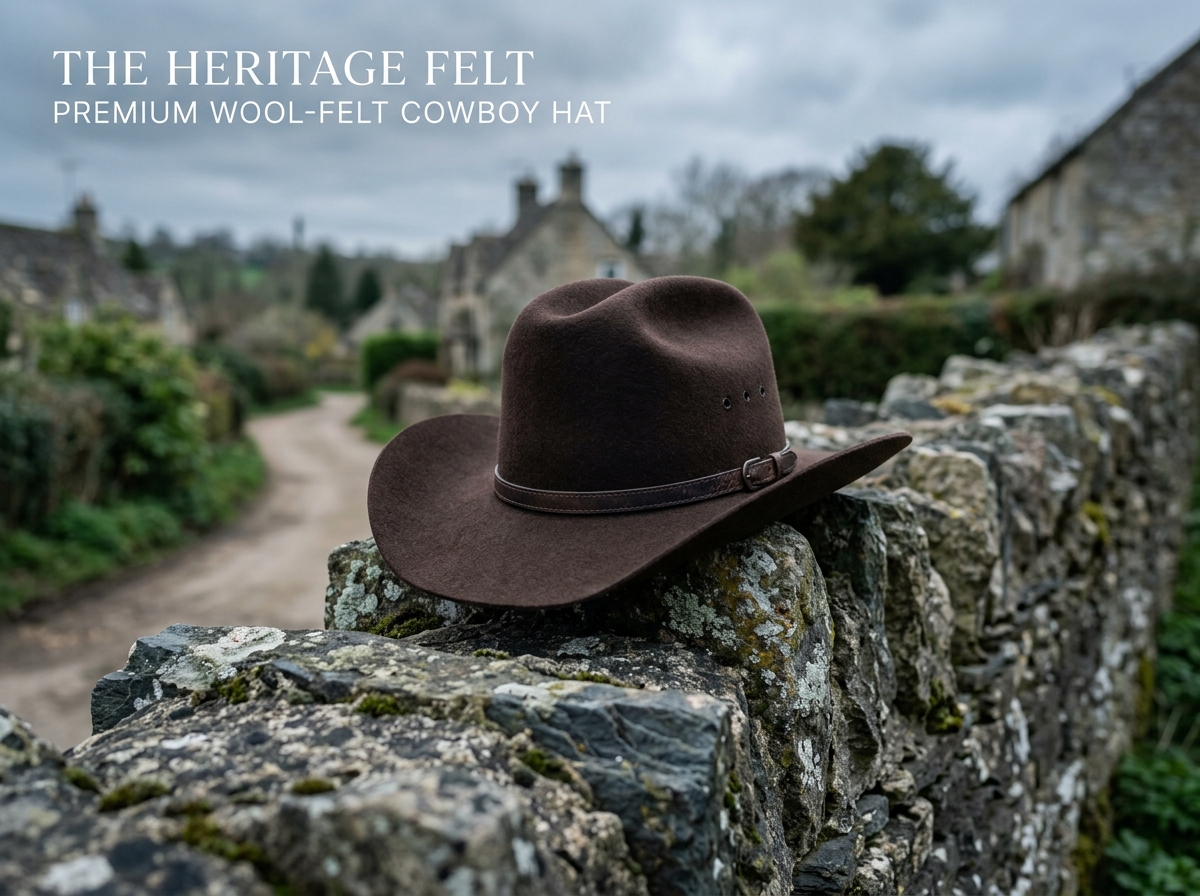
An authentic brown cowboy hat selection represents the absolute benchmark of traditional western utility, rugged durability, and reliable outdoor protection. For riders, trackers, and agricultural hands managing daily field operations, high-quality headwear is a vital piece of defensive personal protective equipment. Spending long hours clearing brush in an open pasture, working livestock, or navigating an unpaved village trail exposes your eyes, face, and neck to harsh elements. A classic wide-brim western hat acts as a structural personal shelter, shielding your skin from intense sun exposure and sudden rainfall.
Selecting a premium brown cowboy hat design requires a clear understanding of fiber grades, functional crown creasing, and precise fitting metrics. This guide details the core mechanics of traditional western headwear, ensuring you acquire an authentic piece of equipment built to handle rigorous daily utility in rugged rural environments.
Technical Material Grades: Felt vs. Straw
The performance, structural lifespan, and seasonal utility of a brown cowboy hat configuration rely completely on its base material composition:
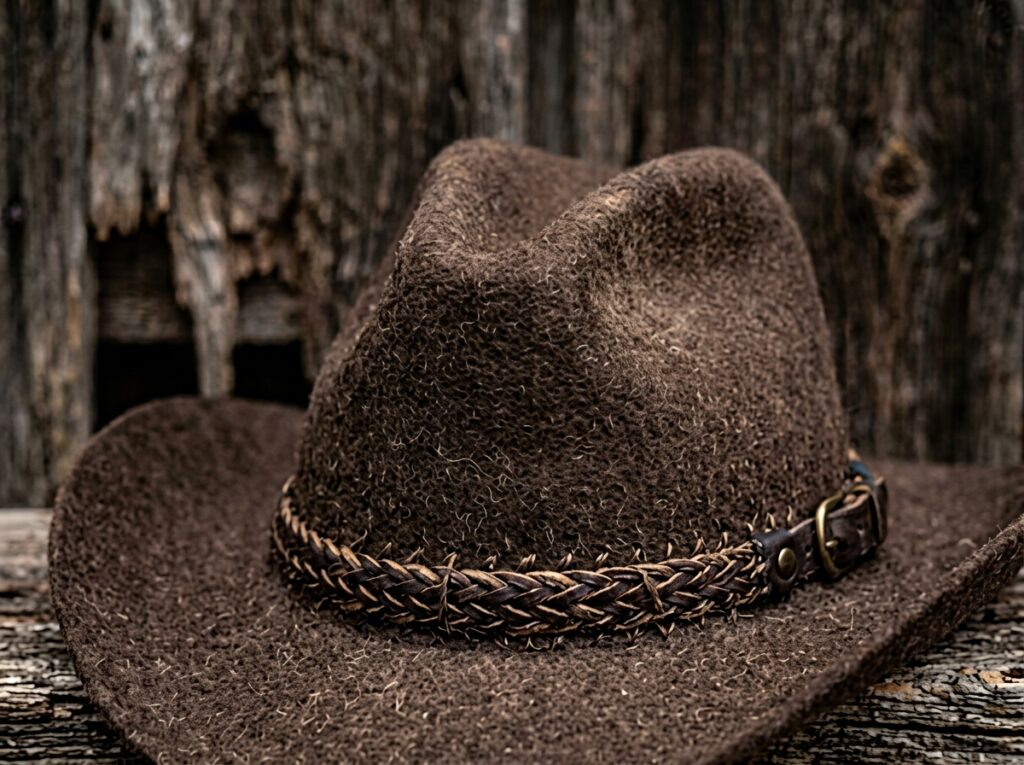
- Pure Wool and Fur-Felt (The All-Weather Shield): The most durable and historically accurate brown cowboy hat profiles are crafted from dense fur-felt or premium wool felt. Through a rigorous mechanical felting process, microscopic animal fibers interlock under heat and pressure to form a tight, highly insulating fabric that is naturally windproof and water-resistant. A brown felt hat easily deflects freezing winter winds and sheds rain without losing its shape, while its earthy tones are exceptionally effective at camouflaging trail dust, mud, and grease during heavy farm chores.
- High-Density Woven Straw and Palm Leaf (The Warm-Weather Alternative): For summer utility and high-temperature environments, woven straw variants provide excellent relief. Tightly woven Shantung straw, Panama straw, or natural palm leaf options offer incredible lightweight breathability. A straw brown cowboy hat layout allows trapped body heat to escape efficiently from the crown while keeping your face completely shaded from direct overhead glare.

Iconic Crown Creases and Their Purpose
The specific indentations shaped into a brown cowboy hat crown serve practical, functional purposes tailored to handle different environmental challenges:
The Cattleman Crease
The single deep groove down the center flanked by two parallel side dents is the most recognized silhouette in western wear. The Cattleman crease lowers the overall wind profile of the crown, helping your brown cowboy hat investment stay firmly anchored to your brow during sudden high-wind valley storms.
The Pinch Front Crown
The Pinch Front design features a sharp teardrop or diamond-shaped indentation on top, accented by two tight pinches at the very front of the crown. This profile is exceptionally popular because it creates a highly tailored, classic silhouette. Mechanically, the sharp front pinches create an ergonomic grip point for your fingers, preventing you from repeatedly grabbing and warping the delicate brim edge when adjusting or removing the hat.
Sizing Metrics for a Secure Hold
Because a brown cowboy hat crown must withstand rigorous physical movement without sliding out of place or causing pressure headaches, precise sizing is mandatory. High-end hats are measured in precise fractional inches based on the exact circumference of your skull just above the ears.
| Fitting Zone | Mechanism | Field Utility |
| Internal Sweatband | Moisture-wicking elastic, soft cotton, or genuine leather lining. | Absorbs heavy perspiration during manual labor while contouring naturally to your brow. |
| Adhesive Sizing Shims | Thin foam inserts placed behind the internal band layer. | Allows you to custom-tighten a loose-fitting hat for a perfect friction grip against heavy trail winds. |
| The Stampede String | An adjustable leather or braided chin cord attached to the crown base. | Essential insurance for fast horseback riding, preventing the hat from flying off into thick brush. |
Routine Maintenance and Storage Protocols
To ensure a premium brown cowboy hat layout survives decades of rugged field use without losing its shape, implement these strict care rules:
- The Crown-Down Rule: Never rest your hat flat on its brim. Forcing the brim to support the weight of the crown will permanently flatten its custom side curves and front dip. Always store the hat upside down on its crown or hang it safely from a dedicated wall peg.
- Handling Etiquette: Always adjust and lift the hat by gripping the front pinches of the crown. Repeatedly pulling on the brim will break down the internal stiffening agents, causing the edge to sag prematurely.
- Clearing Trail Dust: After working on a dusty path, allow any wet mud to dry completely, then use a soft-bristled horsehair brush to clean the fibers. Always sweep counter-clockwise around the crown to align with the natural directional nap of the felt fibers, keeping the texture smooth and water-shedding.