
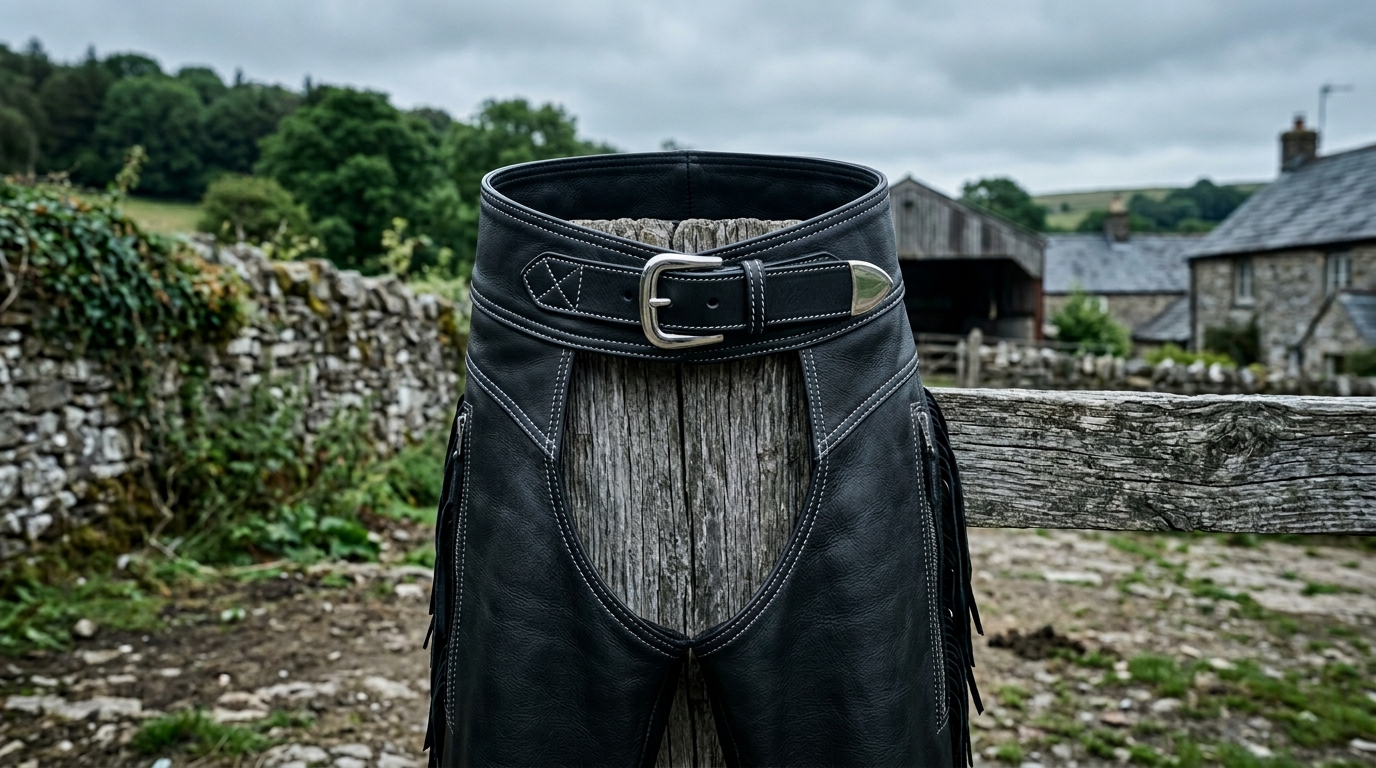
Investing in premium black leather chaps for womens equestrian or ranch wear is a necessity for riders who refuse to sacrifice safety or performance. Standard work pants or denim jeans easily tear when navigating dense brush, clearing thickets on rural property, or handling heavy livestock in tight enclosures.
Genuine cowhide acts as a high-density, flexible shield that absorbs heavy abrasion while providing essential insulation against cutting trail winds.
However, selecting women-specific leg armor involves distinct sizing metrics compared to standard unisex gear. A proper pair must accommodate a woman’s natural waistline, hips, and calf geometry to ensure fluid movement without painful chafing. This guide details how to choose the right materials, obtain a precise fit, and care for your leather equipment in a traditional rural environment.
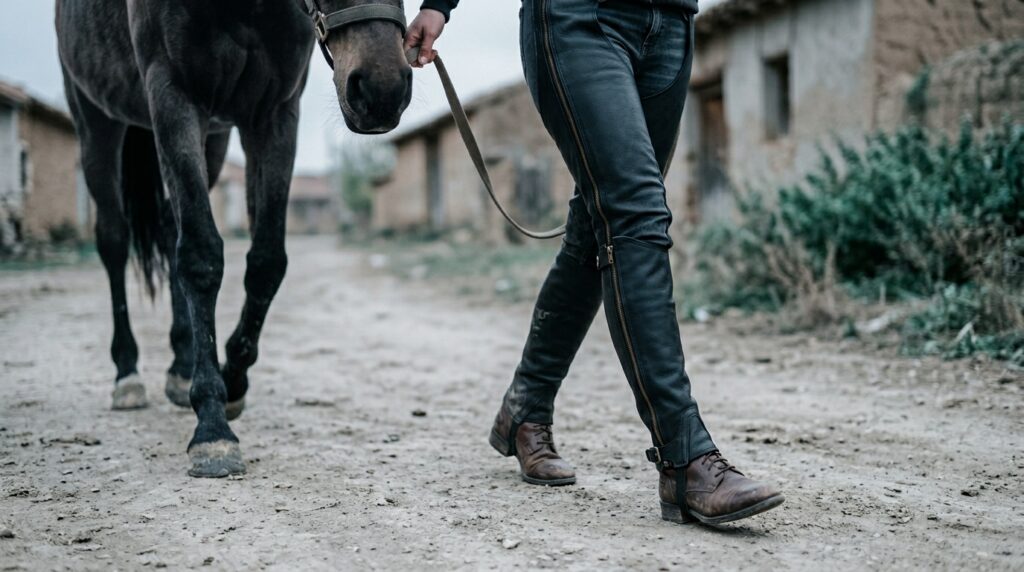
1. The Functional Merits of Black Cowhide
Choosing a black colorway for your western chaps offers specific practical advantages that extend beyond a sleek, classic aesthetic:
- Superior Soil Camouflage: Working in dusty barns, muddy corrals, or open fields exposes gear to a relentless mix of trail dirt, grease, and livestock sweat. Black leather is highly effective at hiding deep stains and scuffs, maintaining a clean, professional profile between deep cleanings.
- Targeted Wind and Weather Insulation: Thick full-grain leather is inherently windproof. During early-morning winter rides or cold farm chores, fully enclosed black leather chaps trap essential body heat, preventing muscle stiffness and fatigue.
- Abrasive Barrier Defense: The outer fiber density of genuine cowhide handles sharp branches, barbed wire snags, and saddle friction seamlessly, absorbing structural damage that would otherwise cause serious personal injury.
2. Sizing Metrics Tailored for a Woman’s Fit
Standard unisex chaps often fit poorly on a woman’s frame, causing the leather to bunch up at the knees or sag around the waist. To ensure absolute comfort and complete safety, you must take three precise measurements while wearing your standard thick riding jeans and boots:
1.Calculate Thigh Expansion Clearance:
Wrap a flexible tape measure around the absolute widest section of your upper thigh. For black leather chaps for womens utility wear, add 1.5 to 2 inches to this measurement. This extension ensures that when you bend your knees to mount a horse or sit deep in a saddle, the dense leather has enough room to accommodate muscle expansion without restricting your circulation.
2.Verify Rise and Waist Adjustability:
Check that the chaps feature a heavy front belt buckle and an adjustable rear leather lacing system. This foundation enables the waistline to sit comfortably above your hips without shifting, binding, or sliding down as you walk or work on foot.
3.Map the Unerring Outseam Length:
Measure from your belt line down the outside of your leg to the absolute base of your boot heel. The leather should completely cover your footwear when your legs are extended to keep kicking trail debris and dirt completely out of your boots.
3. Selecting the Right Texture: Smooth vs. Roughout
The type of leather surface you select changes how the garment interacts with your riding equipment and handles the elements:
| Leather Surface Finish | Structural Texture Profile | Core Functional Benefit | Ideal Trail Application |
| Smooth Full-Grain | Polished, tight outer grain layer faces outward. | Exceptional weather resistance; rain, snow, and trail mud easily slide off the surface. | Wet, muddy environments; exceptionally simple to wipe clean after a long day. |
| Roughout Leather | Textured, fibrous inner side of the hide faces outward. | Generates intense mechanical friction against a leather saddle. | Rugged trail climbs and working cattle; provides a secure, locked-in seat during sudden livestock movements. |
4. Maintenance Requirements in Rural Settings
To preserve the supple texture and defensive qualities of your black leather gear, a consistent care routine is mandatory, especially after exposure to harsh outdoor elements:
Debris Removal
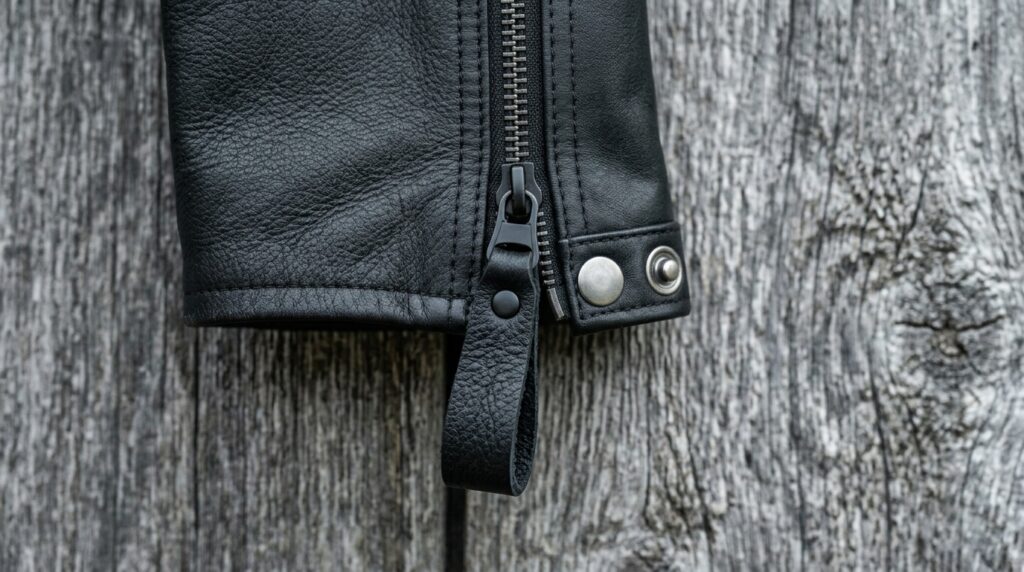
After riding along dusty paths or muddy fields, allow any wet dirt to dry completely. Use a stiff-bristled horsehair brush to vigorously sweep the soil out of the seams, fringe, and zipper tracks. Always brush along the direction of the stitching to prevent premature thread wear.
Conditioning Protocol
Every six months, apply a high-quality leather conditioner or a deep black leather balm to smooth-grain chaps. This hydrates the organic fibers, preventing the hide from drying out, cracking, and losing its windproof qualities under intense sun exposure.
Suede Restoration
For roughout chaps, never apply standard heavy oils, pastes, or waxes, as these treatments will permanently flatten the textured grip. Instead, use a dedicated suede brush or eraser to lift the natural nap and restore the mechanical friction of the material.
5. Conclusion: Future-Proof Your Western Wardrobe
Investing in a tailored pair of black leather chaps ensures your lower limbs are fully protected against the unpredictable realities of field and trail work. By understanding the functional differences between smooth and roughout hides, and respecting the necessary sizing clearances over your riding denim, you create an authoritative barrier against injury. Implementing regular care protocols will extend the lifespan of your chaps, ensuring they remain supple, protective, and reliable for years of continuous outdoor utility.