
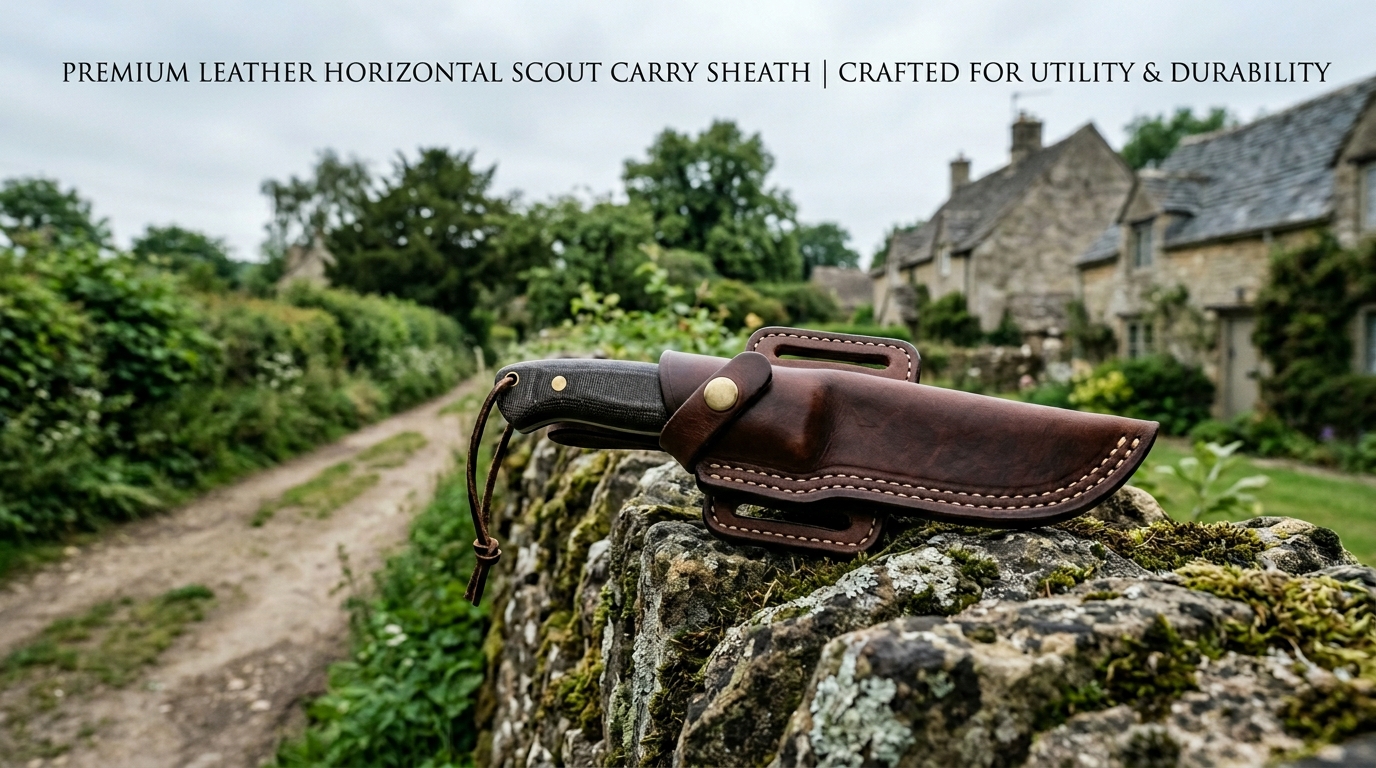
Carrying a full-tang utility tool in a standard vertical drop sleeve often creates severe ergonomic challenges during daily field labor. When operating machinery, climbing over corral fencing, or sitting in a saddle along a trail, a vertical sheath twists uncomfortably, catches on equipment, and digs directly into your thigh. Switching to a leather knife sheath horizontal configuration (frequently designated as scout carry or cross-draw) eliminates these physical restrictions entirely.
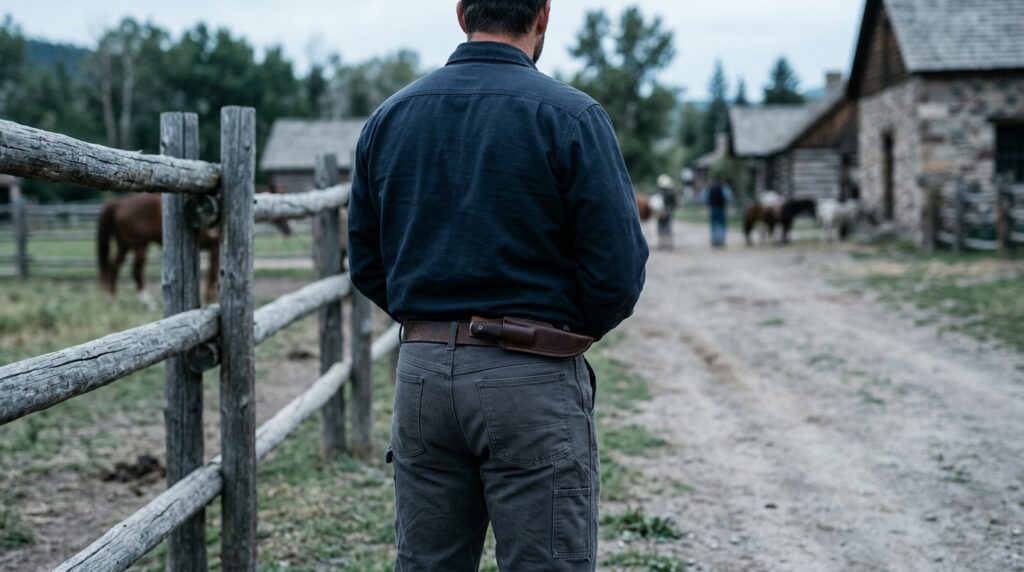
By mounting parallel to your waistline along the small of your back or directly across your front hip, the knife contours cleanly to your torso. This low-profile placement keeps your primary cutting tool completely accessible for rapid, one-handed deployment while maintaining an out-of-the-way profile that stays clear during rigorous physical labor.
1. The Mechanical Advantages of Horizontal Alignment
Transitioning your everyday carry (EDC) setup to a leather knife sheath horizontal profile supplies distinct structural and lifestyle benefits:
- Fluid Torso Mobility: Because the sheath moves in unison with your belt line, it completely eliminates the vertical lever arm that causes standard sheaths to snag on low brush, tree branches, or tractor seats.
- Low-Profile Concealment: A vertical fixed blade can look intimidating during casual public interactions. A horizontal sheath lets the tool sit tight under the hem of a standard work shirt or heavy canvas chore coat, maintaining a clean look.
- True Ambidextrous Draw: Positioning a horizontal sheath at the small of your back allows you to draw the tool smoothly with either hand—a critical safety insurance policy if one arm becomes pinned or injured while handling equipment.
2. Onboarding Lifecycle: Configuration and Mount Sequence
Securing a horizontal sheath correctly ensures your tool remains balanced and readily accessible without sliding out of alignment during physical work. Follow this mounting routine:
1.Select Belt Line Positioning:
Identify your primary draw path. For a dominant-hand rear draw, position the sheath centered over the small of your back with the knife handle facing your drawing hand. For a front cross-draw configuration, mount the unit over your non-dominant hip with the handle angled forward.
2.Thread and Anchor Independent Loops:
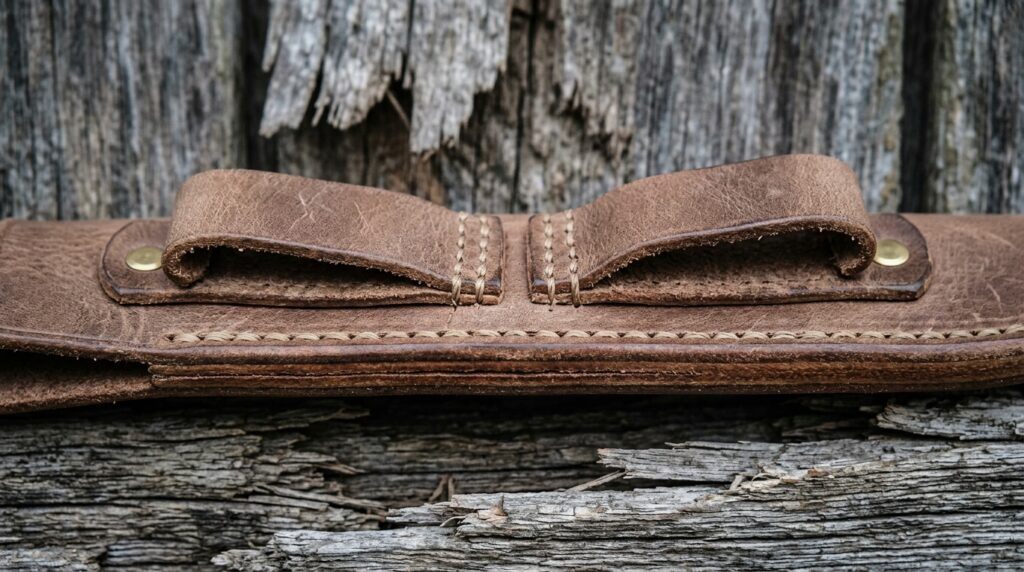
Open the dual-point loop straps. Thread your thick work belt completely through both independent loop segments. For optimal structural stabilization, anchor the sheath loops on either side of a denim belt loop to prevent sideways sliding.
3.Adjust Retaining Tension Layers:
Insert the blade until the wet-molded leather channel securely clamps the guard. Fasten the secondary handle retention strap tightly around the finger bolster, clicking the heavy-duty directional snap home to lock down the tool.
3. Structural Evaluation: Multi-Material Sheath Comparison
Because gravity pulls across the width of a horizontal opening rather than down into the tip, the raw engineering of your carry system determines its defensive resilience:
| Performance Metric | Handcrafted Full-Grain Leather | Engineered Rigid Kydex | Fabricated Ballistic Nylon |
| Draw Acoustics | Virtually silent; fiber density absorbs friction, masking tool deployment. | Loud; sharp plastic click sounds when drawing or seating the blade. | Soft scratch sounds; often relies on noisy velcro closure loops. |
| Retention Longevity | Dynamic friction lock; contours uniquely to the guard through break-in. | Static tension click; depends on constant structural pressure against rivets. | Low friction; relies completely on external strap layers to keep blade home. |
| Edge & Finish Protection | Gentle; internal hide texture safeguards mirror-polished or coated steels. | Abrasive; hard plastic inner walls score blades and dull cutting edges over time. | Pliable; inner fibers can collect metal dust and micro-grit that scratches steel. |
| Environmental Defensibility | Requires seasonal conditioning to repel heavy downpours and sweat. | Absolute; entirely immune to water, mud, oil, chemical washes, and blood. | High absorption; traps ambient humidity and requires slow air-drying cycles. |
4. Critical Structural Elements of a Quality Build
To ensure your horizontal setup holds up under severe physical stress in the field, verify that the manufacturing balances these critical requirements:
Dual-Point Belt Straps
Never buy a horizontal sheath that relies on a single central belt loop. A single attachment point causes the heavy handle of your knife to tilt downward, unbalancing your belt and making a clean draw impossible. High-quality designs utilize two independent, heavy-duty leather loops spaced far apart to clamp the leather flat against your gun belt.
A Thick Internal Welt
The sharp cutting edge of your fixed blade rests directly against the bottom seam in a horizontal orientation. To protect your investment, the sheath must feature a thick leather welt glued and saddle-stitched firmly between the face and back panels. This layer acts as a physical bumper, preventing the blade from cutting through the waxed thread when sheathing the tool.
Custom Wet-Molded Friction Fit
Since the blade sits sideways, secure retention is paramount to prevent tool loss on rough trails. Look for premium vegetable-tanned full-grain leather that has been aggressively wet-molded to the exact bolster and finger guard geometry of your knife. The hide must create a tight friction lock around the handle, supplemented by a heavy-duty retention strap with a solid brass snap for total field security.
5. Sizing Metrics for Belt and Blade
To avoid uncomfortable sag or sliding, your horizontal setup must be precision-matched across three core dimensions:
- Belt Loop Clearance: Measure the exact width and thickness of your primary work belt (typically 1.5 to 1.75 inches). Loops that are too loose allow the sheath to slide sideways or cant awkwardly when you try to pull the knife.
- Handle-to-Blade Balance: Compare the weight of the handle scales against the length of the steel blade. A heavy handle requires wider loop spacing to distribute the weight across your belt frame evenly.
- Guard Clearance: Measure the height of the forward hilt or finger choil. Proper clearance ensures the handle sits far enough off your body for your fingers to wrap around the grip cleanly without scraping your clothing.
6. Specialized Maintenance for Cross-Draw Gear
Because a leather knife sheath horizontal slip rests tightly against your lower back or abdomen, it absorbs significantly more body heat, sweat, and bending stress than a standard drop-leg holster.
Every few months, remove the sheath from your belt and clear out any internal lint, pocket dust, or grit tracks inside the mouth of the sheath using a dry cotton swab. For smooth-grain leather, apply a light coat of natural beeswax balm to the belt loops and external edges to preserve the hide’s resilience against cracking.
Retention Warning: Avoid over-conditioning the molded core with soft liquid oils like neatsfoot. Maintaining a baseline structural stiffness in the leather is absolutely required to keep the friction-lock retention solid for life.
7. Conclusion: Streamlining Everyday Carry Mobility
Investing in a premium leather horizontal knife sheath upgrades your tool accessibility while removing the constant discomfort of traditional vertical options. By prioritizing thick vegetable-tanned full-grain hide featuring a defensive inner welt, dual-point loop placement, and aggressive custom molding, you protect both your blade and yourself. Implementing simple, dry cleaning habits and targeted wax hydration guarantees your scout carry framework remains rigid, quiet, and completely functional across a lifetime of field service.