
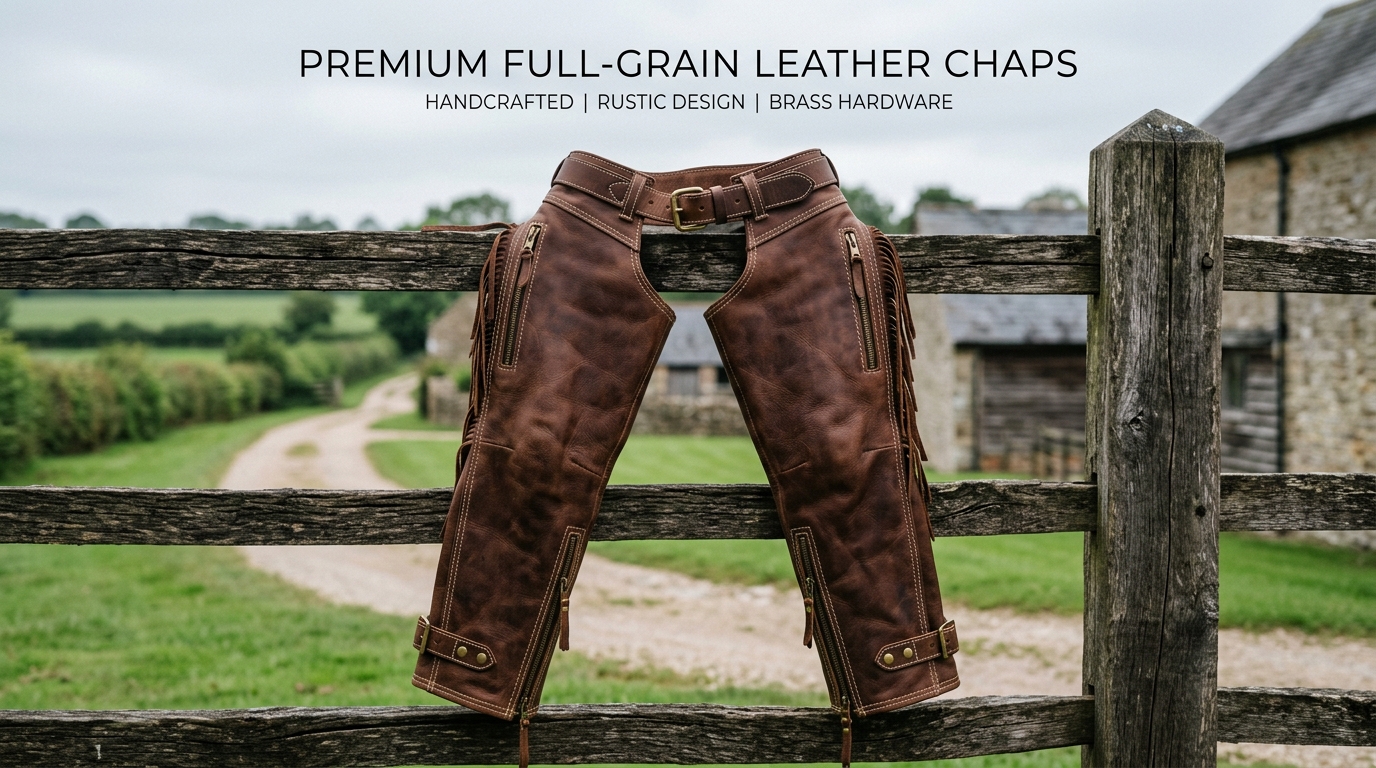
Finding the right pair of leather chaps for sale is the single most important step you can take to secure premium leg protection and superior saddle grip. When working on a busy agricultural ranch, handling unpredictable livestock, or clearing dense thickets on an unpaved village trail, standard denim jeans easily fail. Authentic leather chaps act as a durable, modular barrier that shields the lower body from severe lacerations while providing essential insulation against freezing mountain winds.
However, browsing through various leather chaps for sale requires an understanding of leather grades, specific cut styles, and traditional sizing metrics. Purchasing a cheap, generic pair made of synthetic materials will result in a rapid structural breakdown under heavy tension. This comprehensive guide details exactly how to evaluate the best leather chaps on the market, ensuring you acquire equipment that delivers authentic western utility and long-lasting durability in demanding rural environments.
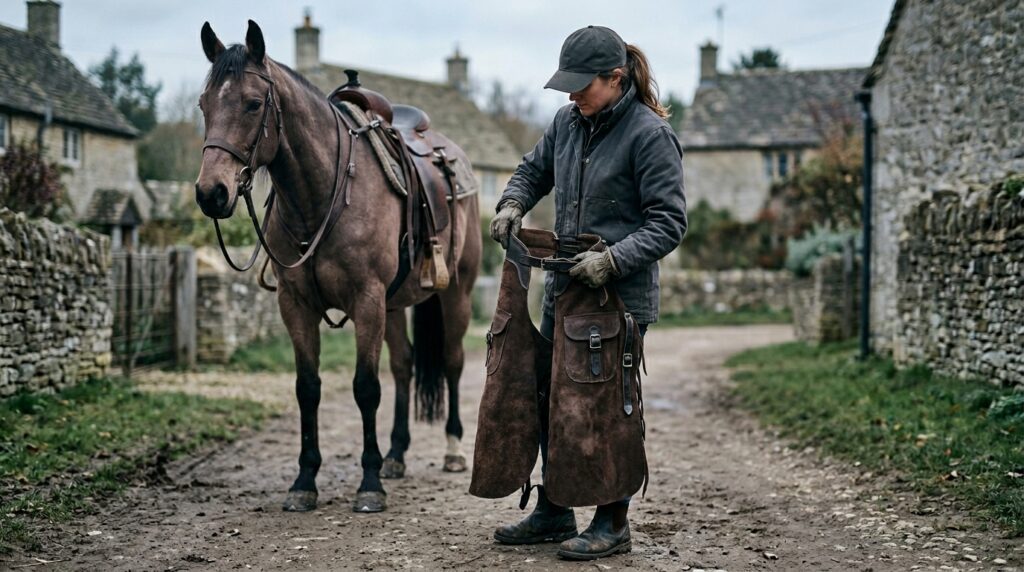
1. The Structural Advantages of Full-Grain Cowhide
When analyzing any leather chaps for sale, your primary focus must be on the material composition. The longevity of your safety gear depends entirely on the chemical tanning process and the specific layer of the animal hide utilized:
- Premium Full-Grain Cowhide: The absolute highest tier of protective leg armor is constructed from full-grain leather. This material utilizes the outermost layer of the hide, retaining the maximum density of natural fibers. Full-grain hides handle sharp branches, barbed wire snags, and heavy saddle abrasion seamlessly without tearing or puncturing.
- Vegetable-Tanned Leathers: For maximum structural memory, seek out vegetable-tanned leather chaps. This organic tanning method uses tree bark and natural tannins, allowing the leather to remain incredibly dense while absorbing moisture effectively during custom wet-molding or shaping.
- The Critical Safety Welt: High-quality leather chaps feature a thick leather welt glued and stitched securely between the main panels along the outside seams. This strip prevents friction from wearing down the main stitching, ensuring your investment does not unravel in the middle of a long workday.
2. Sizing Metrics for a True Fit over Riding Denim
Before purchasing any leather chaps for sale, you must obtain precise physical measurements while wearing your standard thick riding jeans and work boots. Guessing your size will result in gear that either restricts your circulation or sags dangerously. Follow this measurement sequence carefully:
Calculate Thigh Expansion Clearance
1.Calculate Thigh Expansion Clearance:
Wrap a flexible tape measure around the absolute widest section of your upper thigh. Add 1.5 to 2 inches to this baseline number. This addition ensures that when you sit deep in a saddle or kneel on the ground, the thick leather accommodates your muscle expansion comfortably without binding.
Map the Outseam Length
2.Map the Outseam Length:
Measure from your belt line straight down the outside of your leg to the bottom of your boot heel. The leather must completely cover your ankle joint while riding to prevent kicking trail debris, mud, and twigs from entering your footwear.
Verify Waistband Adjustability
3.Verify Waistband Adjustability:
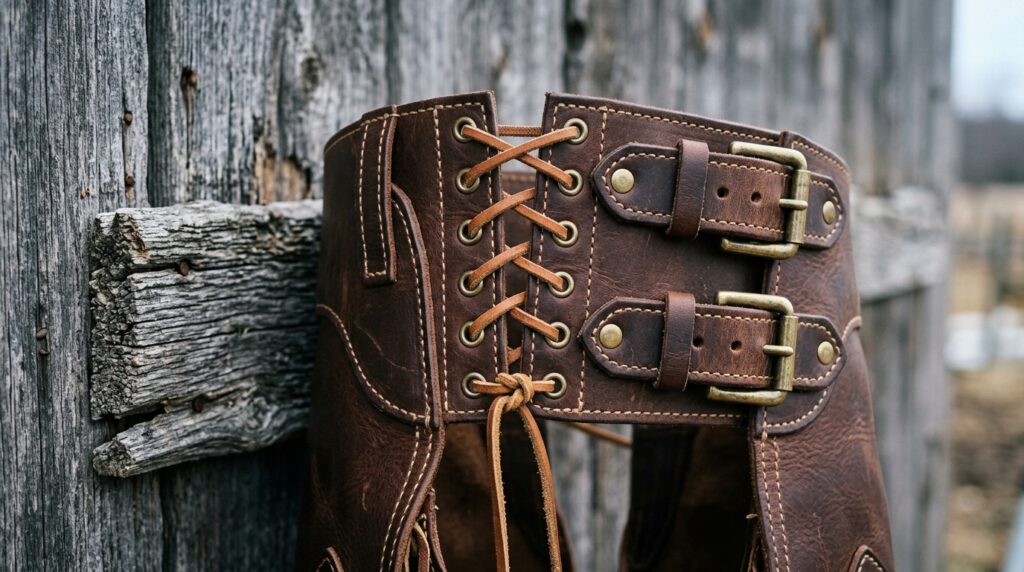
Ensure the chassis features a heavy front belt buckle and an adjustable rear leather lacing system. This mechanism allows the waist to expand easily over heavy winter coats or contract cleanly for thin summer utility shirts.
3. Selecting Your Silhouette: Cut Styles Compared
As you sort through different leather chaps for sale, you must select a cut style that matches your specific rural tasks. Different silhouettes alter your overall range of motion, heat retention, and leg coverage:
| Chap Cut Style | Leg Enclosure Profile | Core Functional Advantage | Ideal Climate / Application |
|---|---|---|---|
| Traditional Batwing | Fastens around the upper thigh; lower leg flares completely open. | Maximum ventilation in warm weather; unrestricted knee bending on foot. | General ranch work, sorting cattle, and active rodeo roughstock arenas. |
| Form-Fitting Shotgun | Straight, narrow profile; encloses the leg completely via full side zippers. | Traps body heat efficiently; provides total 360-degree protection from hazards. | Winter trail riding, cold-weather agricultural labor, and dense brush clearing. |
| Western Chinks | Half-length variation ending just below the knee; open lower calf. | Ultra-lightweight build; shields thighs and knees from rope burns while staying perfectly cool. | Hot summer months, intensive ground work, and branding clinics. |
4. Routine Maintenance Protocols for Lasting Value
To preserve the water resistance and defensive qualities of your new leather chaps, a consistent maintenance routine is mandatory after exposure to harsh outdoor elements:
Soil and Dust Removal
After a long day on a dusty path or inside a muddy corral, allow the dirt to dry completely on the leather surface. Use a stiff-bristled horsehair brush to vigorously sweep the soil out of the leather grain, fringe, and zipper tracks. Always brush in the direction of the stitching to prevent thread wear.
Hydration and Conditioning
Every six months, apply a high-quality leather conditioner or a natural beeswax balm to smooth-grain leather. This replenishes the natural oils lost to sun exposure, keeping the hide supple and preventing it from drying out or cracking over time.
Suede and Roughout Restoration
For roughout suede leather chaps, never apply standard oils, heavy pastes, or waxes, as this permanently flattens the textured grip. Use a dedicated suede brush or brass-wire brush to lift the nap and restore the natural saddle friction.
5. Conclusion: Future-Proof Your Field Armor
Investing in a premium pair of western chaps changes your comfort level in the field and shields your lower body from unpredictable environmental hazards. By prioritizing thick, full-grain vegetable-tanned cowhides and selecting the exact silhouette required for your daily workload, you establish a reliable barrier against injury. Implementing proper cleaning and conditioning protocols ensures your investment remains supple, weather-resistant, and completely functional for decades of rugged, dependable utility.