Let me tell you a story about a miserable afternoon that entirely shifted my perspective on outdoor gear. A few years ago, I was helping a friend clear some thick brush and old fencing off a sprawling piece of property. It was exhausting, dirty work. I had brought along a highly capable, expensive utility knife, but I had made a rookie mistake: I was carrying it loose deep in the pocket of my heavy work pants.
Every single time I needed to cut a piece of stubborn twine or clear a thick vine, I had to take off my heavy leather gloves, dig past my keys and phone, and wrestle the tool out of my pocket. By noon, my hands were scraped, my pocket was full of dirt, and I was incredibly frustrated.
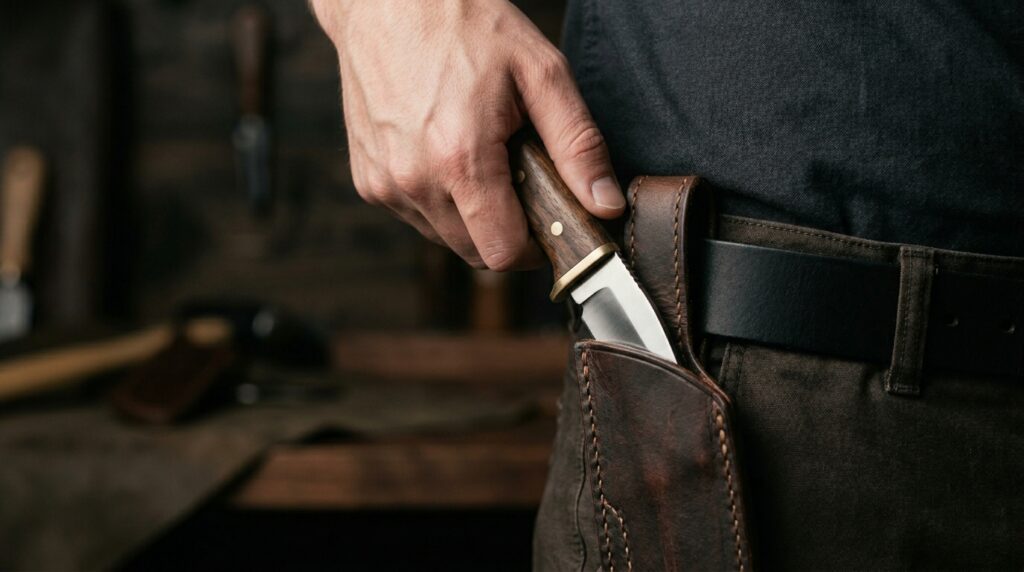
Then I looked over at the property owner. He was wearing a stunning, handcrafted knife and sheath for belt combination. Whenever he encountered a problem, his hand instinctively dropped to his hip, he drew his blade in one fluid motion, made the cut, and snapped it safely away without ever breaking his stride. It was a masterclass in efficiency and preparedness.
That day, I learned a vital lesson: A great tool is completely useless if you cannot access it seamlessly. Transitioning to a dedicated belt loop sheath is not just a minor gear adjustment; it is a fundamental upgrade to your entire everyday carry philosophy.
The Philosophy of the Belt Carry: Why It Reigns Supreme
Since the dawn of human history, the waistline has been the most strategic place to carry a vital tool. But why is the knife and sheath for belt setup still the undisputed champion in a world full of tactical backpacks and high-tech pocket clips?
- Rapid Accessibility: In an emergency—whether cutting a tangled seatbelt or heavy cordage—you do not have the luxury of time. When your fixed blade knife is mounted on your hip, it sits in the natural resting path of your hands. The draw stroke becomes effortless muscle memory.
- Physical Comfort: A heavy knife bouncing in your pocket restricts movement and slaps against your thigh. A high-quality premium leather sheath distributes the weight evenly across your belt, making even a heavy-duty survival tool feel weightless.
- Psychological Readiness: Strapping a meticulously crafted custom knife sheath to your waist provides a deep sense of confidence. It is a physical reminder that you are prepared and equipped for any challenge.
The Perfect Marriage: Steel Meets Leather
You cannot discuss a belt carry system without acknowledging that the two items must work in perfect harmony. You can own a blade made of advanced high-carbon steel, but if it lives in a flimsy nylon pouch, the system is flawed.
This is where true leather craftsmanship excels. Genuine full-grain leather possesses organic properties that synthetic materials cannot replicate:
- The “Welt”: Premium sheaths use a thick extra strip of leather sewn into the seam. This ensures the blade edge never slices the stitching or the wearer.
- Breathability: High-quality leather prevents moisture from trapping against the steel, which would otherwise cause rust.
- Custom Retention: Over time, the leather fibers naturally compress to form a secure, custom-molded friction lock around your specific knife.
Step-by-Step Guide: How to Choose Your Perfect Belt Setup
The market is flooded with options, but following this methodology will help you find the ultimate EDC gear for your lifestyle.
Step 1: Define Your Primary Use Case
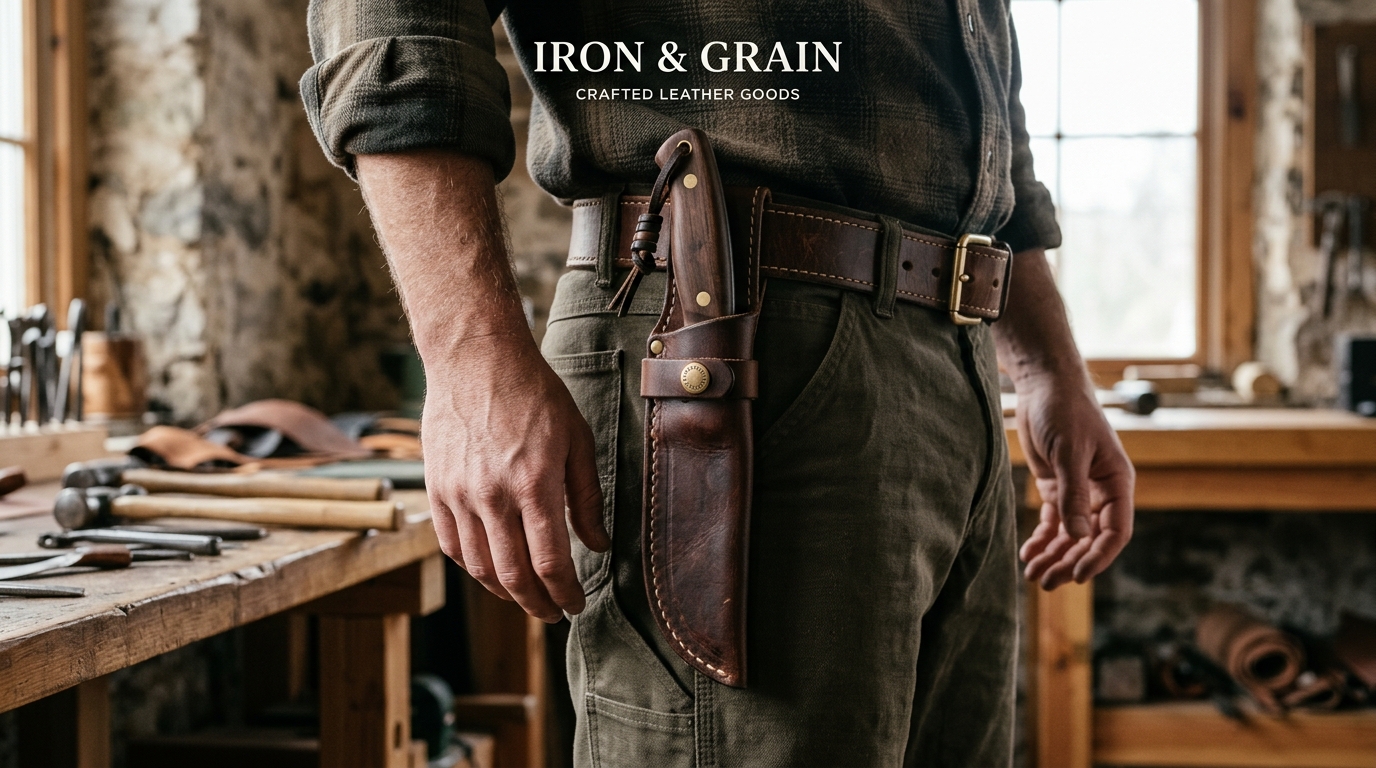
- Bushcraft/Hunting: You need a heavy-duty, vertical belt knife sheath that accommodates a larger blade for heavy work.
- Urban/Trade Work: Look for a low-profile horizontal sheath (scout carry) that stays out of your way while sitting in a vehicle or an office chair.
Step 2: Demand Full-Grain Leather Never settle for “genuine leather” or synthetic PU. These will peel and crack. Ensure the description explicitly states full-grain or top-grain leather to guarantee a rich patina and lifelong durability.
Step 3: Check the Belt Loop Sizing Always check if the sheath loop matches your belt. If you wear a 2-inch work belt, a standard 1.5-inch sheath loop will not fit.
Step 4: Evaluate the Retention System Decide if you prefer deep friction molding or a secondary heavy-duty brass snap closure. If you are climbing or riding, that snap provides essential peace of mind.
Step-by-Step Guide: Lifetime Care for Your Leather System
Leather is an organic material that requires basic hydration to survive the elements.
- Keep it Clean: After a weekend outdoors, wipe away mud and sand. If the sheath gets soaked, never place it near a fire or radiator. Rapid heat shrinks and destroys the hide; let it air-dry naturally at room temperature.
- Hydrate the Material: Every 4–6 months, apply a leather conditioner or beeswax. Rub it in with gentle, circular motions to keep the leather supple and weather-resistant.
- Inspect Hardware: Periodically check the stitching and ensure brass rivets or snaps are free of debris.
Step Up Your Preparedness and Buy With Absolute Confidence
Continuing to carry your most vital tool loose in your pocket is a disservice to your gear. Upgrading to a premium knife and sheath for belt system is a deliberate step toward true preparedness.
When you strap on a piece of exceptional leather craftsmanship, you instantly feel the difference. The secure weight, the lightning-fast access, and the rugged aesthetic elevate your daily routine. Explore our meticulously handcrafted collection today, find your profile, and wear your new blade with absolute, unshakeable confidence.