
Let me share a quick story from a camping trip I took deep in the mountains a few years ago. We had just arrived at our campsite when a massive, unexpected thunderstorm rolled in. I was frantically trying to string up a heavy tarp between two trees to create a dry shelter. My hands were freezing, and the paracord had knotted itself into a mess. I reached down to my hip for my survival knife.
At the time, I was using a cheap, mass-produced nylon sheath. The flimsy retaining strap was jammed, and the fabric had folded over itself. I had to use both hands and actively look down just to wrestle my own tool free, wasting precious seconds while the rain soaked right through my clothes.
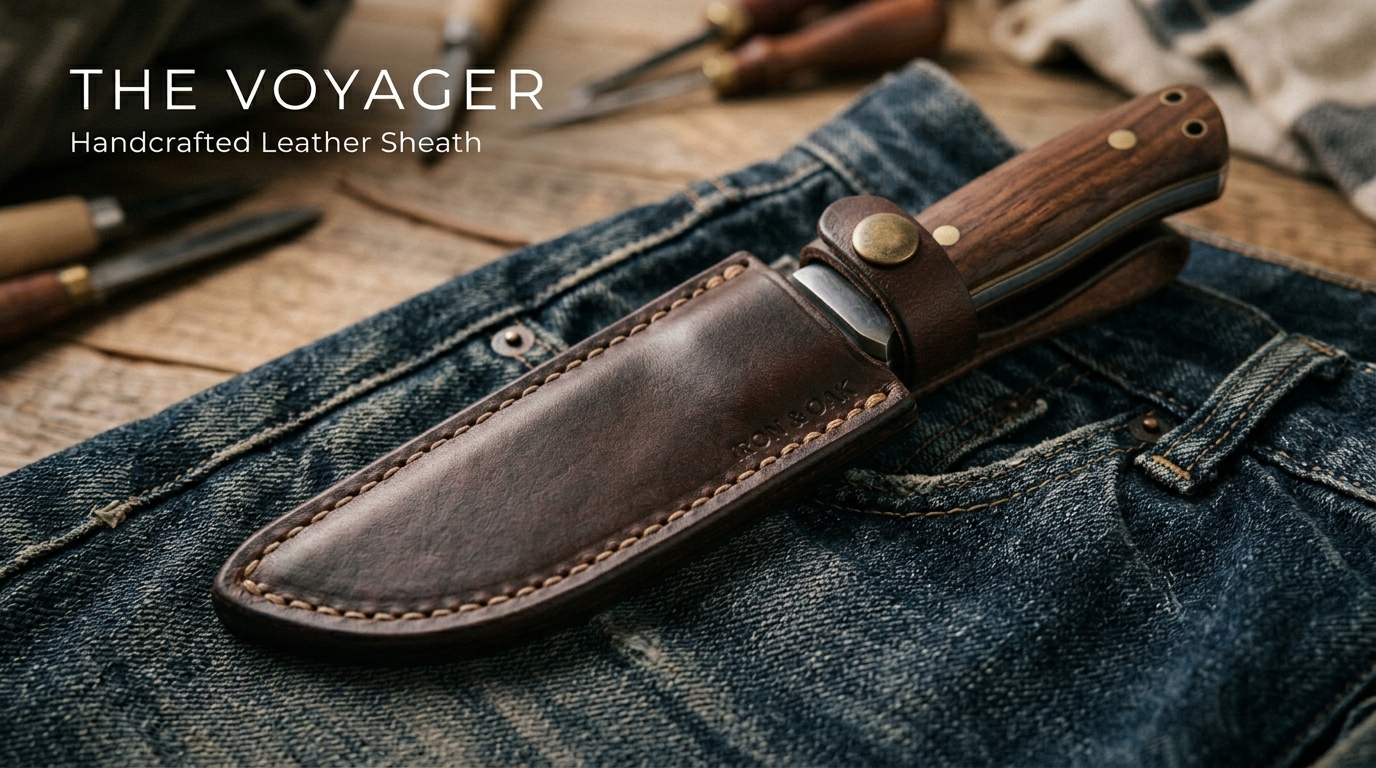
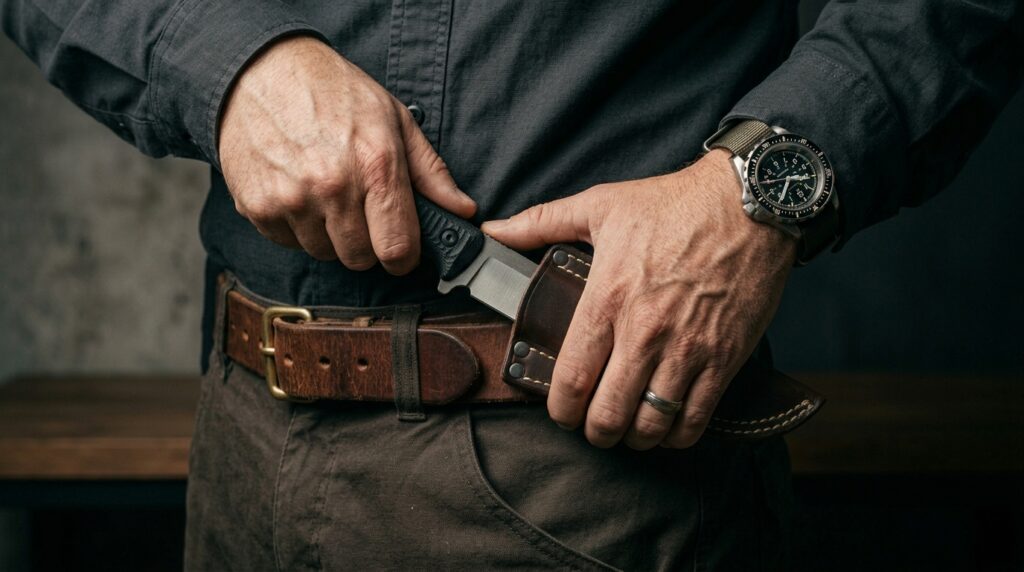
The moment I returned to civilization, I immediately replaced that useless pouch with a meticulously handcrafted, genuine leather fixed blade knife sheath. The next time I went into the woods, the experience was entirely different. Drawing and returning the blade became a fluid, one-handed, effortless motion. It wasn’t just a carrying case anymore; it was an active part of my survival system.
Why Your Tool Demands a Premium Fixed Blade Knife Sheath
When people talk about everyday carry (EDC) or wilderness survival, they spend hours obsessing over the steel and the edge. However, they completely overlook the vessel that holds it.
- Absolute Safety: Unlike a folding knife, a fixed blade is always “open.” If you fall on a rocky trail, a cheap synthetic sheath can be pierced by the tip of your own knife. Premium leather craftsmanship utilizes thick layers of hide—often reinforced with a hardened leather “welt”—ensuring the edge never pushes through the stitching.
- Superior Retention: A high-quality custom knife sheath relies on precise, custom-molded friction. Your tool will not rattle, shift, or unexpectedly fall out, even if you are climbing over heavy obstacles or running.
- Classic Style: A beautiful leather knife sheath signals a respect for traditional skills and dependable gear. It is a statement of quality that ages beautifully with time.
Decoding the Carry Styles: How Should You Wear It?
One of the greatest advantages of upgrading your gear is choosing exactly how the knife sits on your body.
| Style | Description | Best For |
| Vertical Belt Carry | The sheath hangs straight down from a sturdy loop. | Standard hiking, camping, and hunting. |
| Scout Carry | Mounted horizontally along the small of your back. | Bending, sitting, or driving off-road vehicles. |
| Cross-Draw | Worn on the opposite side of your dominant hand, angled forward. | Carrying firearms or tool belts on your dominant side. |
Step-by-Step Guide: How to Break In Your New Leather Sheath
Do not force the knife into a new sheath violently! Follow these steps for a flawless fit:
Step 1: The Protective Wrap
To prevent rust and keep the interior clean, wrap your entire knife tightly in a single, thin layer of clear plastic kitchen wrap.
Step 2: The Gentle Insertion
Slowly and firmly push the wrapped knife into the tight sheath to the depth you want it to naturally sit.
Step 3: The Molding Process
Using your thumbs, gently massage the outside of the leather, pressing it into the unique contours of the knife’s handle and guard.
Step 4: The 24-Hour Wait
Leave the wrapped knife inside the sheath for at least 24 to 48 hours. The dense fibers of the leather will “memorize” the shape of the tool.
Step-by-Step Guide: Lifetime Maintenance
If you respect the materials, exquisite leather craftsmanship can outlast the person wearing it.
- Brush Away the Dirt: After a trip, use a soft-bristled brush to wipe away dried mud or sand from the exterior.
- Hydrate the Leather: Every 3 to 6 months, apply a dime-sized amount of premium leather conditioner or beeswax balm. This prevents the material from drying out under the hot sun.
- Manage Moisture: If your sheath gets soaked, never use a hairdryer or radiator. Extreme artificial heat will warp the leather. Always let it air-dry naturally at room temperature.
Secure Your Blade With Absolute Confidence
A brilliant, razor-sharp blade deserves a home that matches its quality. Relying on a cheap synthetic pouch is a disservice to your gear and a risk to your safety.
By investing in a high-quality, handcrafted fixed blade knife sheath, you are choosing reliability. You will instantly feel the difference the moment you thread it onto your belt. The unmatched durability and the secure custom fit will drastically upgrade your entire outdoor experience.
Do not wait until your flimsy factory pouch fails you on the trail. Secure your most vital tool today with absolute confidence.