
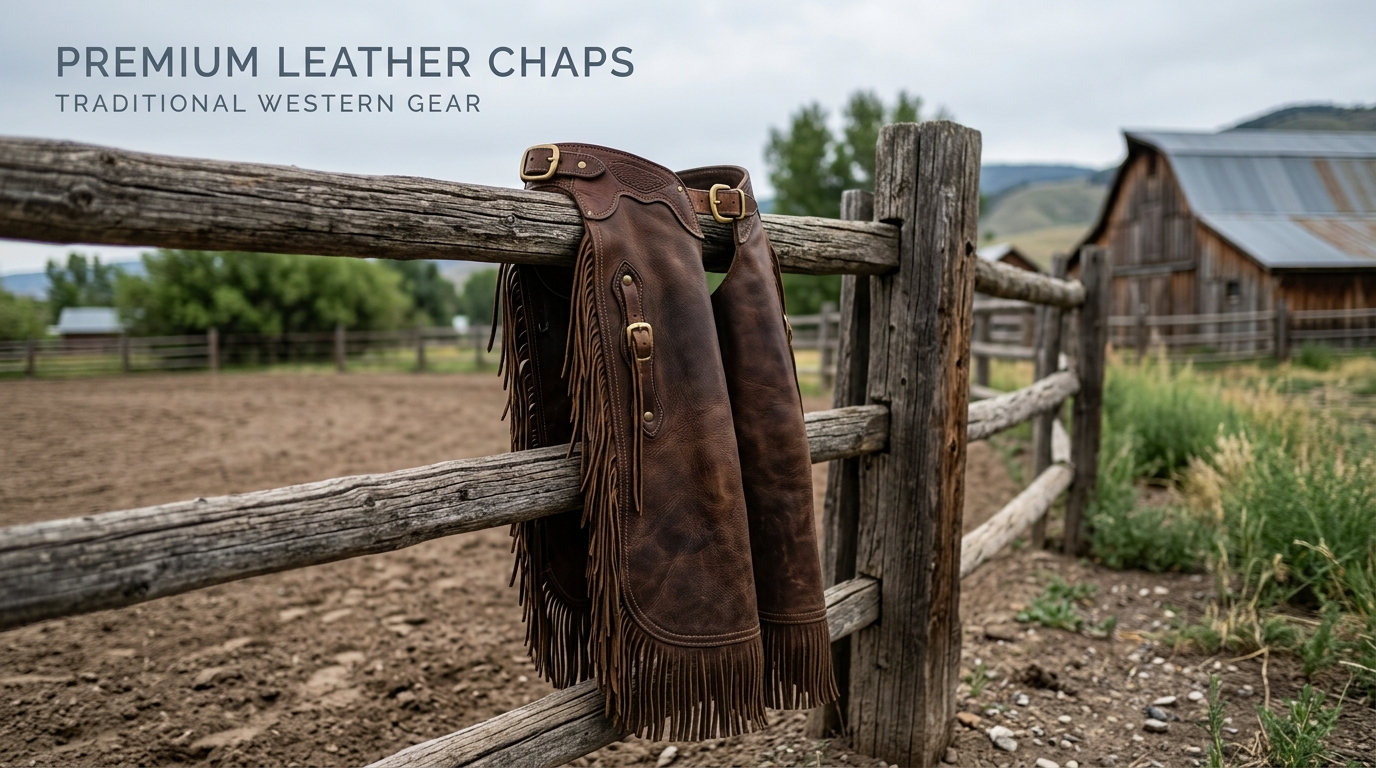
Women’s leather chaps western gear is the ultimate investment for anyone who spends their days working cattle, training horses, or simply enjoying long trail rides across demanding landscapes. You already know that regular denim jeans just don’t cut it. Thorns, thick brush, and constant saddle friction can quickly turn a great ride into a painful experience. That’s where a great pair of chaps comes in.
They aren’t just for show; they are an essential piece of equestrian gear designed to act as a second skin. Wearing them over your jeans absorbs the daily wear and tear, prevents saddle pinches, and blocks out the biting wind. Let’s break down how to find the perfect pair of chaps for your daily grind, ensuring you stay comfortable and protected on the open range.
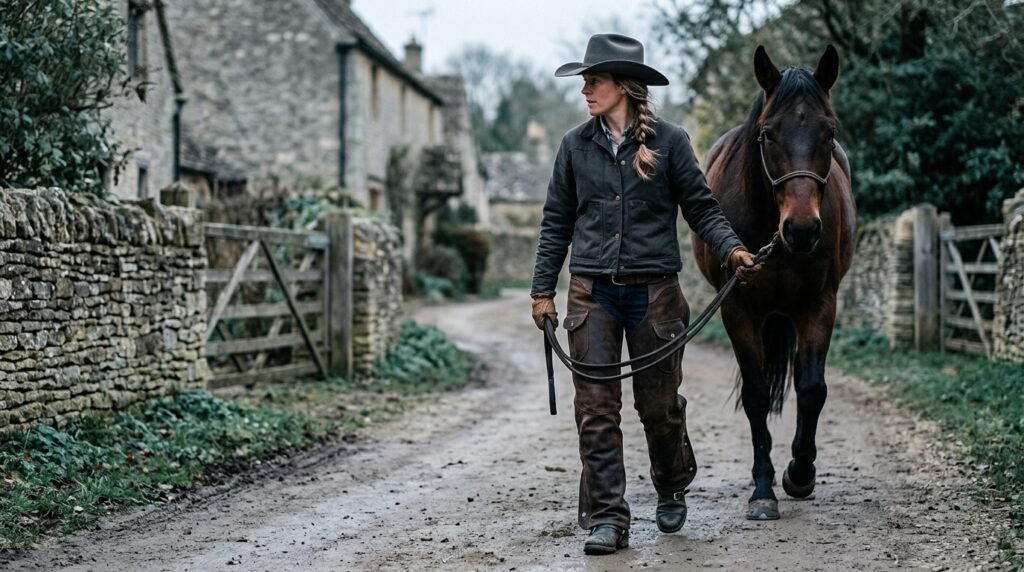
1. Finding Your Style: Batwings vs. Chinks
When shopping for protective leg wear, you will generally choose between two classic silhouettes. Your choice really depends on your local climate and what kind of chores you tackle daily.
- The Full-Length Batwing: This is the time-tested standard for open-pasture trail riding and heavy livestock handling. These chaps buckle securely around your upper thigh, but from the mid-thigh down to your boot, the leather is left open and flared. This smart design gives your knees complete freedom to bend. You can mount your horse, hop over a fence, or crouch down to check a calf without feeling restricted. Plus, the open flaps let the breeze in when things get warm.
- Traditional Western Chinks: If you ride in hot, humid weather, chinks are an absolute lifesaver. They are a shorter, lightweight alternative that stops right around your mid-calf. Often decorated with beautiful long fringe, chinks give you heavy-duty protection right where you need it most (your thighs and knees) while letting your lower legs breathe.
2. Choosing the Right Leather: Smooth vs. Roughout
The way your gear handles the weather—and how well it grips the saddle—comes down to the finish of the cowhide.
- Smooth Full-Grain Leather: This is your best bet for weather resistance. Morning dew, rain, and thick trail mud just slide right off a smooth finish, making them super easy to wipe down at the end of a long day. Over time, smooth leather will mold perfectly to your legs and develop a gorgeous, rich patina.
- Roughout Suede: Roughout leather wears the textured, fibrous inside of the hide on the outside. Why? Because that suede texture acts like a natural grip against your saddle. If you need extra stability in the seat during sudden livestock movements or steep trail climbs, roughout leather will help lock you in place.
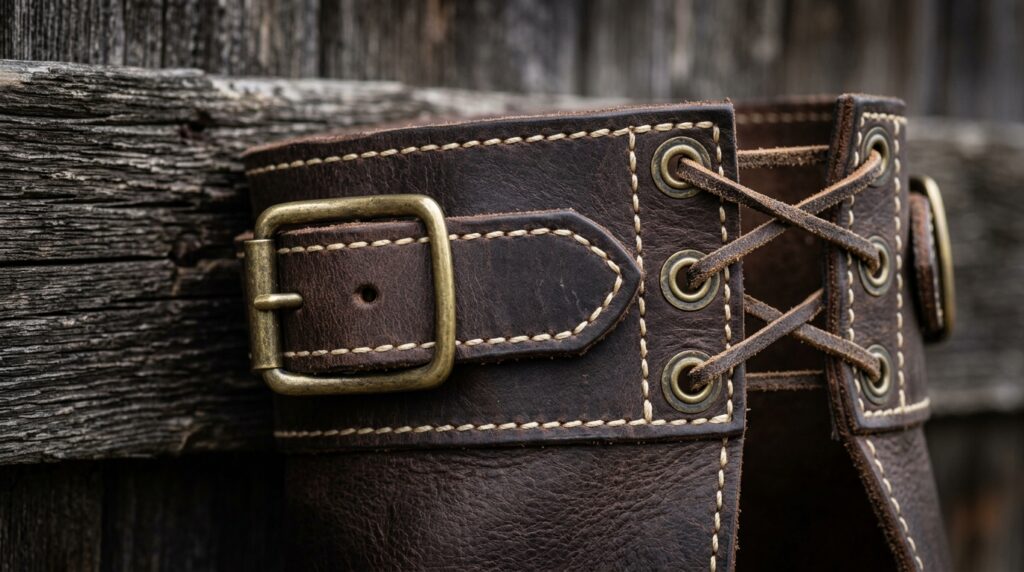
3. Getting the Perfect Fit
Because thick cowhide doesn’t stretch much, guessing your size is a recipe for an uncomfortable ride. Grab a flexible measuring tape and put on your favorite riding jeans and boots before taking these measurements for your new gear:
| Where to Measure | How to Do It | Why It Matters |
| Upper Thigh | Wrap the tape around the thickest part of your upper thigh. | Add 1.5 to 2 inches to this number so your leg muscles have room to expand when you sit deep in the saddle. |
| Mid-Calf | Measure around the widest part of your calf over your jeans. | If you are buying a streamlined zip-up style, you need this clearance so the zippers close easily without cutting off your circulation. |
| Outseam Length | Measure straight down the outside of your leg from your belt line to the bottom of your boot heel. | This ensures the material is long enough to completely cover your ankles and keep trail debris out of your boots. |
4. Caring for Your Chaps
Your women’s leather chaps western gear is going to take a beating from horse sweat, dirt, and mud. To keep the hide from drying out and cracking, you need a simple but solid care routine:
- Brush off the Dirt: After a dusty ride, let any mud dry completely at room temperature. Then, take a stiff horsehair brush and vigorously sweep away the dirt from the leather grain, the fringe, and the hardware.
- Condition Smooth Leather: Twice a year, treat your smooth leather to a light coat of natural beeswax or a high-quality leather conditioner. This keeps the hide soft, strong, and completely windproof.
- Revive the Suede: Never put standard oils or heavy waxes on roughout suede—it will ruin the texture! Instead, use a dedicated suede wire brush to lift the fibers and keep that high-friction grip working perfectly.