
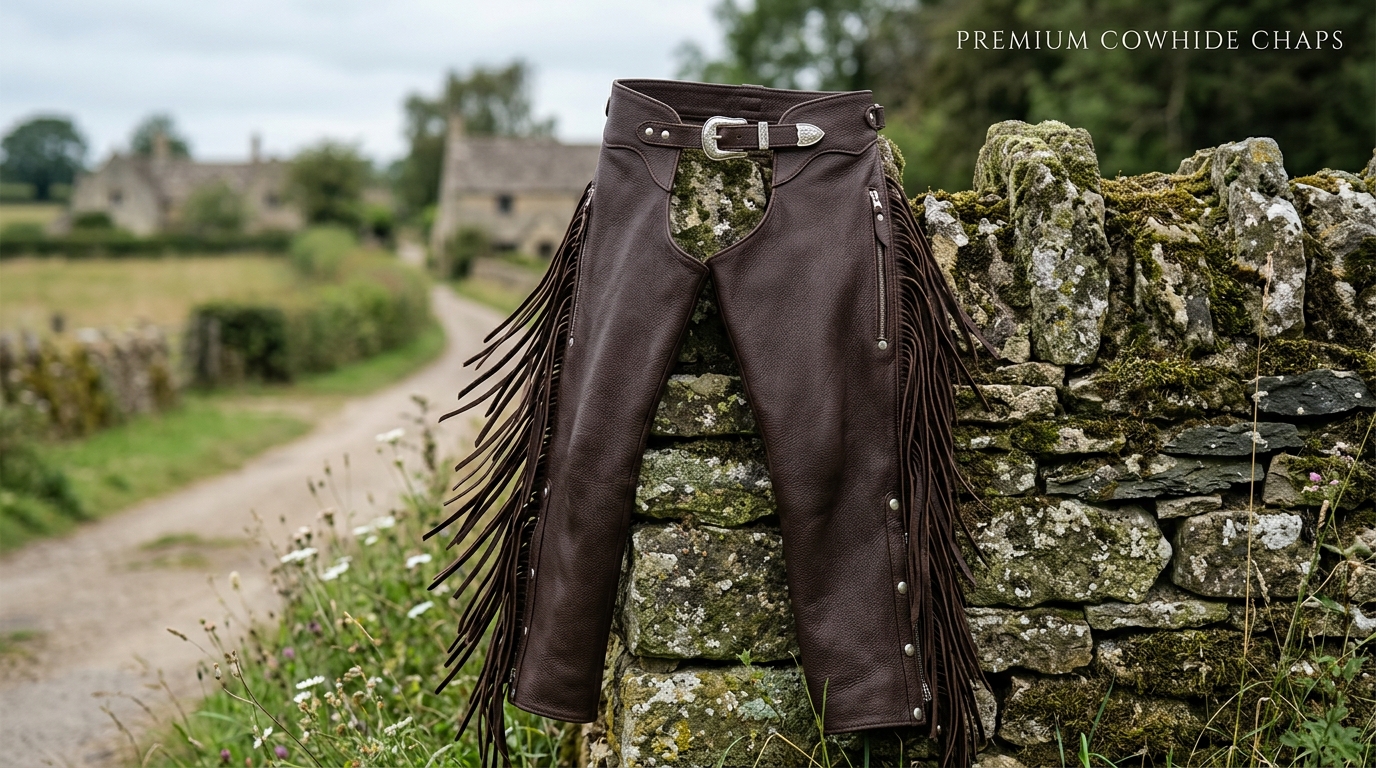
For riders who demand complete field safety without sacrificing traditional western styling, investing in premium women’s fringed leather chaps is a necessity. Standard work pants or denim jeans easily tear when clearing overgrown brush on a rural property, handling heavy livestock in close quarters, or navigating tight village corrals.
A dedicated set of full-length leather chaps functions as a highly durable, flexible armor layer that shields your legs from painful cuts, absorbs friction, and stabilizes your position in the saddle.
Choosing a pair of women’s fringed leather chaps requires a clear understanding of material textures, traditional western cuts, and specific anatomical sizing metrics. This guide details the functional mechanics, historical purpose of fringe, and care routines necessary to preserve your leather gear for decades of daily utility in demanding rural environments.
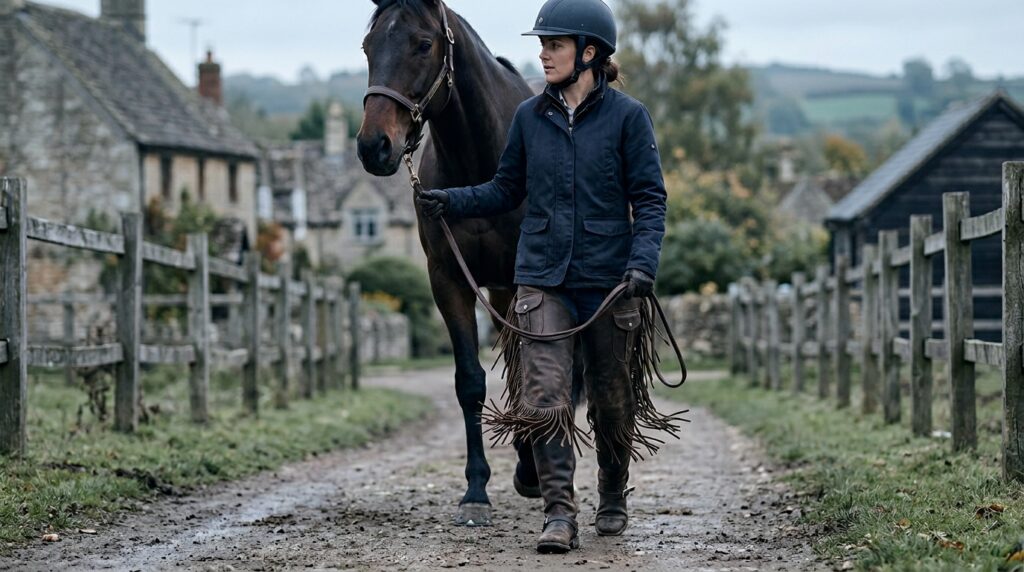
1. The Functional Design Elements of Western Leg Armor
While modern fashion often treats western accents purely as decoration, every single component of authentic women’s fringed leather chaps serves a specific mechanical purpose designed to handle the realities of daily farm labor and trail riding:
- The Aerodynamic Weighted Fringe: The iconic leather fringe along the outer seams is intensely practical. In a heavy rainstorm, the individual leather strips act as a natural drainage system, channeling water downward away from the main body of the leg so your denim stays dry. Furthermore, the motion of the fringe creates a natural visual marker that adds aesthetic emphasis to a rider’s movements in the arena or on the trail.
- 360-Degree Hazard Shielding: Extending fully from the upper thigh down to the boot heel, these chaps create an uninterrupted defensive barrier against jagged barbed wire snags, flying trail debris, and abrasive thickets.
- Insulation and Wind Defense: Thick, premium cowhide is completely windproof. During freezing early-morning chore runs or windy trail rides, women’s fringed leather chaps trap essential body heat, keeping your muscles warm and preventing fatigue.
2. Fit Configuration: Precision Sizing for a Woman’s Frame
Standard unisex chaps often fit poorly on a woman’s frame, resulting in leather that sags dangerously around the waist or bunches uncomfortably behind the knees. To achieve total comfort, follow this measurement sequence while wearing your standard thick riding jeans and work boots:
1.Calculate Upper Thigh Circumference:
Wrap a flexible measuring tape around the absolute widest section of your upper thigh. You must add 1.5 to 2 inches to this baseline measurement. This critical addition allows your thigh muscles to expand naturally when you are seated deep in a saddle or forcefully gripping a horse.
2.Verify the Outseam Drop Length:
Measure straight down the outside of your leg from your belt line to the absolute base of your boot heel. The leather fringe and main panel must completely cover your ankle joint while riding to prevent dirt and gravel from entering your footwear.
3.Confirm Waistband Adjustability:
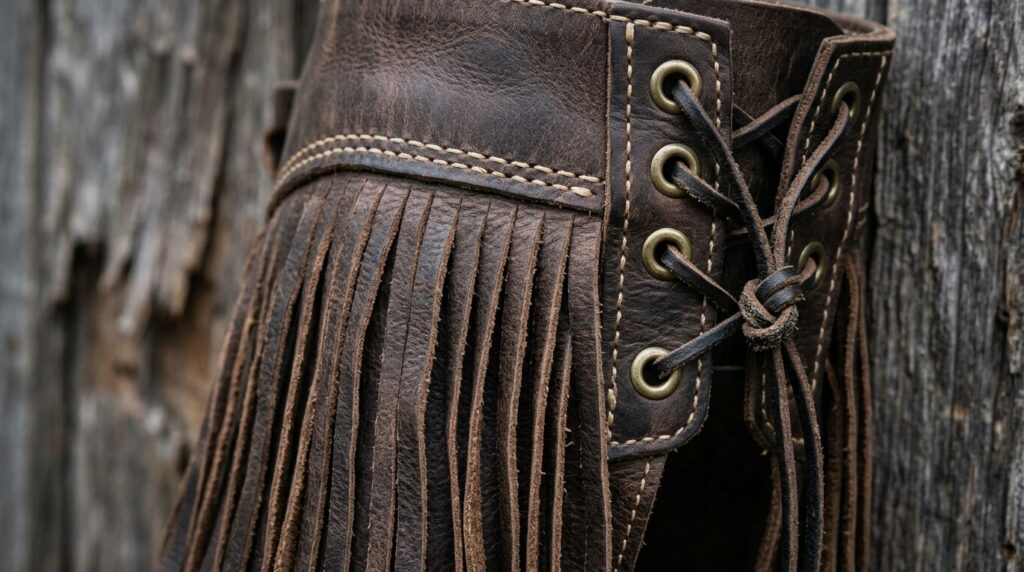
Ensure the chaps utilize a heavy front belt buckle combined with an adjustable rear leather lacing system. This mechanism allows the waist to expand easily over heavy winter canvas jackets or contract tightly over thin summer shirts.
3. Selecting Your Silhouette: Western Cut Comparison
When exploring high-quality women’s fringed leather chaps, you will primarily encounter two classic western cuts tailored for different climates and tasks:
| Chap Silhouette Style | Lower Leg Closure Profile | Core Functional Advantage | Ideal Climate / Application |
| Traditional Batwing | Secures at the upper thigh; lower leg left open to flare naturally. | Unrestricted knee joint bending; exceptionally fast to mount and dismount your horse. | Warm weather ranch hands, cattle cutting, and open village gates. |
| Western Chinks | Shorter, half-length design ending mid-calf just below the knee. | Ultra-lightweight build; shields knees from rope burns while maximizing airflow. | Hot, humid environments and intensive ground-work chores. |
4. Routine Maintenance Protocols for Premium Cowhide
Genuine cowhide absorbs a persistent mix of trail dust, livestock sweat, and mud. To keep the organic fibers from drying out, cracking, and breaking down over time, implement these care steps:
Soil Removal
After a long day on a dusty path, allow any wet mud to dry completely. Use a stiff-bristled horsehair brush to vigorously sweep the dried dirt out of the leather grain, independent fringe strands, and buckle tracks. Always brush along the direction of the stitching to shield the threads from premature wear.
Conditioning Smooth Leather
For smooth full-grain finishes, apply a light coat of natural beeswax balm or premium leather conditioner twice a year to replenish the natural oils lost to sun exposure, keeping the hide supple and weather-resistant.
Roughout Suede Restoration
For roughout suede chaps, never apply standard paste waxes or heavy liquid oils, as this permanently flattens the textured grip. Instead, use a dedicated suede wire brush or eraser to lift the fibers and restore the high-friction nap required for a locked-in saddle seat.
5. Conclusion: Protecting Your Western Wardrobe
Investing in an authentic pair of women’s fringed leather chaps establishes an elite layer of protection over your lower limbs, keeping you safe from unpredictable trail and arena hazards. By selecting between a flexible full-length batwing or a highly breathable warm-weather chink, and maintaining appropriate structural clearance over your work denim, you ensure absolute comfort in the field. Adhering to regular, heat-free cleaning and material-specific hydration habits guarantees your traditional armor remains supple, balanced, and functional for a lifetime of dependable utility.