
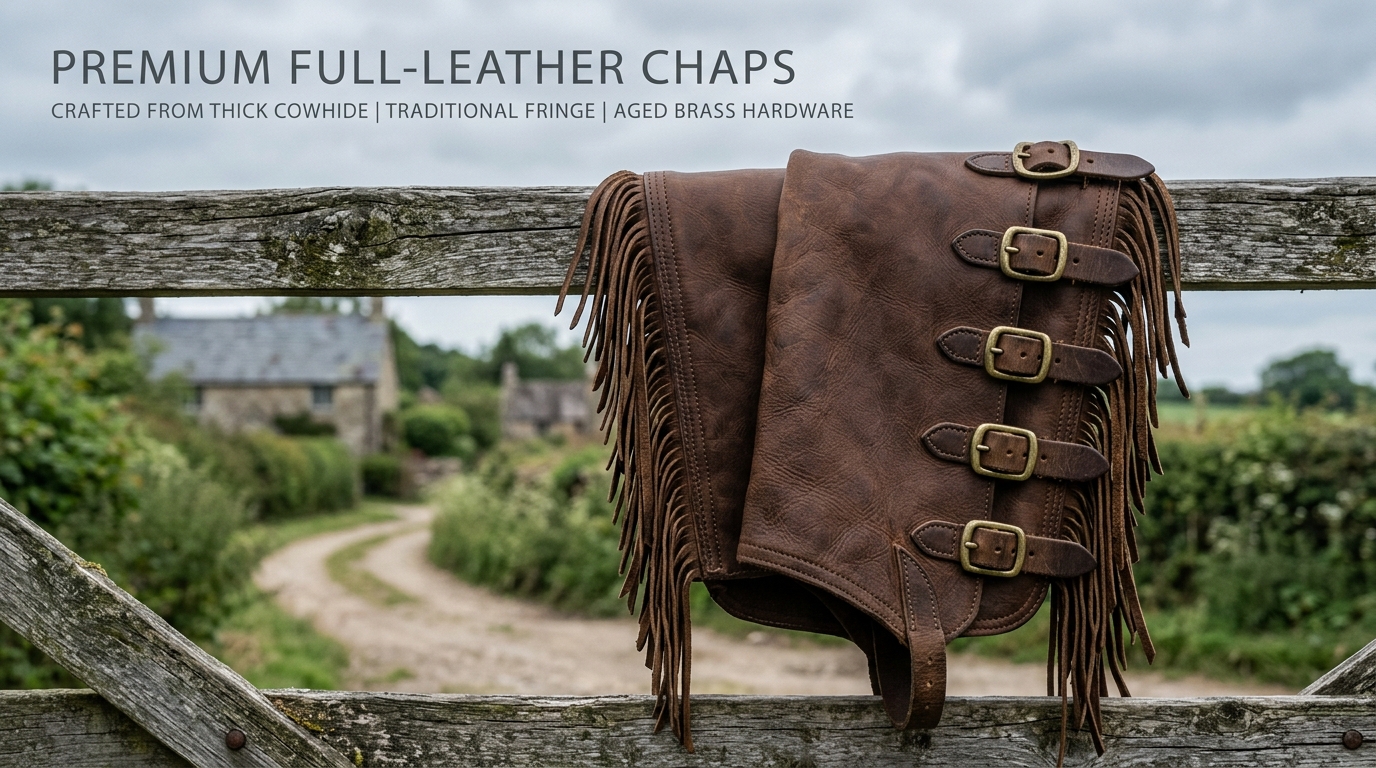
When navigating dense thorny thickets, clearing brush on rural properties, or handling heavy livestock in tight village pens, standard denim work jeans fail to provide adequate physical protection. Full leather chaps serve as an essential, high-density protective barrier worn directly over your everyday riding denim. By enclosing the legs in premium cowhide, this traditional western gear shields the lower body from severe lacerations, absorbs heavy impacts, and improves overall performance in the saddle.
Selecting a lifelong pair of chaps requires a clear understanding of leather grades, structural reinforcement, and precise fitment metrics. This comprehensive guide details the functional mechanics of full-length leg armor, ensuring you acquire equipment that delivers proven durability and authentic western utility.
1. The Functional Advantages of Full-Length Protection
Traditional full leather chaps are engineered to offer comprehensive defense across three primary categories:
- 360-Degree Abrasion Shielding: Unlike half-chaps or chinks that stop near the knee, full-length chaps extend completely from the upper thigh down to the boot heel. This provides uninterrupted defense against sharp branches, flying gravel, and jagged barbed wire snags along the trail.
- Enhanced Saddle Stability: Many heavy-duty chaps utilize a roughout (suede) finish on the hide. The textured nap of roughout leather generates high friction when pressed against a leather saddle, locking the rider’s legs firmly into position during sudden, unpredictable livestock movements.
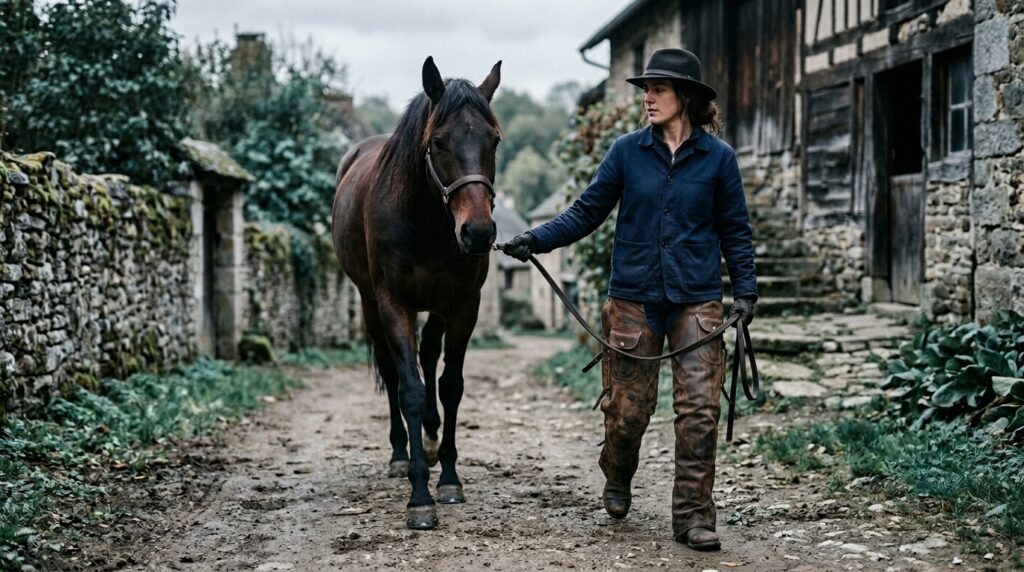
- Wind and Cold Mitigation: Thick full-grain leather is naturally windproof and highly insulating. As shown in the rugged workspace layout above, the dense material fits securely over standard denim to trap body heat efficiently, preventing muscle stiffness and cold fatigue during early morning farm chores.
2. Sizing Infrastructure: Fitment Metrics for Full-Length Gear
Because genuine leather does not stretch significantly across its thickness, obtaining exact physical measurements over your standard thick work jeans is mandatory prior to purchase. Follow this validation sequence to ensure accurate sizing:
1.Calculate Upper Thigh Circumference:
Wrap a flexible tape measure around the absolute widest part of your upper thigh while wearing your heaviest riding denim. Add 1.5 to 2 inches to this baseline number to allow your muscles to expand comfortably when transitioning to a deep seated position in the saddle.
2.Verify Mid-Calf Clearance:
Measure the widest part of your calf muscle directly over your work jeans. This step is absolutely critical for zippered shotgun cuts, guaranteeing that the side closures can slide shut cleanly without binding or restricting lower limb circulation.
3.Map the Outseam Drop Length:
Measure from your natural belt line straight down the outside profile of your leg to the absolute base of your boot heel. An accurate length ensures the trailing leather completely covers your ankle joint while riding, keeping kicking dirt, twigs, and mud out of your footwear.
3. Evaluating Cut Styles: Batwing vs. Shotgun
The overall shape and fastening mechanism of your chaps dictate how easily you can move both on the ground and in the saddle:
| Chap Silhouette Style | Fastening & Closure Mechanism | Core Functional Advantage | Ideal Operational Application |
| Traditional Batwing | Fastens tightly around the upper thigh; lower leg left completely unfastened. | Wide leather flaps flare open naturally to allow maximum airflow and unrestricted knee joint flexibility. | General ranch work, sorting cattle, and tasks requiring frequent mounting and dismounting. |
| Streamlined Shotgun | Encloses the leg completely from thigh to ankle via full side zippers or snaps. | Low-profile silhouette traps body heat perfectly and minimizes the risk of snagging on dense brush or gear levers. | Winter trail riding, severe cold-weather elements, and clearing thick undergrowth. |
4. Routine Maintenance for Lifelong Value
Heavy-duty cowhide absorbs a relentless mix of trail dust, livestock sweat, and mud. To keep the organic fibers from drying out, cracking, and breaking down, implement these strict care protocols:
Debris Removal
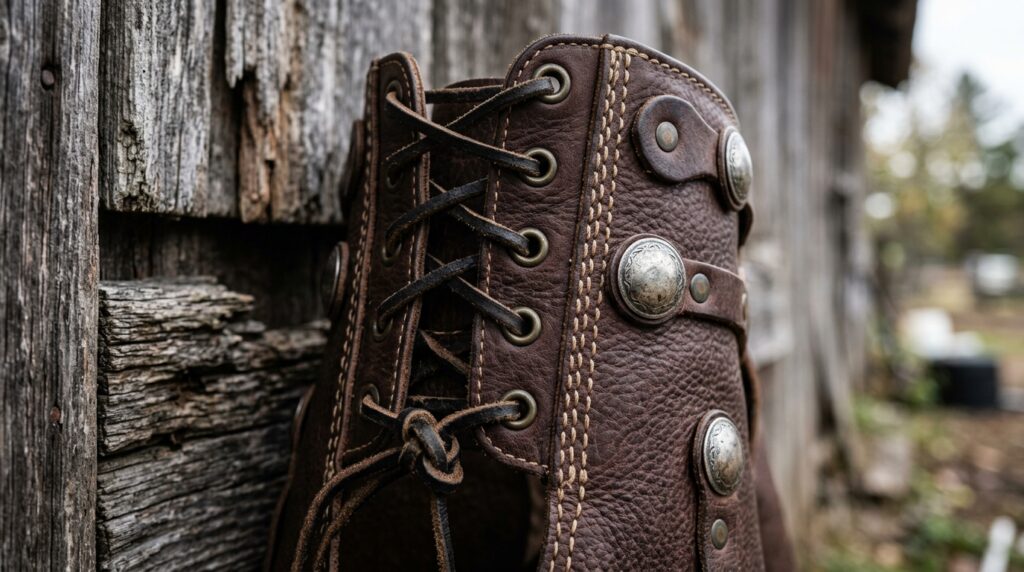
After a long workday on a dusty path or inside a muddy corral, allow any wet dirt to dry completely on the leather surface. Use a stiff-bristled horsehair brush to vigorously sweep the soil out of the leather grain, fringe lines, and zipper tracks. Always brush in the direction of the seams to protect the stitching threads.
Conditioning Smooth Hides
Every six months, apply a light coat of natural beeswax balm or premium leather conditioner to smooth full-grain chaps to replenish the natural oils lost to sun exposure.
Roughout Suede Restoration
For roughout chaps, never apply standard oils or paste waxes, as this permanently ruins the friction-generating nap. Use a specialized suede brush or brass-wire brush to lift the crushed fibers and restore your mechanical saddle grip.
5. Conclusion: Shielding Your Field Performance
Investing in an authentic pair of full leather chaps establishes a highly durable, modular shield over your lower limbs, transforming your defensive readiness on the ranch or trail. By matching your specific regional climate demands to either a flexible batwing or an insulating shotgun cut, and maintaining appropriate structural spacing over your riding denim, you insulate your capital from rapid gear breakdown. Applying consistent, wax-based preservation steps ensures your traditional armor remains supple, resilient, and completely field-ready for decades of dependable outdoor utility.
2 Comments
Women's Fringed Leather Chaps: Premium Western Equestrian Gear
June 8, 2026[…] straight down the outside of your leg from your belt line to the absolute base of your boot heel. The leather fringe and main panel must completely cover your ankle joint while riding to prevent dirt and gravel from […]
Leather Chaps Bull Riding Setup: The Professional Arena Guide
June 10, 2026[…] Friction Adhesion: The vast majority of professional bull riding chaps are manufactured using heavy roughout (suede) cowhide. The textured nap of roughout leather creates […]