
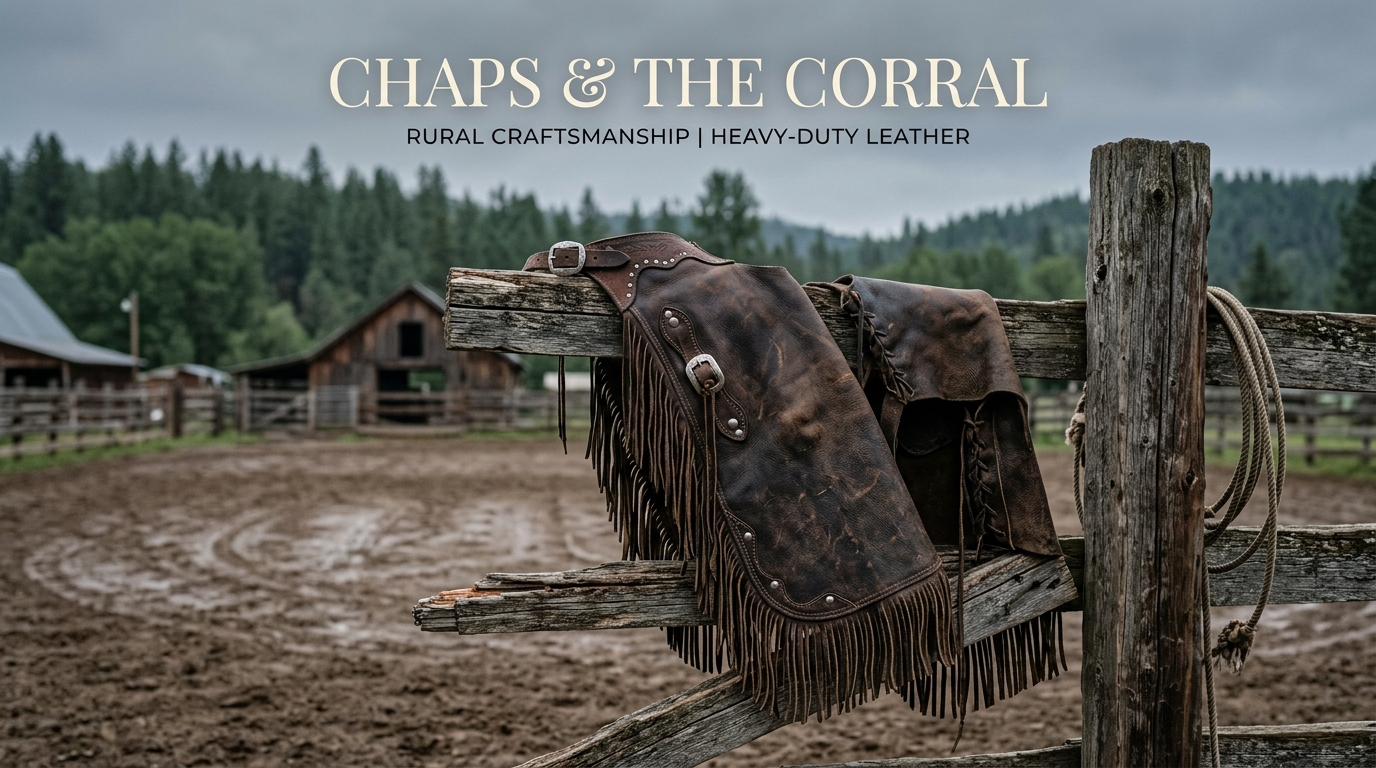
Leather rodeo chaps are highly specialized protective garments engineered for the severe physical demands of competitive riding and heavy-duty ranch labor. When participating in roughstock events like bull riding or saddle bronc riding, or when managing unpredictable livestock, standard denim cannot withstand the immense friction and impact. Authentic rodeo chaps serve as a heavy-duty, modular barrier that shields the rider while actively improving their mechanical advantage in the saddle.
Selecting the proper pair requires a firm understanding of specific leather cuts, material grades, and exact sizing measurements. This guide details the structural and functional aspects of professional rodeo chaps, ensuring you acquire equipment that delivers proven durability and authentic western utility.
The Functional Mechanics of Arena Leg Armor
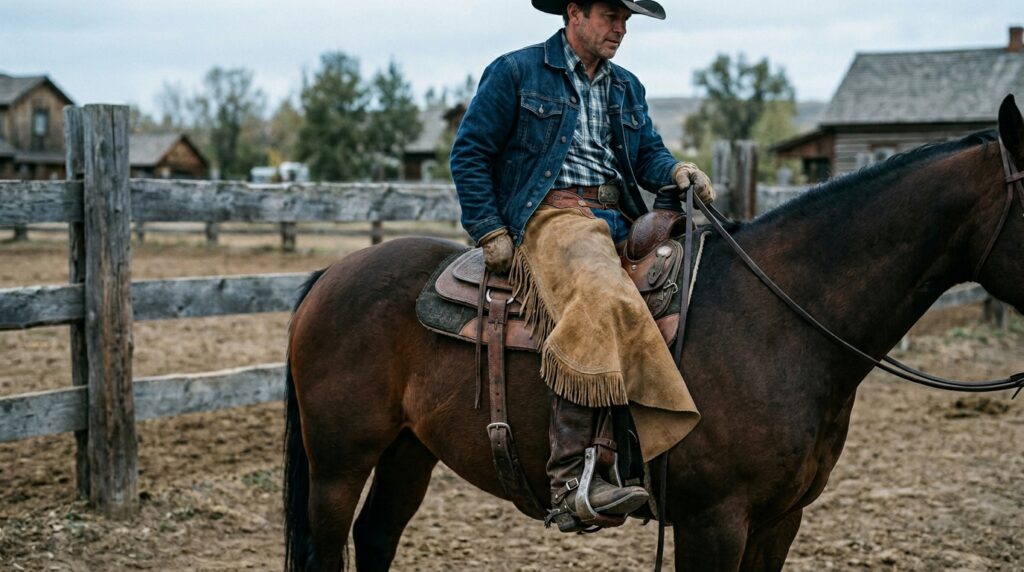
The design of rodeo chaps prioritizes maximum mobility, extreme durability, and saddle adhesion. Worn over standard riding jeans, they offer distinct mechanical benefits:
- Superior Saddle Grip: The majority of professional rodeo chaps are manufactured using heavy roughout (suede) leather. The textured nap of the suede creates intense friction against a leather saddle or a bareback rigging. This friction is a critical component that helps a rider maintain a deep, secure seat during aggressive, unpredictable animal movements.
- Impact and Abrasion Resistance: Premium, thick cowhide absorbs the physical impact from arena fencing, livestock horns, and heavy brush on rural trails. This dense layer prevents severe skin lacerations and protects primary clothing from being destroyed during high-risk events.
- Unrestricted Joint Mobility: Unlike stiff motorcycle gear, rodeo chaps are cut specifically to allow the knee and hip joints to bend and articulate without any leather binding or pinching, ensuring the rider can spur and react with complete freedom of movement.
The Standard Silhouette: The Rodeo Batwing Cut
While there are various styles of western leg wear, the batwing cut is the undisputed standard for rodeo athletes and active ranch workers.
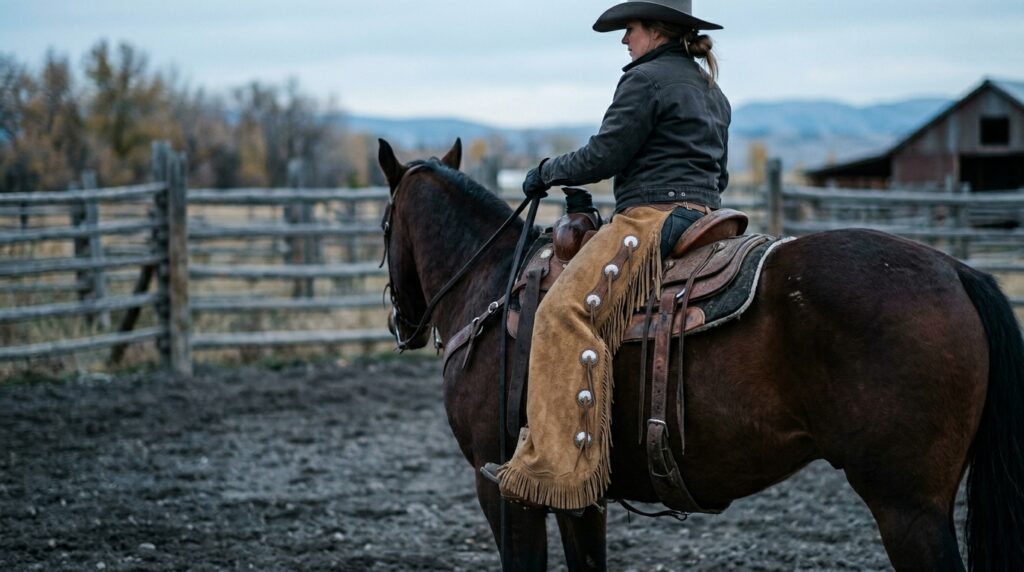
Batwing chaps secure tightly around the upper thigh using reinforced leather straps and heavy-duty buckles. However, the lower leg is left completely unfastened, allowing the thick leather to flare outward dramatically.
As captured in high-intensity roughstock events, this open-leg design serves two purposes:
- Full Range of Motion: It permits a complete range of motion for the knee joint, which is necessary for the exaggerated leg movements required to mark out and spur effectively.
- Judged Visual Emphasis: The wide, flaring leather adds visual emphasis to the rider’s spurring action, which is a key scoring metric in judged rodeo competitions.
These chaps also feature heavy, elongated leather fringe down the outer seams. Beyond the traditional aesthetic, the fringe adds physical weight to the edge of the leather, ensuring the protective flap pulls back down cleanly after a sharp movement.
Accurate Sizing for Professional Utility
Rodeo chaps must fit with precision to function correctly. Incorrect sizing leads to chafing, restricted blood flow, or a loose fit that can snag on arena equipment.
1.Upper Thigh Measurement:
Wrap a flexible measuring tape around the widest part of your upper thigh while wearing your standard riding jeans. Add 1 to 2 inches to this baseline measurement. This crucial addition allows your thigh muscles to expand comfortably when you are forcefully gripping the animal.
2.Waist Adjustment Anchor:
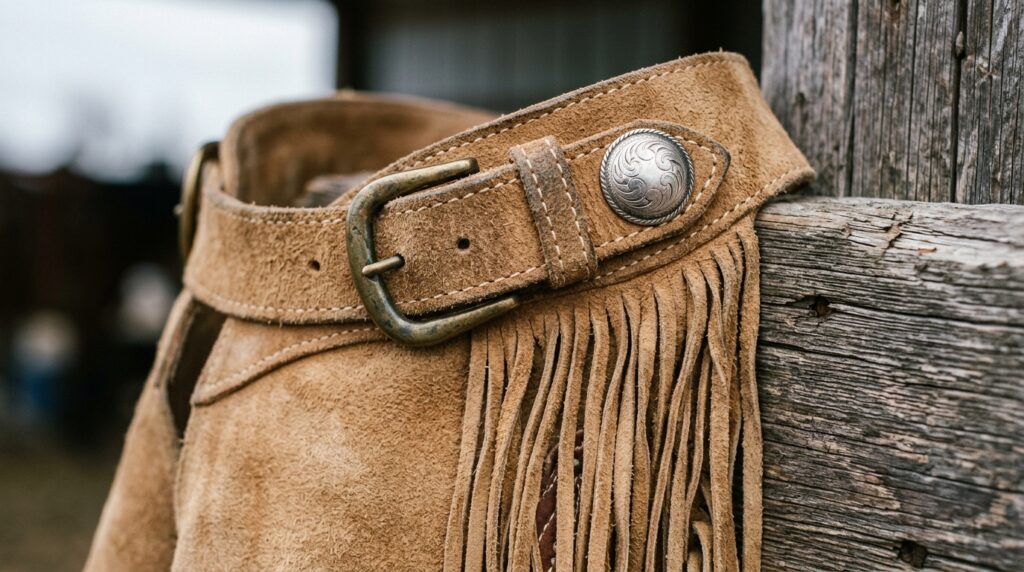
Measure your waistline directly over your jeans and belt. Authentic rodeo chaps utilize a heavy-duty front belt buckle and a highly adjustable rear leather lacing system. This allows the waistline to be expanded or contracted by several inches, ensuring a secure fit regardless of the clothing layers worn underneath.
3.Outseam Length Drop:
Measure from your belt line straight down the outside of your leg to the heel of your riding boot. The leather must completely cover the boot top to prevent dirt, arena dirt, and debris from entering your footwear during an event.
Arena Legwear Performance Matrix
To balance protection against raw agility, understand how the classic rodeo batwing cuts compare to alternative western layouts:
| Chap Cut Style | Primary Arena / Ranch Benefit | Leg Coverage Profile | Ideal Climate Use |
| Rodeo Batwing | Maximum mobility & spurring visibility; free knee bending. | Full thigh closure; flared and open lower leg. | Varied; highly breathable due to open-back design. |
| Traditional Chinks | Extremely lightweight; excellent airflow for hot arenas. | Knee-length coverage; features long edge fringe. | Hot / Summer ranch work and cutting events. |
| Western Shotgun | Complete wraparound protection; maximum insulation. | Form-fitting, zipped enclosure from thigh to ankle. | Severe cold weather; dense trail brush. |
Maintenance Requirements for Heavy-Duty Cowhide
To preserve the structural integrity and grip of your gear, routine maintenance must be applied after exposure to arena dirt or trail mud.
- Mud and Dirt Removal: Allow any wet arena mud to dry completely. Use a stiff-bristled horsehair brush to vigorously sweep the dirt out of the leather grain, fringe, and seams.
- Maintaining Roughout Leather: Rodeo chaps made of roughout (suede) must never be treated with standard oils or waxes, as this will permanently flatten the nap and destroy the friction-generating grip. Use a specialized suede brush or a suede eraser to aggressively restore the rough texture after heavy cleaning.
- Hardware Inspection: Regularly inspect the brass or stainless steel thigh buckles, conchos, and rear lacing. Ensure the leather straps holding the hardware have not stretched or weakened under the severe stress of competition.