
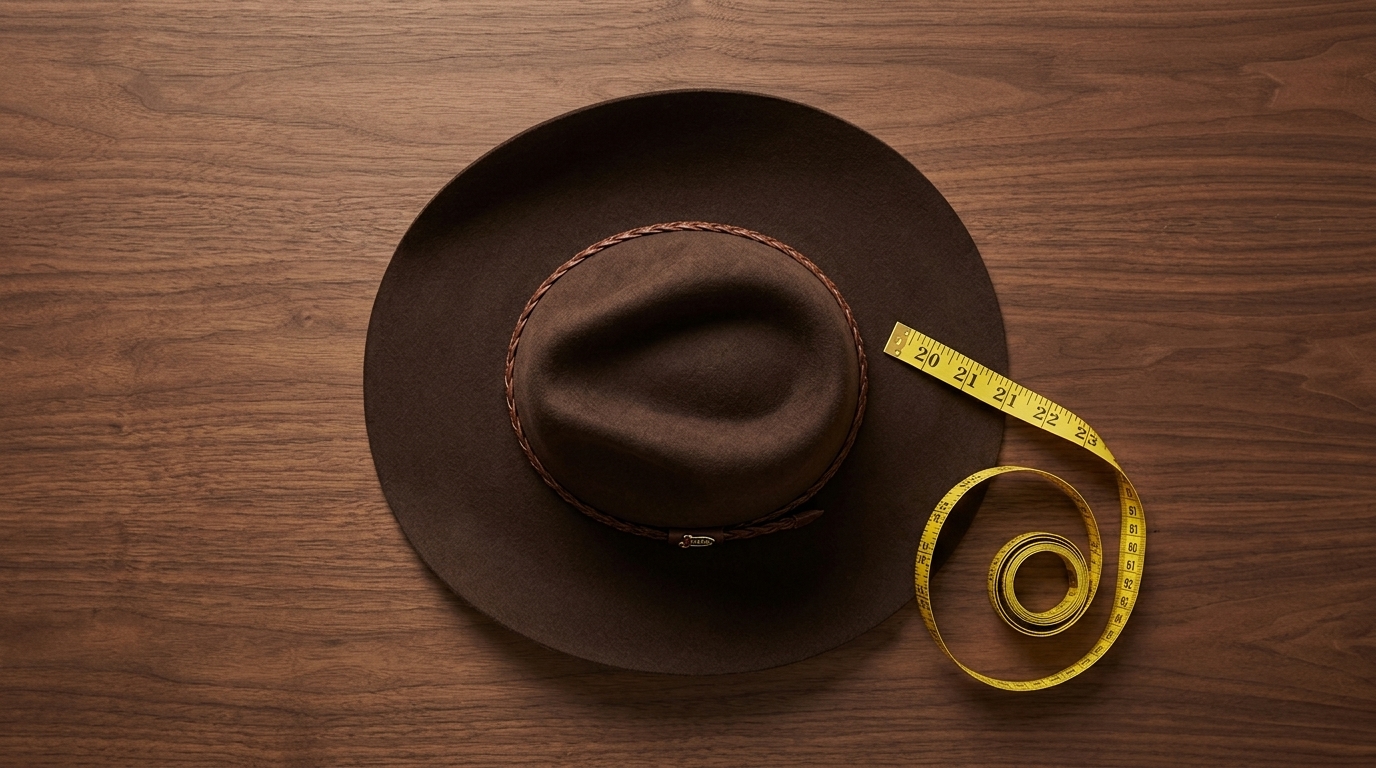
A Quick Story: Let me share a quick, slightly embarrassing story about my very first foray into premium western wear. Years ago, I saved up for weeks to purchase a stunning, handcrafted leather hat from a high-end boutique. I didn’t want to bother with a measuring tape, so I simply guessed my size based on the standard baseball caps I usually wore. “A large should be fine,” I confidently told myself.
I eagerly tracked the package for days. Finally, the box arrived. I pulled out this magnificent piece of craftsmanship, placed it on my head, and… it immediately slid right past my forehead, completely covering my eyebrows. I looked ridiculous. It completely ruined the cinematic, confident vibe I was going for. Worse yet, I had to pack it back up, pay for return shipping, and wait another two weeks to get the right size.
That frustrating experience taught me a highly valuable lesson: when it comes to structured headwear, guessing is never an option. Unlike a t-shirt or a stretchy beanie, a premium hat is built to hold its rigid shape. Whether you are shopping for a sleek modern flat brim or a rugged, wide-brimmed classic, understanding how to use a proper cowboy hat size chart is the single most important step before you click the “checkout” button.
In this comprehensive guide, we are going to completely demystify the world of western hat sizes. By the end of this article, you will know exactly how to measure your head like a professional tailor, how to read standard sizing charts, and how to make your next purchase with absolute, unwavering confidence.

Why Precise Hat Sizing is Absolutely Crucial
When you buy cheap, mass-produced clothing, you are used to the standard “Small, Medium, Large” sizing system. These garments are designed with elastic or forgiving fabrics meant to fit a wide variety of body types.
However, premium headwear is a completely different story. High-quality cowboy hat styles are typically crafted from dense, unyielding materials like stiffened rabbit fur felt, thick full-grain leather, or tightly woven straw. These materials do not stretch easily.
First and foremost, a hat that is even slightly too small will act like a vice grip on your skull, causing severe tension headaches within an hour of wearing it. Conversely, a hat that is slightly too large will constantly shift around, slide down your forehead, or blow completely off your head the moment a stiff breeze rolls through.
Therefore, utilizing a reliable cowboy hat size chart is not just a suggestion; it is a vital requirement for comfort. A hat that fits perfectly feels weightless. It should rest securely on your head with a gentle, comfortable grip, allowing you to go about your day completely forgetting it is even there.
Step-by-Step Guide: How to Measure Your Head Accurately
You do not need to visit a professional tailor to get an accurate measurement. With a few basic tools you likely already have at home, you can find your exact hat size in less than two minutes.
Step 1: Gather the Right Tools
Do not try to use a rigid metal tape measure from your toolbox; it will not conform to the shape of your head and will give you a highly inaccurate reading. You need a soft, flexible sewing measuring tape. If you do not have one, you can easily use a piece of non-stretchy string or a thick piece of yarn.
Step 2: Position the Tape Correctly
Stand in front of a mirror to ensure your placement is straight. Wrap the soft measuring tape (or string) around your head. The tape should rest exactly where the sweatband of the hat will sit. This is typically about one to two finger-widths (around half an inch) above your eyebrows, and roughly a quarter-inch above the top of your ears.
Step 3: Find the Sweet Spot for Tension
This is the most critical step for a perfect hat fit. Do not pull the tape incredibly tight, but do not let it hang loosely either. Pull it just snug enough so that it feels comfortable and secure, replicating exactly how you want the hat to feel on your head.
Step 4: Record Your Exact Measurements
Pinch the tape where it meets the starting point. If you used a piece of string, carefully mark the meeting point with a pen, lay the string flat on a table, and measure it with a standard ruler. You must write down the measurement in both inches (to the nearest 1/8th of an inch) and centimeters. Modern hat sizing guides across the globe use a mix of both metrics, so having both numbers on hand is incredibly helpful.
The Ultimate Cowboy Hat Size Chart
Now that you have your precise head circumference, it is time to translate that number into a standard hat size. While sizes can occasionally vary slightly between specific artisan manufacturers, this universal cowboy hat size chart covers the industry standards used by the most respected hatmakers in the world.
| Circumference (Inches) | Circumference (Centimeters) | US Hat Size | General Sizing |
| 21 1/8″ | 54 cm | 6 3/4 | Small |
| 21 1/2″ | 55 cm | 6 7/8 | Small |
| 21 7/8″ | 56 cm | 7 | Medium |
| 22 1/4″ | 57 cm | 7 1/8 | Medium |
| 22 5/8″ | 58 cm | 7 1/4 | Large |
| 23″ | 59 cm | 7 3/8 | Large |
| 23 1/2″ | 60 cm | 7 1/2 | X-Large |
| 23 7/8″ | 61 cm | 7 5/8 | X-Large |
| 24 1/4″ | 62 cm | 7 3/4 | XX-Large |
| 24 5/8″ | 63 cm | 7 7/8 | XX-Large |
Pro Tip: If your measurement falls exactly between two sizes on the chart, you should always round up to the larger size. It is incredibly easy to add a small strip of weather-stripping or a dedicated hat-sizing pad inside the sweatband to tighten a slightly loose hat. However, it is nearly impossible to permanently stretch a stiff hat that is too small.
Understanding Head Shapes: The Final Piece of the Puzzle
While the cowboy hat size chart dictates the circumference, you must also consider the physical shape of your head. Human skulls are not perfectly round bowling balls, and hatmakers take this into account.
- The Regular Oval: This is the most common head shape. It means your head is slightly longer from front to back than it is from side to side. The vast majority of off-the-shelf hats are built on a “Regular Oval” block.
- The Long Oval: Some individuals have heads that are noticeably elongated from the forehead to the back of the skull. If you often find that hats fit well on the sides of your head but leave a painful red mark on your forehead, you likely have a Long Oval head shape. Many premium manufacturers, like Justin Hats or Stetson, specifically offer “Long Oval” versions of their most popular models.
- The Round Oval: Conversely, if hats often feel incredibly tight on the sides above your ears but loose on your forehead, you have a Round Oval shape.
Understanding your specific shape ensures that your custom hat sizing journey results in a product that feels like it was custom-molded just for you.
Why You Can Now Shop Online with Absolute Confidence
Historically, people were terrified of buying structured hats on the internet. The fear of getting the wrong fit kept many buyers limited to whatever small selection their local western wear store had in stock.
However, you are no longer constrained by those limitations. Armed with your exact measurements and a firm understanding of the standard cowboy hat size chart, the entire world of premium headwear is now at your fingertips. You can browse extensive digital catalogs, explore unique flat brim styles, and purchase luxurious, cinematic statement pieces without an ounce of hesitation.
Think of the empowering feeling of receiving a package, pulling out a meticulously crafted piece of clothing, and having it slide onto your head with absolute perfection. It instantly elevates your posture, commands respect, and completes your wardrobe. Do not let the fear of sizing hold you back from owning an iconic piece of fashion. Grab a measuring tape, discover your true hat size, and invest in your next favorite accessory today!